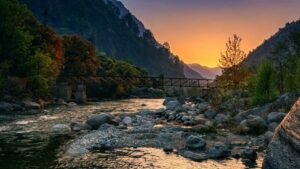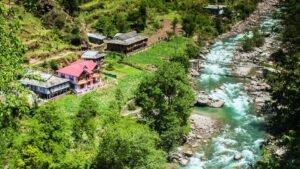
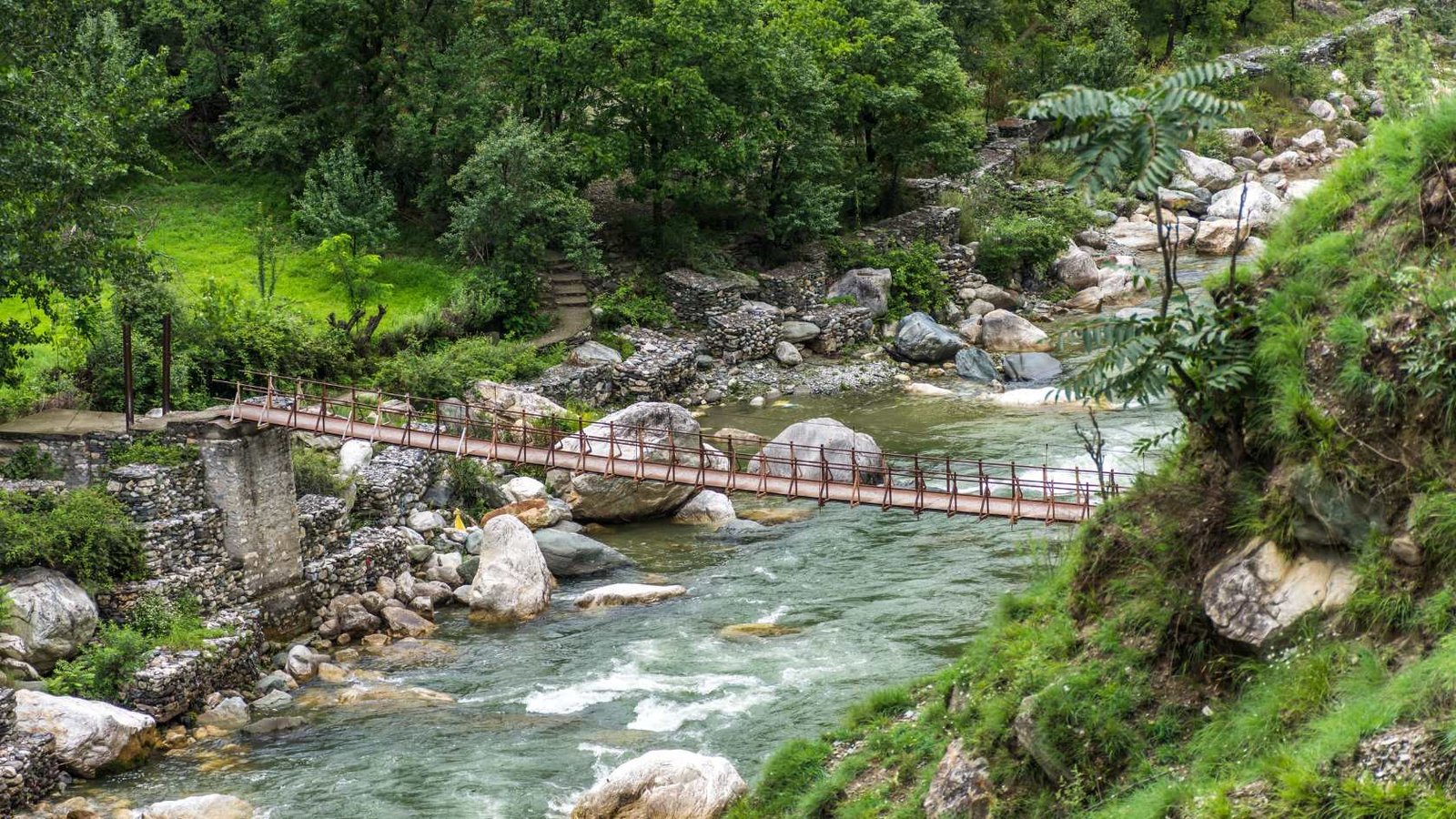
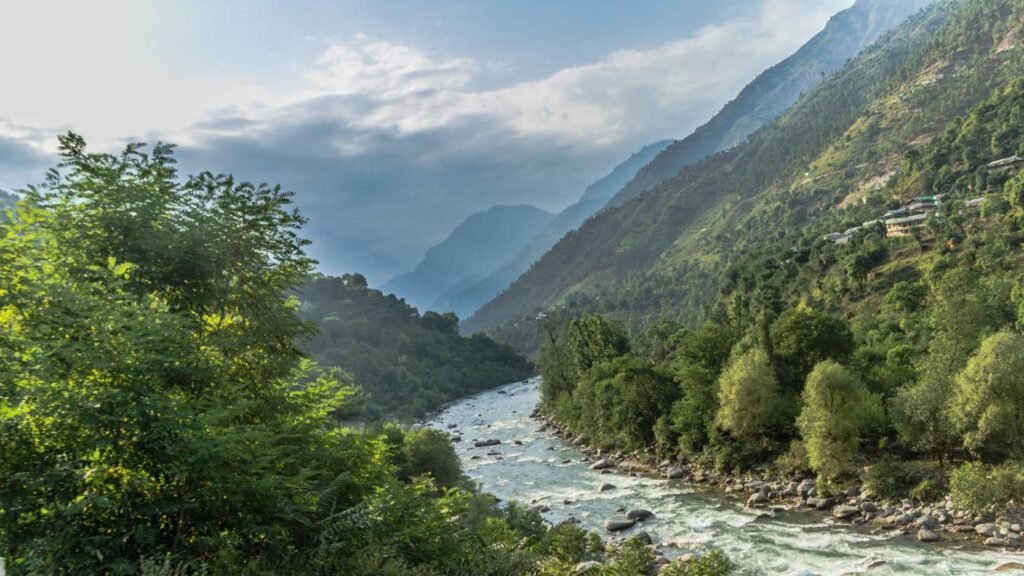
The Tirthan River runs fast and cold, fed by snowmelt from the ridges above. The forest is thick and green, and the air smells like pine and rain-damp earth — the kind of atmosphere that makes Tirthan Valley in May feel raw, fresh, and deeply Himalayan.
And somehow, most people still haven’t heard of this place.
Tirthan Valley sits about 500 km from Delhi in the Kullu district of Himachal Pradesh, and May is genuinely one of the best windows to visit. The weather is comfortable, the roads are open, and the valley hasn’t hit its peak-summer crowds yet. If you’ve been putting this trip off, this is the guide to help you stop doing that.
Quick Answer
May is one of the best months to visit Tirthan Valley. Daytime temperatures sit around 30°C and evenings cool down to around 15°C, which makes days perfect for treks, walks, and river time. The valley is green, the river is full, and the overall vibe is relaxed.
Families, couples, and solo travellers all enjoy Tirthan Valley in May. If your main goal is Jalori Pass and Serolsar Lake, aim for late May rather than early May — the pass is seasonal and snow clearance can push the opening date. We’ll cover that in detail below.
Is May a Good Time to Visit Tirthan Valley?
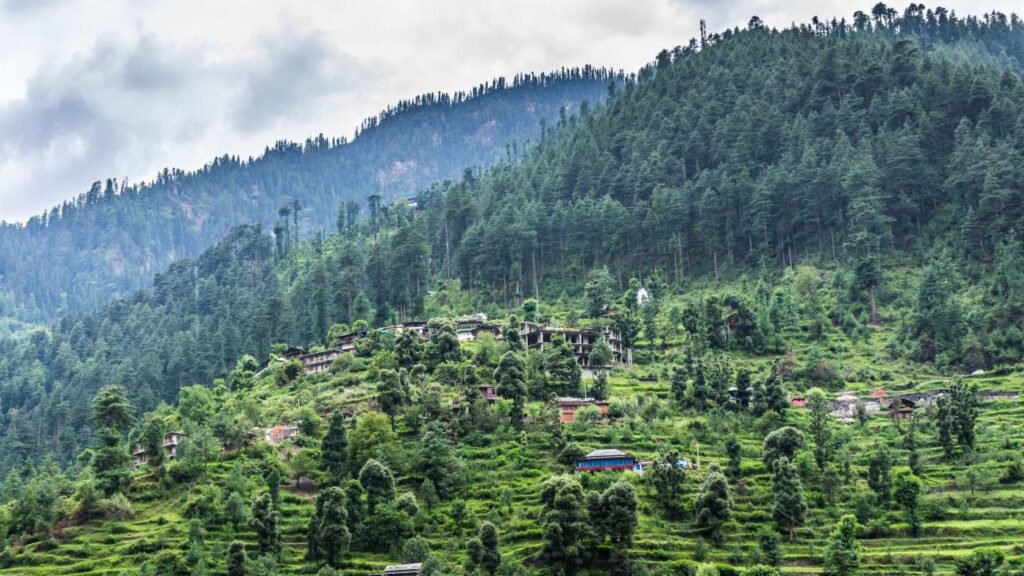
Short answer: yes, genuinely. May hits a sweet spot that few months in Himachal match.
The heat that makes Delhi and Chandigarh miserable in May barely registers here. You’re at altitude, surrounded by forest, with a cold river running outside most stays. Days feel warm and bright. Evenings need a light jacket. Mornings near the river are cool enough to feel refreshing.
What most tourists get wrong about Tirthan Valley in May is comparing it to Manali or Kasol. Manali is crowded and commercially driven in summer. Kasol is busy year-round now. Tirthan moves at a different pace entirely, and May is still early enough in the season that the valley hasn’t filled up with the July-August rush.
Weekends do see more visitors, especially around popular riverside camps near Gushaini and the Jibhi stretch. But even on a busy weekend, Tirthan feels calmer than most hill stations we send people to. That’s part of why we recommend it so often for families and for people who specifically want to slow down.
If you have flexibility, Monday to Thursday travel in May means near-empty trails and easier accommodation deals. We’ve seen that firsthand when our own team has done recce trips through the valley in late May — you can walk to Chhoie Waterfall and pass maybe ten people the entire way.
What Is the Weather in Tirthan Valley in May?
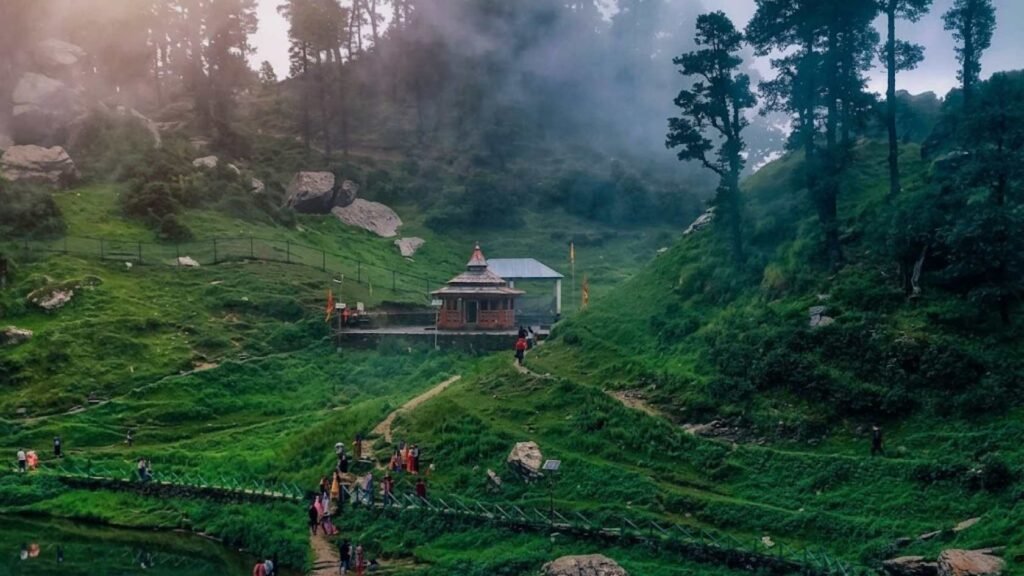
The numbers: daytime highs around 30°C in the lower valley near Banjar, evenings cooling to around 15°C. One local estimate puts Tirthan Valley itself at about 16°C high and 5°C low with roughly ten rainy days across the month.
What this actually feels like: mornings by the river are crisp. By 11 AM, the sun is strong enough that you want sunscreen and a light t-shirt. By sunset, you’re reaching for a fleece. Nights are cold — not Spiti-cold, but cold enough that you’ll want a proper warm layer to sleep in.
Rain in May is light and usually short — afternoon showers that clear quickly. Not monsoon rain. Not rain that cancels plans. Just Himachal’s version of a summer afternoon.
Pack light layers you can add and remove through the day. A thin fleece, a windcheater you can fold into a bag, full-sleeve cotton shirts for trekking, and one proper warm layer for evenings. Comfortable walking shoes are more important than trekking boots for most Tirthan activities. Sunscreen is non-negotiable — the valley gets full sun on clear days.
Is Jalori Pass Open in May 2026?
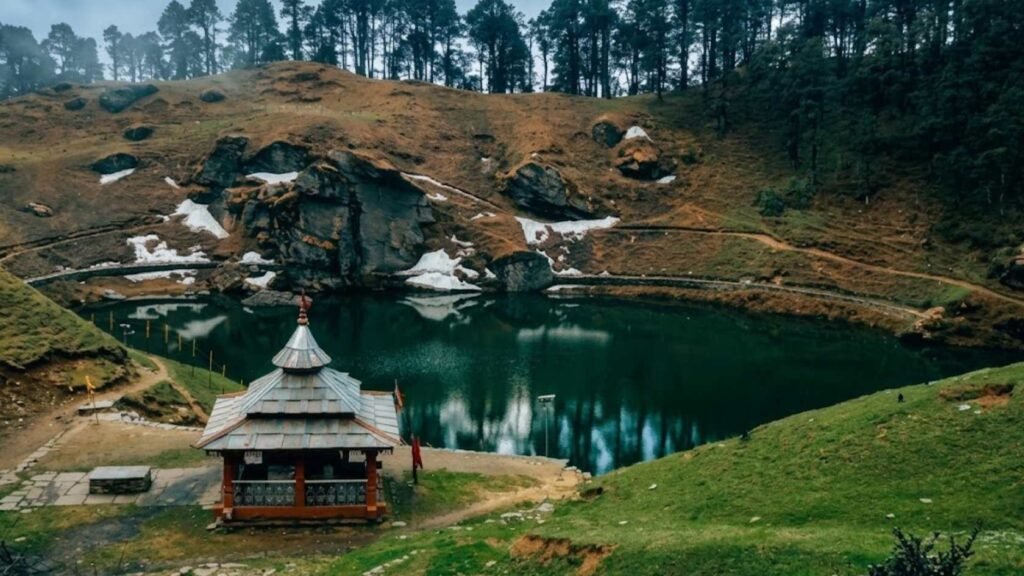
Jalori Pass sits at 3,120 metres and it’s a seasonal road. It generally opens somewhere between May and early June, depending on how fast BRO clears the snow from winter.
Here’s the honest picture for 2026: as of 28 March 2026, local updates showed Jalori Pass was not yet open for regular vehicle access. That’s earlier in the year, so it’s not unexpected. By late May, the pass is typically clear and accessible. But early May can still be a coin toss depending on how the winter went.
What this means practically: if you’re planning a Tirthan trip in the first two weeks of May and Jalori Pass and Serolsar Lake are your main goals, build in some flexibility. The pass may or may not be open. If you’re going in late May, the odds are in your favour, but still verify the latest status before you drive up.
The Jibhi to Jalori Pass drive is around 12 km on a mountain road that winds through dense oak and rhododendron forest. When it’s open, it’s one of the best scenic drives in this part of Himachal.
Plan B if the pass isn’t open yet: Tirthan doesn’t need Jalori Pass to be a complete trip. The Chhoie Waterfall walk is fully accessible. The GHNP ecozone is open. The river is at its most dramatic in May from snowmelt. Village walks around Gushaini and Sai Ropa give you a completely different experience from the pass. We tell our travellers to plan around the valley, not around one single road, and that mindset makes for a much better trip.
What Are the Best Things to Do in Tirthan Valley in May?
Spend Slow Time by the Tirthan River
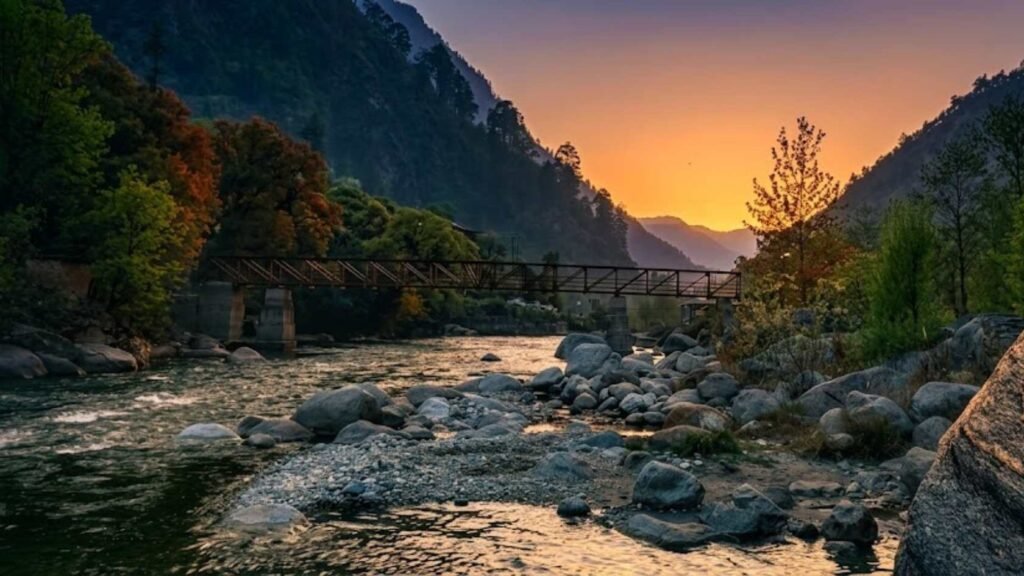
This is the real reason people come here, even if they don’t always admit it when planning. The Tirthan River is cold, fast, and genuinely beautiful in May. Most good stays in Gushaini are built right alongside it.
You wake up to the sound of water. You sit on a rock with chai in the morning. You do nothing for an hour and feel completely fine about it. In our experience running trips here, guests who came for Jalori Pass end up spending three hours just sitting by the river — and calling it one of the best parts of the trip.
Don’t underestimate this as an activity. In a world where everyone’s packing every hour, Tirthan’s river pace is actually the thing people remember.
Visit Great Himalayan National Park
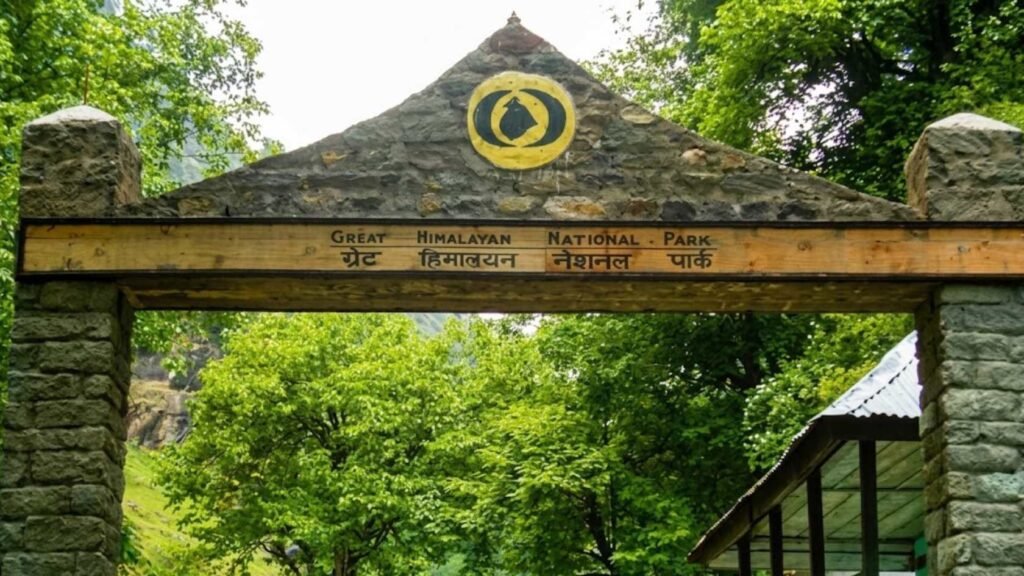
GHNP is a UNESCO World Heritage Site and most travellers walk right past the entry point without understanding what they’re standing next to. The Tirthan-side approach goes via Aut, Larji, Banjar, Shai Ropa, and Gushaini — and the park road from that side is currently open.
Entry is by permit. For Indian adults the fee is ₹200, for Indian students ₹100, and for foreign tourists ₹800. Core-zone permits are issued at Shamshi, Shairopa, and Ropa.
Most day visitors do the ecozone walk, which is gentle and gives you forest, river crossings on wooden bridges, and a genuine sense of the park without needing a guide or extra clearance. If you want deeper trekking inside the core zone, the logistics get more involved and need advance planning.
Drive Towards Jalori Pass
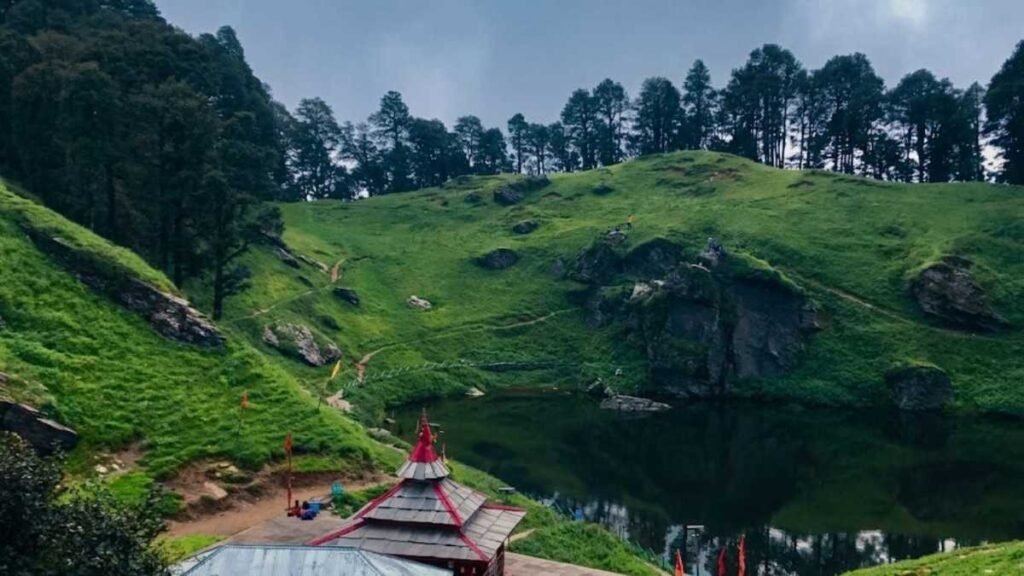
When it’s open, the road from Jibhi to Jalori Pass is worth doing just for the drive. You gain altitude through thick forest, the views open up as you climb, and the pass itself gives you a wide-angle view of ridges on both sides.
It’s a good half-day outing when combined with a chai stop at one of the small stalls near the top. Full day if you continue to Serolsar.
Serolsar Lake Trek from Jalori Pass
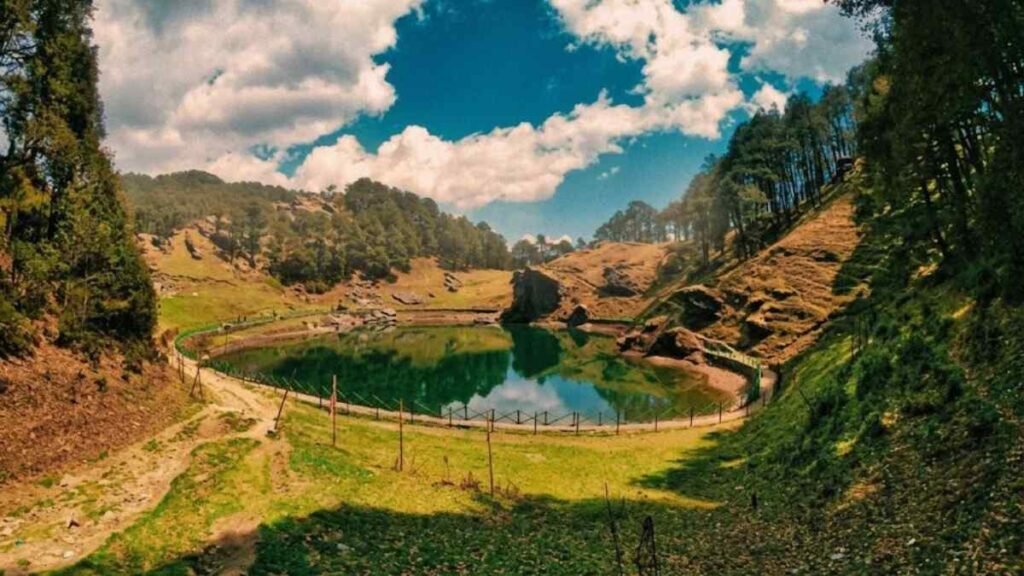
Serolsar Lake sits about 5 km one way from Jalori Pass, through forest. It’s a moderate walk, not a difficult trek. The lake itself is small and tucked into the trees, with a small shrine at the edge. Good for walkers who want more than a viewpoint stop at the pass.
Go early. By 10 AM in peak season, the trail gets busy. Early morning light through the oak forest on the way up is the kind of thing that ends up on people’s camera rolls for years.
Do the Chhoie Waterfall Walk
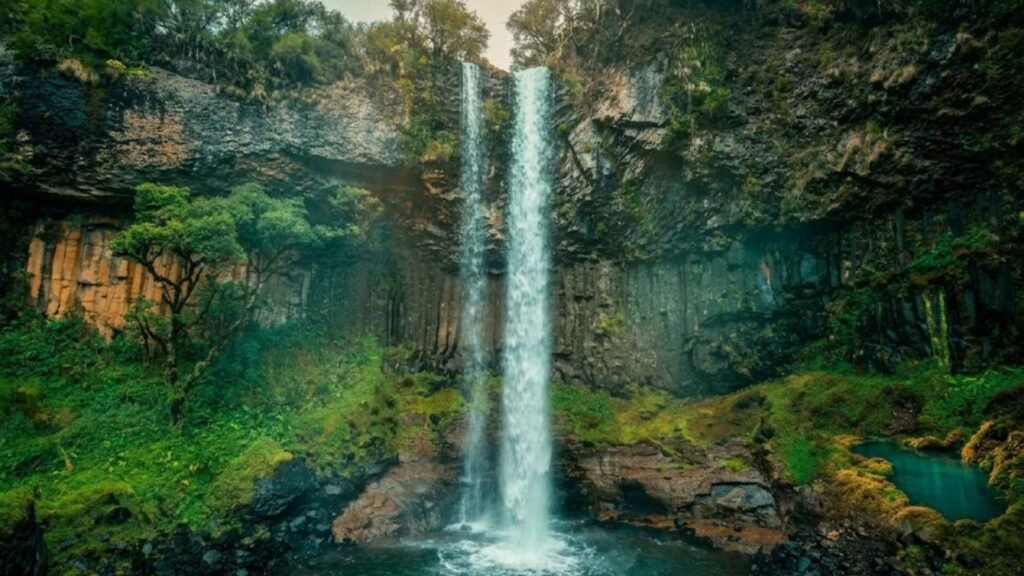
Chhoie Waterfall is one of the shorter nature walks from the valley floor. Different sources cite the trail at roughly 1 to 2 km. It’s accessible to most fitness levels and works well as a morning or late-afternoon outing when the sun isn’t at its hardest.
The waterfall itself drops through a rocky gorge with forest on both sides. In May, the flow is strong from snowmelt and the whole scene looks like it belongs in a nature documentary.
Try Trout Fishing
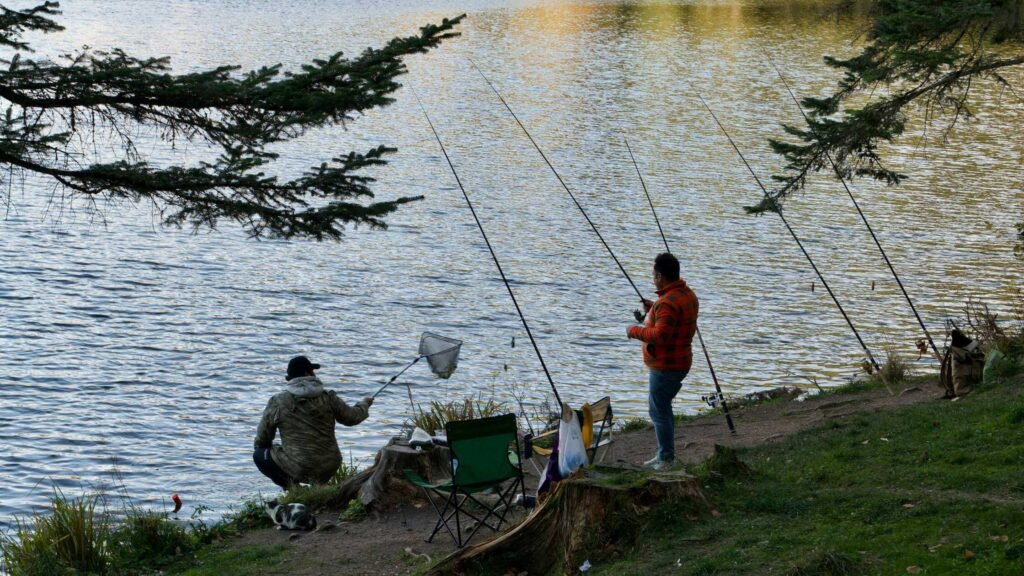
The Tirthan River is a trout fishery and May sits comfortably inside the active season, which local operators run from March to October. You need a licence for trout fishing in these waters, but local operators handle all of that.
Expect to pay ₹500 to ₹1,500 for a session, covering equipment, a local guide, and permit arrangement. It’s a genuinely good half-morning activity — especially if you’ve never fished before. The guides know exactly which stretches of river hold fish in each season, and even if you don’t catch anything, standing in a cold Himalayan river with mountains around you is its own kind of good time.
Tirthan Valley in May Itinerary Options

2-Day Itinerary
This works for people driving up from Chandigarh or those with a tight weekend window.
Day 1: Leave Chandigarh early, reach Gushaini by afternoon. Check in, freshen up, and walk to the river. Evening at the camp or guesthouse. Day 2: Drive toward Jalori Pass if open (check status the night before), stop for views, return by afternoon, and head back.
It’s tight, but the drive itself is half the experience. Don’t try to do GHNP and Jalori in the same short trip — pick one.
3-Day Itinerary
This is what we recommend for most travellers. It gives you enough time to actually relax rather than check boxes.
Day 1: Reach Gushaini, settle in, river time, quiet evening. Day 2: GHNP ecozone walk in the morning, Chhoie Waterfall in the late afternoon. Day 3: Jalori Pass and Serolsar Lake if open (confirm the evening before), or a full river morning and leisurely drive back.
Three days is the sweet spot. You leave feeling rested, not like you rushed through a checklist.
4-Day Itinerary
Split your stay between Tirthan and Jibhi or Shoja. Two nights in Gushaini for river access and GHNP, then two nights in Jibhi or Shoja for a different pace — more cafés, more views from higher ground.
This version works especially well for couples or friends who want the best of both ends of the valley. We’ve seen people do Tirthan and Jibhi together on our Jibhi & Tirthan Valley in May packages and it consistently produces some of the most positive trip feedback we get.
How Crowded Is Tirthan Valley in May?
Tirthan is not Manali. It is not Kasol. The crowd pressure is real in May but it’s a different scale entirely.
The busiest spots are the riverside camps in Gushaini, the stretch around Jibhi, and the road to Jalori Pass on weekends. Weekdays feel almost empty by comparison. If you arrive on a Thursday and leave on Sunday, your first two days will feel like you have the valley to yourself.
Long weekends in May — around Buddha Purnima or any gazetted holiday — see more bookings, and popular stays fill up a week in advance. Book ahead if your dates overlap with a long weekend. A good stay near the river will not sit vacant for long in May.
For travellers who want the most peaceful version of Tirthan, Tuesday to Friday is the sweet spot.
Where Should You Stay in May: Gushaini, Banjar, Jibhi or Shoja?
Gushaini
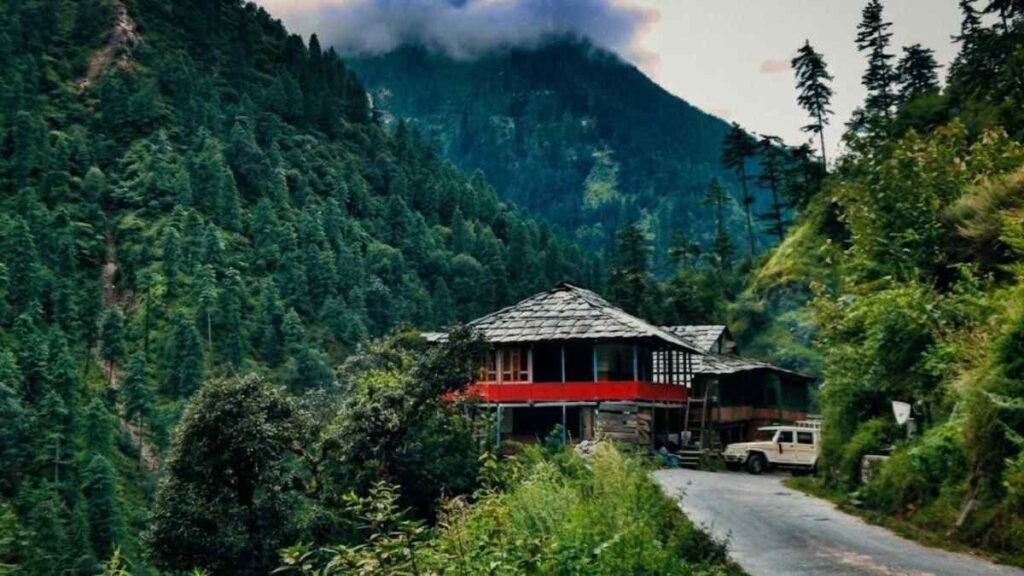
It is the best base for river access and park proximity. Most of the good GHNP-side camps and guesthouses are here. If you want to fall asleep to the sound of the Tirthan, this is your spot. It’s quieter than Jibhi and the pace is slower. Our recommendation for families and couples who want nature over cafés.
Banjar
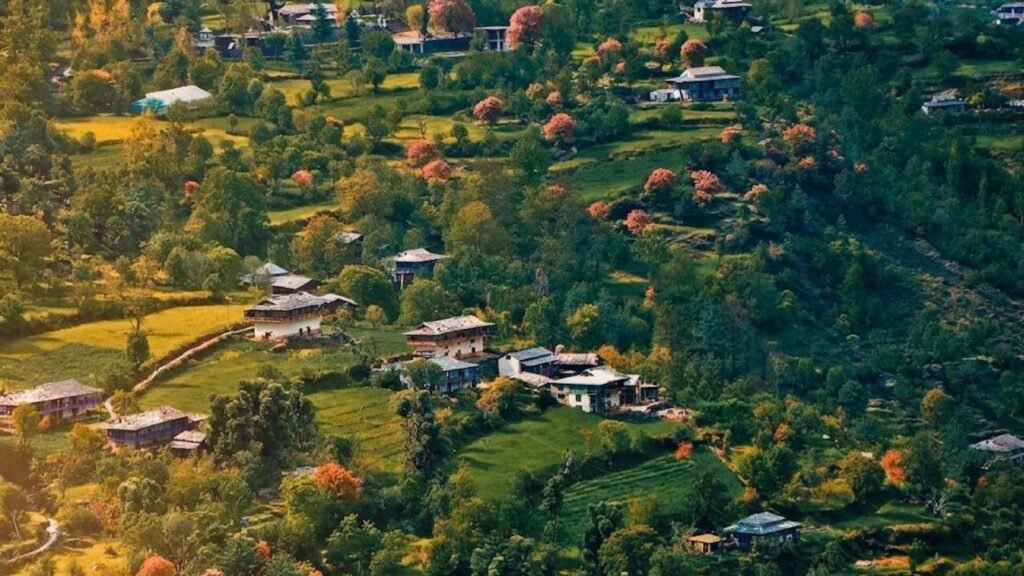
It is the town, not the hideaway. If you need a market, a pharmacy, or a proper restaurant, Banjar is where you go. It works as a base if you can’t find anything at the valley ends, but it doesn’t have the same character as the river camps further in.
Jibhi
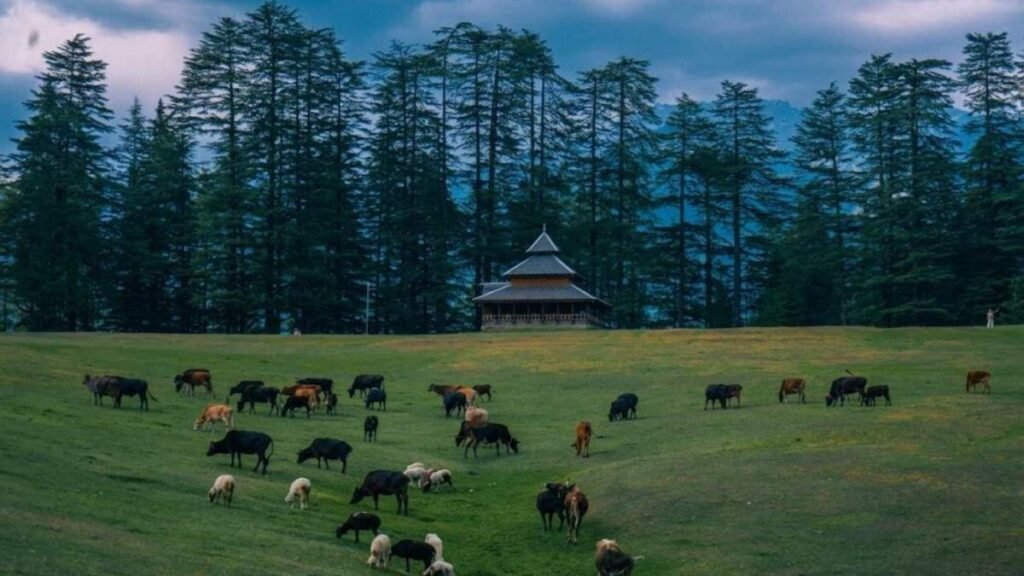
It has the café culture. Young crowd, good coffee, instagrammable bridges, and more social energy. May is busy here on weekends. It suits solo travellers and friend groups who want a bit more life around them. We’ve covered the full Jibhi experience in our Jibhi in May guide if you want to compare before deciding.
Shoja
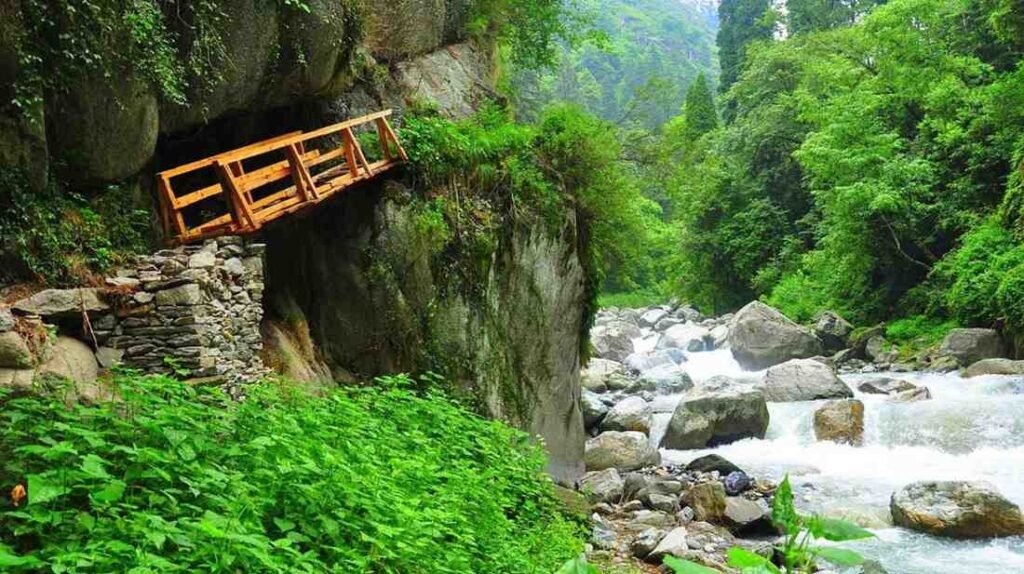
It sits above Jibhi at higher altitude and has cooler temperatures, better views, and fewer people. Small number of guesthouses. Go here if you want quieter than Jibhi with altitude views and don’t mind basic options.
The practical recommendation: first-time visitors should stay in Gushaini for river and GHNP access. Second-time visitors looking for variety should split between Gushaini and Jibhi.
What Should You Pack for Tirthan Valley in May?

Pack layers. The shift between midday and evening is about 15 degrees, which is more than people expect.
Thin t-shirts and full-sleeve cotton shirts for daytime trekking, a fleece or light woollen for evenings, and a windcheater you can stuff into a daypack. One pair of sturdy walking shoes with grip covers all the trails here. You don’t need heavy trekking boots unless you’re doing the GHNP core zone.
Sunscreen with SPF 50 is important — the sun is strong even on slightly overcast days at this altitude. A light rain layer or a packable jacket is worth having for the afternoon showers that sometimes roll in. Personal medicines, a basic first aid kit, and any prescription medication in the right quantity. This is a valley, not a city — the nearest proper pharmacy is in Banjar.
Download offline maps before you leave Aut. Signal is patchy in Gushaini and non-existent on the GHNP trails. And carry enough cash — ATMs in the valley are limited and UPI coverage at smaller stays is not guaranteed.
How to Reach Tirthan Valley in May
By Air:
The nearest airport is Bhuntar / Kullu-Manali Airport, about 50 km from Tirthan Valley and roughly a 2-hour drive. Flights from Delhi to Bhuntar are short but can be expensive and weather-dependent in summer. Worth checking, but don’t build your return plans around a flight from a small Himalayan airport.
By road
From Delhi: The distance is around 480 km and usually takes 10 to 12 hours depending on traffic on the initial stretches. A taxi from Delhi to Tirthan runs roughly ₹12,000 to ₹18,000. The overnight Volvo bus from Delhi to Aut costs around ₹1,500 — you reach Aut in the morning and take a taxi for the remaining 29 to 32 km into the valley.
From Chandigarh: It’s about 265 km and around 7 hours. Taxi from Chandigarh is roughly ₹6,000 to ₹9,000. This is the most comfortable option for families who don’t want to self-drive mountain roads on a long overnight.
One honest warning
Don’t plan to drive mountain roads after dark if you’re not used to Himachal driving. The roads after Aut are winding, unlit in stretches, and unforgiving to first-timers after sunset. Reach Aut in daylight and complete the last stretch into the valley while you can still see the road.
Tirthan Valley Trip Cost in May

A rough estimate for a 3-day trip from Chandigarh: taxi around ₹6,000 to ₹9,000 one way. Riverside guesthouses and camps range from budget homestays to mid-range options current nightly rates]. GHNP entry is ₹200 per adult. A trout fishing session if you want it runs ₹500 to ₹1,500 per person. Food at local dhabas and camp kitchens is inexpensive — a full meal of rice, dal, sabzi, and roti typically costs per person.
The valley is not a budget-buster. The main costs are transport and accommodation. If you self-drive from Chandigarh, your fuel costs and tolls are likely cheaper than a hired taxi, but factor in driver fatigue for the mountain sections.
For a full cost and package comparison for summer Himachal trips, our Popular Himachal tours page gives a good overview.
Jibhi vs Tirthan Valley in May: Which One Is Better?
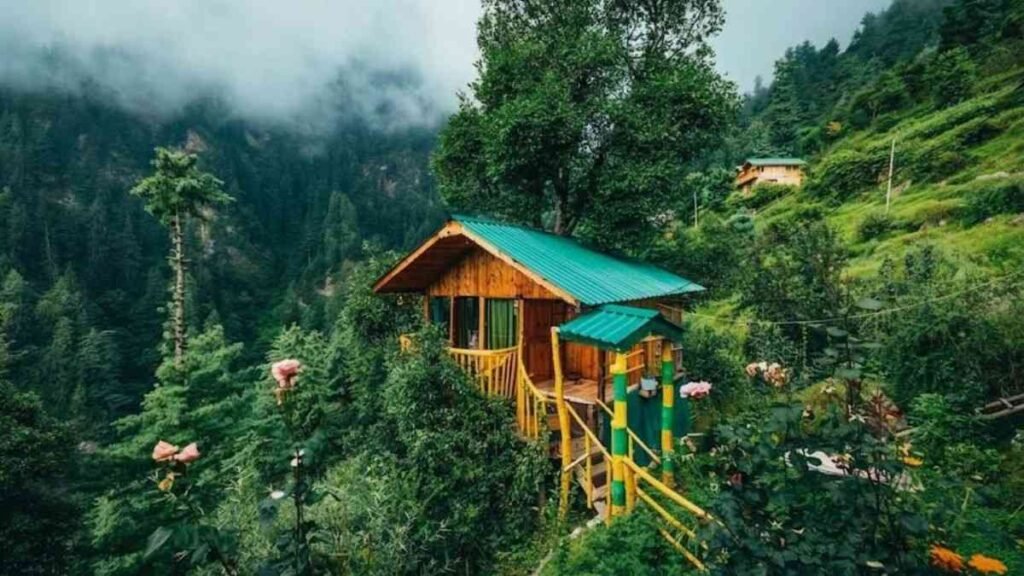
They are two different experiences, not two versions of the same thing.
Jibhi
It is for cafés, a more social atmosphere, easier access to Jalori Pass, and a vibe that appeals to younger solo travellers and friend groups. It’s more Instagram-friendly. It’s also more crowded on weekends.
If you’re comparing the two for a decision, the best answer: if you have 3 or more days, do both. Two nights in Gushaini, one or two nights in Jibhi. You see both faces of the valley and you understand why people keep coming back.
Tirthan
(Specifically Gushaini) is for river access, GHNP, quiet mornings, and people who want to feel like they’ve actually left the city. It’s the choice for families who want safe, calm surroundings and travellers who want nature without noise.
Important May Travel Tips Before You Book

Book accommodation at least 10 to 14 days ahead for any weekend in May. Good riverside stays near Gushaini go fast, and you don’t want to settle for something further out just because you waited.
Don’t plan your entire trip around Jalori Pass. We’ve seen people drive 12 hours, reach Jibhi, and feel devastated when the pass is still closed. The valley is worth the trip with or without Jalori. Build your itinerary around the river and GHNP, and treat Jalori as a bonus when it’s open.
Verify road and trek status 48 hours before departure. Mountain conditions in May can change fast. A single heavy rain can affect the Jalori road or make certain river crossings in GHNP temporarily difficult. Check with a local contact before you leave home — not a blog written three months ago.
We always tell first-timers: Tirthan is not a destination you need to rush. The people who enjoy it most are the ones who let the valley set the pace instead of arriving with a minute-by-minute schedule. Carry your slow mode with you.
Frequently Asked Questions
Also Read: Dharamshala in May 2026: Weather, Places to Visit, Triund, Crowds and Travel Tips
Ready for Your Himachal Adventure?
Get FREE customized itinerary · Best Price Guaranteed · Local Himachal Experts since 5+ years · 3,973+ Happy Travelers