Most people cancel their Spiti Valley in monsoon plans the moment they see rain in the forecast. That fear is mostly misplaced. Spiti sits behind the high Himalayan wall, in a rain shadow, so it stays largely dry while the rest of the hills get soaked. We run trips here every July and August from our base in Shimla, and the valley itself rarely gives us a rainout.
The real risk is not the rain inside Spiti. It is the approach roads. The cliffs of Kinnaur and the water crossings near Batal are where monsoon actually bites. Get the route and the timing right, and a monsoon Spiti trip can be cheaper, quieter and just as beautiful as peak season.
Quick Answer: Can You Visit Spiti Valley in Monsoon?
Yes. You can visit Spiti Valley in monsoon, and most years it is a good idea. The valley stays mostly dry because it lies in a rain shadow, so Kaza and the high villages see little rainfall even in July and August.
The catch is the journey in. The roads through Kinnaur and the Manali side can face landslides and water crossings during heavy rain. Pick the Shimla Kinnaur Kaza route, keep one buffer day, and check road status before every leg.
Short version: the destination is safe and dry. The drive needs respect. If you plan for delays instead of fighting them, monsoon is one of the smarter times to see Spiti.
If you want this handled end to end, our Spiti Valley tour packages build in buffer days, verified stays and a driver who knows which nala swells first after rain.
👉 Confused? Let locals plan your trip.
Does It Rain in Spiti Valley During Monsoon?
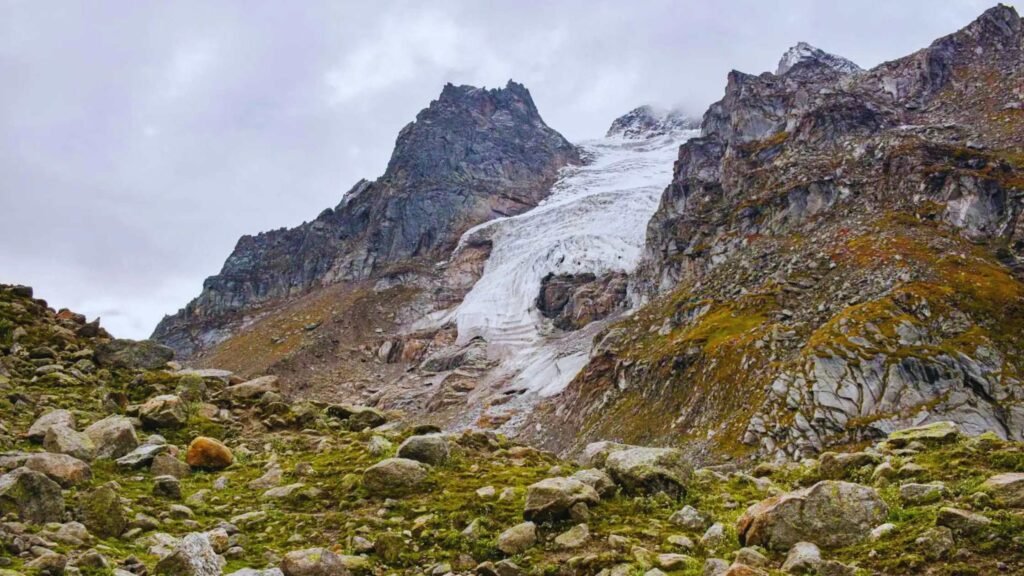
Not much. This is the single fact that changes everything about a monsoon trip here. Spiti is a cold desert. The big Himalayan peaks block the monsoon clouds coming up from the plains, so most of that rain dumps on the outer ranges and never reaches the valley.
The whole region gets very little rain across the year. Average annual rainfall is around 170 mm, which is a fraction of what Manali or Shimla collect. A lot of that arrives as winter snow, not summer rain.
So what does a monsoon day in Kaza actually look like? Usually blue sky, strong sun and dry trails. You might get a short shower or an overcast afternoon, but full-day rain inside Spiti is rare.
Here is what most tourists get wrong. They check the Manali weather, see heavy rain, and assume Spiti is washed out too. The two are completely different climates separated by a wall of mountains. In our experience the sun in Kaza is so strong in July that people get sunburnt while it is pouring back in Manali.
The rain that matters is the rain on the approach. Heavy spells over Kinnaur or near Gramphu loosen the slopes and feed the stream crossings. That is the part of the trip you plan around, not the lake mornings or the monastery walks.
Spiti Valley Weather in July, August and September
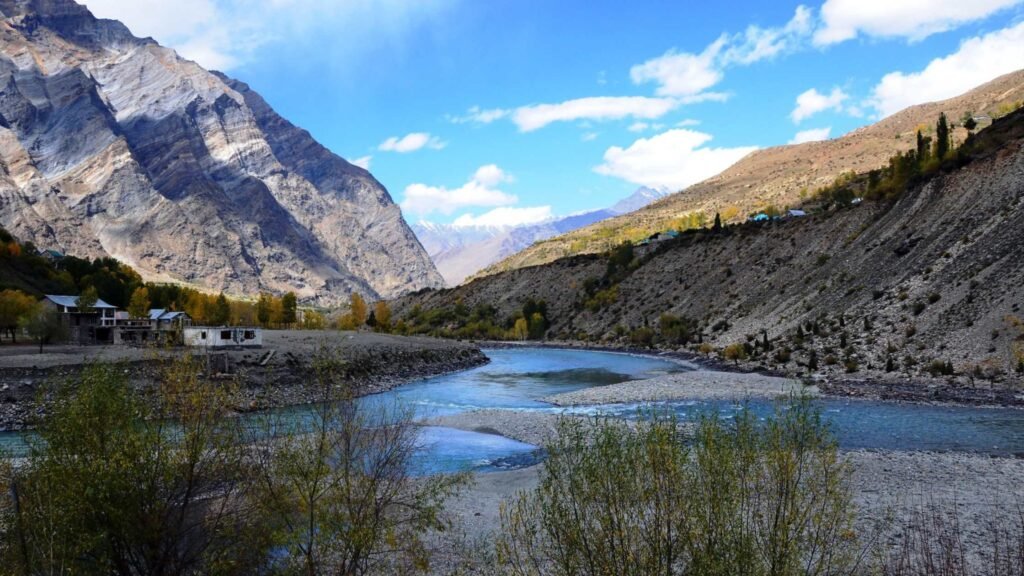
The monsoon window covers July and August, with September acting as the calm tail end. The weather inside Spiti stays similar across all three. What changes is the road behaviour and the crowd size.
July
July is warm and bright inside the valley. Daytime around Kaza sits roughly between 10 and 18 degrees when the sun is out, and nights still drop close to freezing at the higher villages.
This is when monsoon properly starts in the plains, so the Manali side and parts of Kinnaur can see landslide spells. The Spiti core stays dry. Wildflowers show up across the meadows and the light is clean in the mornings.
Crowd-wise, July is busy. School holidays and the start of the season mean Kaza fills up on weekends. Book stays ahead if you travel this month.
August
August feels much like July inside Spiti, cool and mostly sunny, but the approach roads are at their twitchiest. The Manali to Gramphu stretch and the Kinnaur cliffs both see more rain-triggered blockages this month.
The upside is fewer people. August generally sees lighter tourist numbers than peak summer, so the villages feel calmer and stays are easier to get. The surroundings also turn their greenest.
If you travel in August, treat buffer days as non-negotiable. A single heavy night of rain on the approach can hold a road for several hours.
September
September is the sweet spot for many of our travellers. The monsoon pulls back, the skies clear, and road conditions settle into the most stable stretch of the season.
Days stay pleasant in the sun and nights get sharply cold, often below freezing by late September. The landscape shifts to golden-brown and the lake colours deepen. It is the cleanest light of the year.
If your dates are flexible and this is your first Himalayan road trip, lean towards September. We cover the shoulder months in detail in our Spiti Valley in June guide and Spiti Valley in May guide if you are weighing early season against late.
Is Spiti Valley Safe During Monsoon?
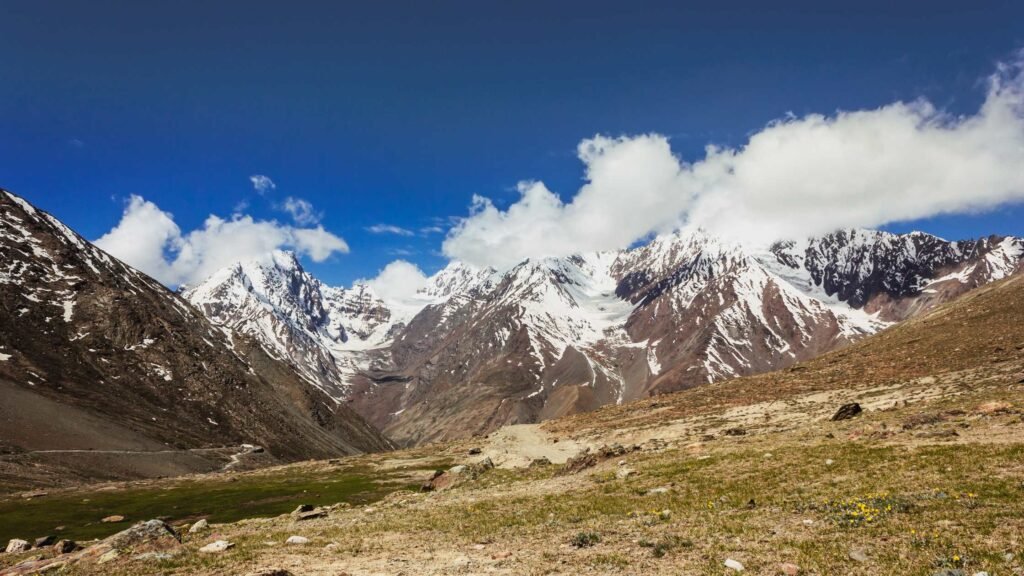
The lake mornings, the monasteries and the villages are safe. The risk in monsoon is almost entirely about roads, water and altitude, not the destination itself.
Landslides are the main concern. After heavy rain, loose slopes on the Kinnaur cliffs or near Gramphu can send rock and mud onto the road. These usually clear in hours, but they can hold you up, so daylight driving and a buffer day matter.
Water crossings are the second concern. On the Manali side, streams like Pagal Nala swell through the day as snow melts and rain adds to it. Cross them in the morning when they are low.
Altitude is the quiet one people forget. Kaza sits above 12,000 feet and the high villages climb past 14,000. Go up slowly, drink water, skip alcohol on the first nights, and do not rush the gain from the plains.
For families, monsoon Spiti is fine with older kids who handle long drives and altitude. For very young children or elderly travellers with heart or breathing issues, plan a slower itinerary and keep medical distance in mind, because help is far away out here.
Solo travellers, including solo women, do trips here every season and Spiti is one of the safer mountain regions for it. The thing to manage is connectivity and route delays, not personal safety. Our full Spiti Valley travel guide breaks down altitude, network and stay realities if you want the deeper version.
Which Route Is Better During Monsoon?
This is the most important planning decision for a monsoon trip. There are two ways into Spiti, and in the rains they are not equal.
Shimla Kinnaur Kaza Route
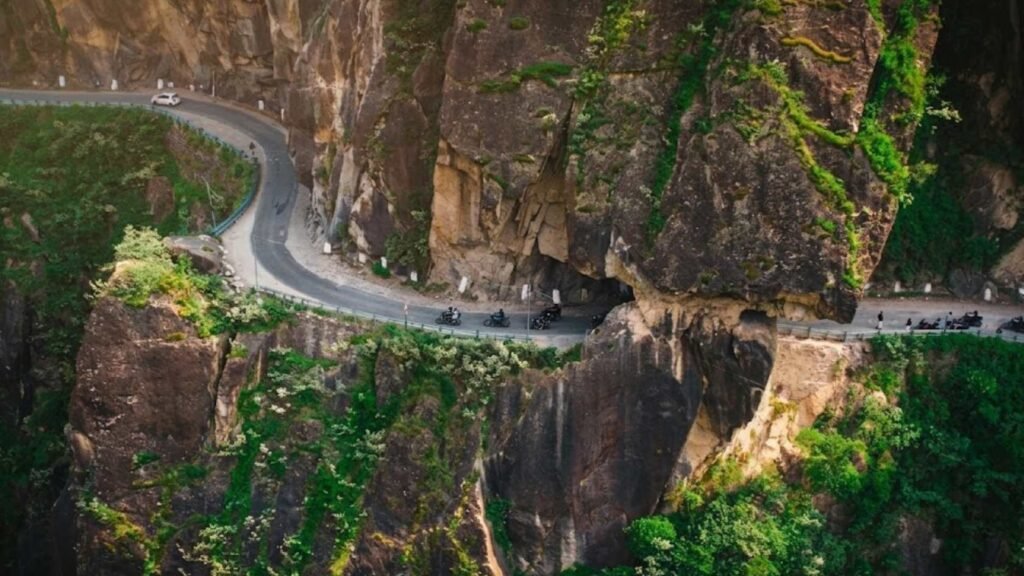
This is the safer monsoon route, and the one we default to for July and August trips. It climbs gradually through Kinnaur along the Sutlej, and it does not depend on any single high pass opening.
It is not landslide-proof. The cliff sections past Reckong Peo and around the Malling stretch can get rough after heavy rain. But the gradual climb also gives your body time to adjust to altitude, which the Manali side does not.
If you are building the Kinnaur leg properly, our Kinnaur travel guide covers Kalpa, Nako and the apple-belt stops, and our Kinnaur tour packages handle the stays and permits along it.
Manali Kaza Route
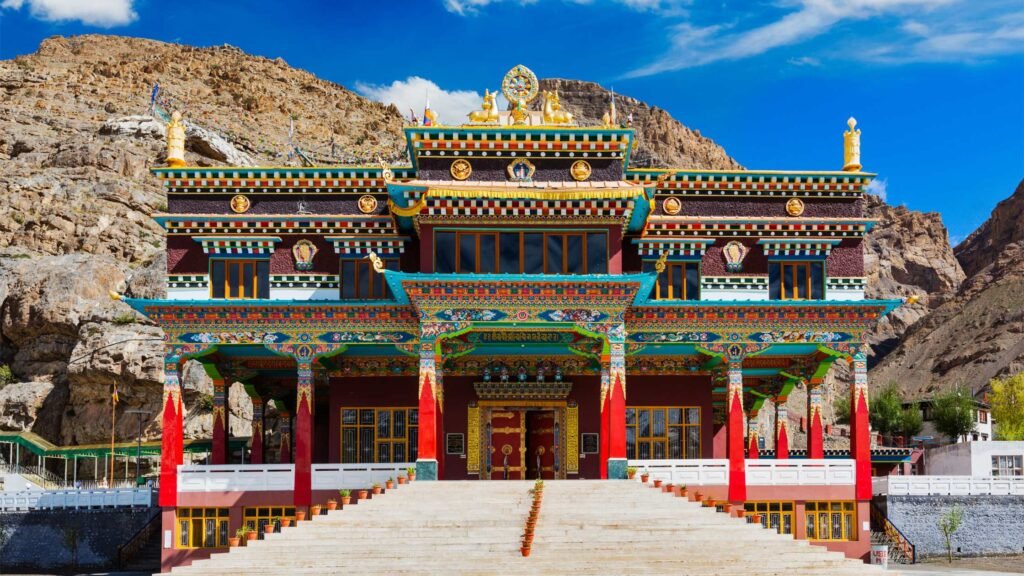
This route is faster and more dramatic but riskier in monsoon. You cross the Atal Tunnel, then push through Gramphu and Batal, where the road turns rough and the water crossings begin.
The Manali to Gramphu and Batal stretch is the part that closes first after rain. Expect slush, loose gravel and stream crossings that get deeper through the day. A high-clearance vehicle is not optional here.
We tell most monsoon travellers to enter from Shimla and treat the Manali side as the exit, only if it is confirmed open. That way a blocked pass costs you a buffer day, not your whole trip.
Pros of Visiting Spiti Valley During Monsoon
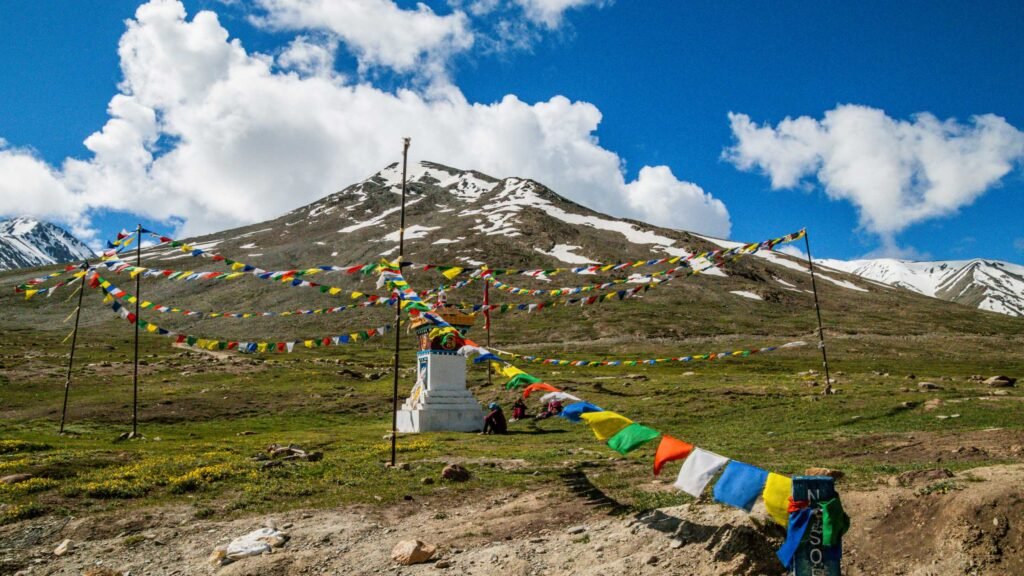
Fewer crowds is the big one, especially in August. The monasteries feel quiet, the homestays have space, and you are not queueing for a photo at Key.
The valley is at its greenest. Snow patches still cling to the peaks while the meadows around Langza and Demul turn soft green. It is a contrast you do not get in spring or autumn.
Prices ease off the peak. Stays and shared transport are often easier to negotiate, and last-minute spots open up that would be gone in May or September.
And the sky. After a clear monsoon night above 4,000 feet, the star field over Kaza and Chandratal is as good as it gets in India. Low light pollution plus washed air equals a Milky Way you can see with the naked eye.
Cons of Visiting Spiti Valley During Monsoon
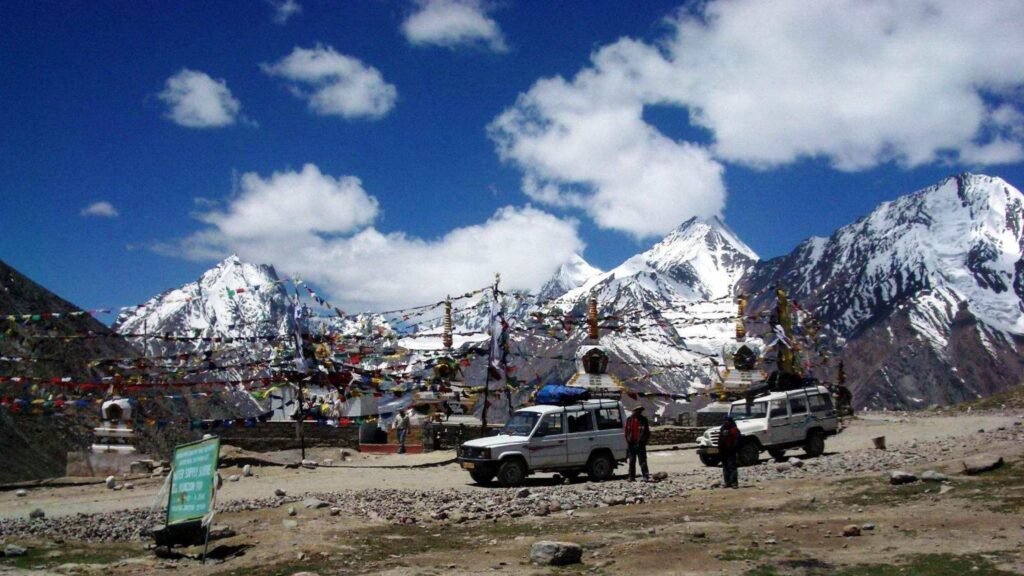
Road delays are the honest downside. The approach roads can block without warning after heavy rain, and a single landslide can hold you for hours. If your schedule is tight, this is real stress.
The Manali side is unreliable. Kunzum Pass, Chandratal access and the Batal stretch all get more unpredictable in the rains, so you cannot promise yourself those experiences on fixed dates.
Here is the honest negative we give everyone. If you are someone who needs a guaranteed, minute-by-minute itinerary with no surprises, monsoon Spiti will frustrate you. The mountains do not run on your calendar in July and August, and pretending otherwise ends in a bad trip.
Network is also patchy and gets worse when poles go down in rain. BSNL works best around Kaza, and most apps will not load past Narkanda on the Shimla side. Download offline maps before you go.
👉 Pick the right stay & route — we’ll help.
Best Places to Visit in Spiti During Monsoon
Kaza
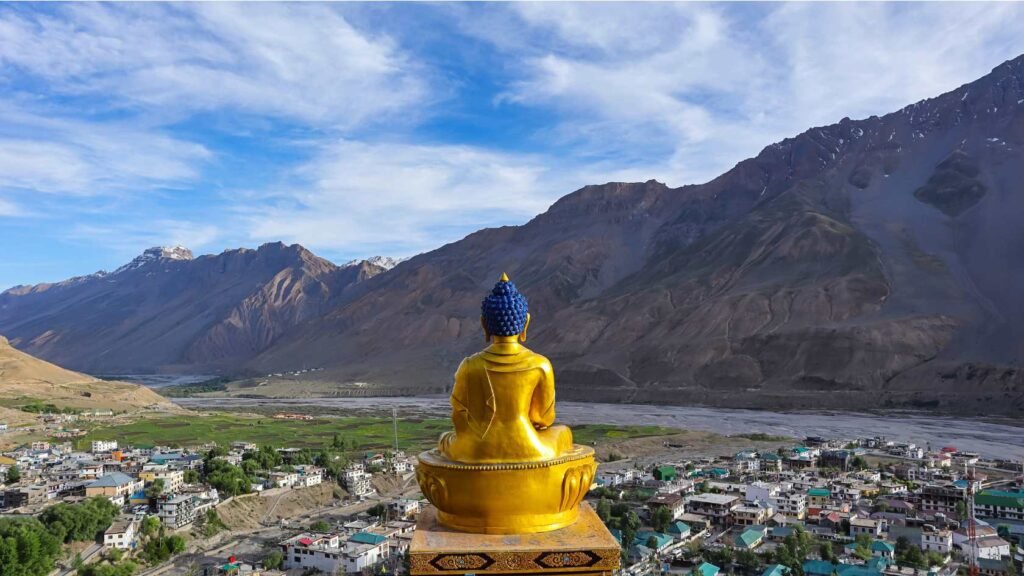
It is your base, sitting around 12,500 feet. It has fuel, an ATM that sometimes works, simple hotels and the Tibetan kitchens in the market. The thukpa and momos at the small eateries off Kaza market are the best warm meal you will get before heading higher, and they are cheap.
Key Monastery
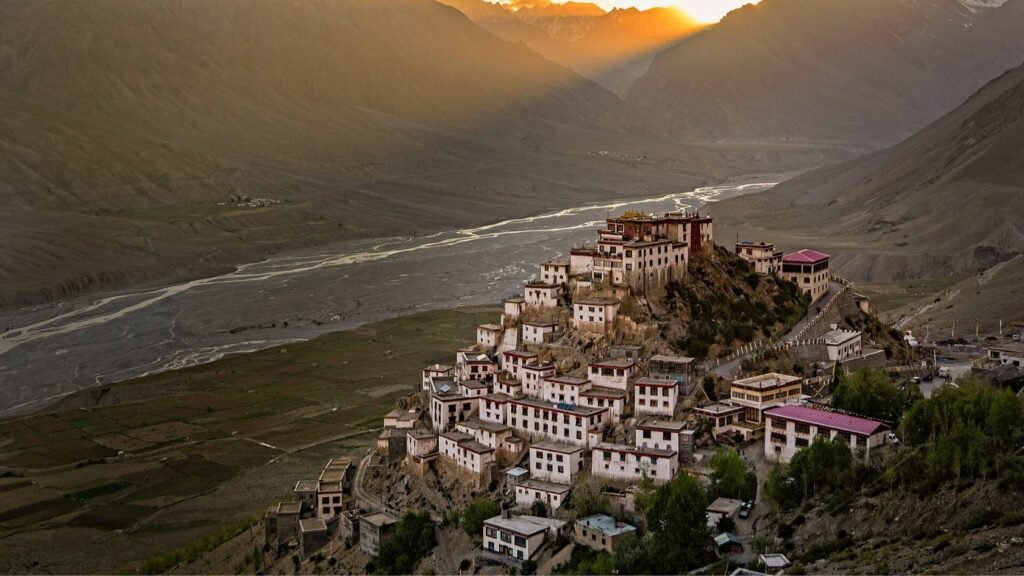
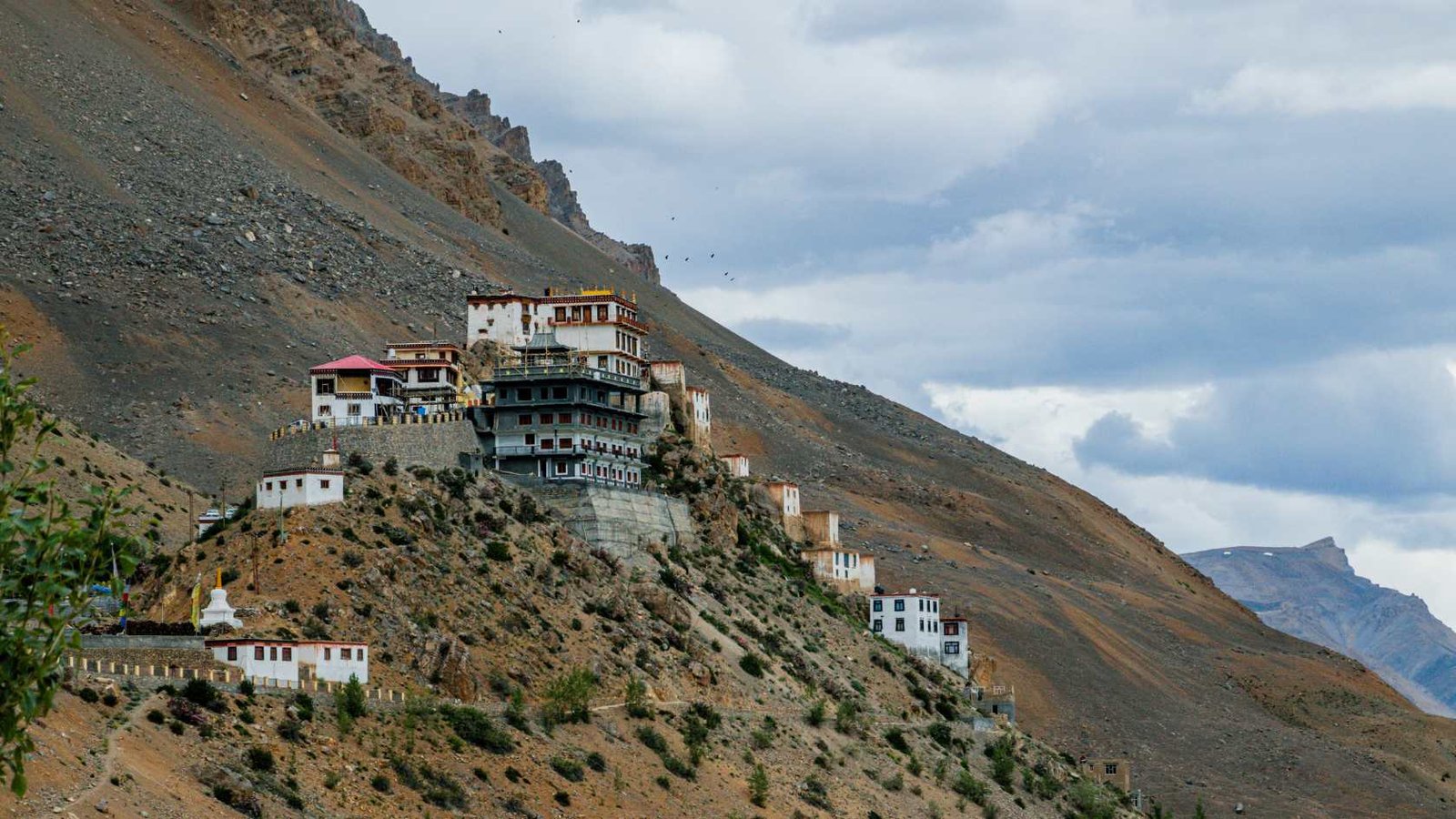
It is the postcard shot, a white monastery stacked on a hill above the river. Reach it early in the morning before the day-trip vehicles roll in from Kaza, and you get the place almost to yourself.
Langza, Hikkim and Komic
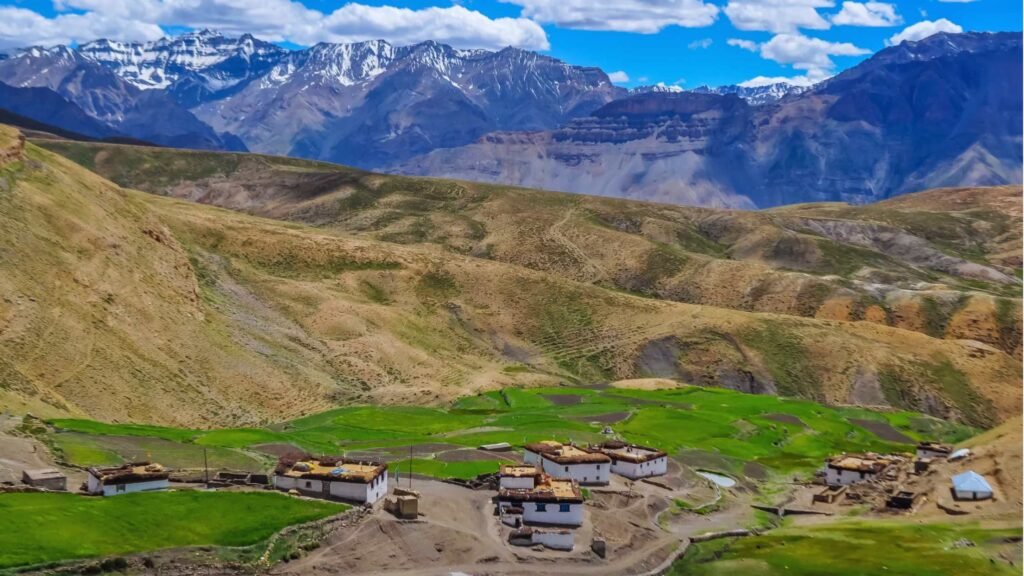
Form the high-village loop above Kaza. Langza has the giant Buddha and marine fossils in its fields, Hikkim has the world’s highest post office where you can post a card home, and Komic claims the highest motorable village tag.
A money-saving tip most blogs skip. You do not need a separate paid taxi for each of these villages. They sit on one loop, so hire one shared SUV for the half-day Langza-Hikkim-Komic circuit and split it across your group instead of paying per village.
Dhankar
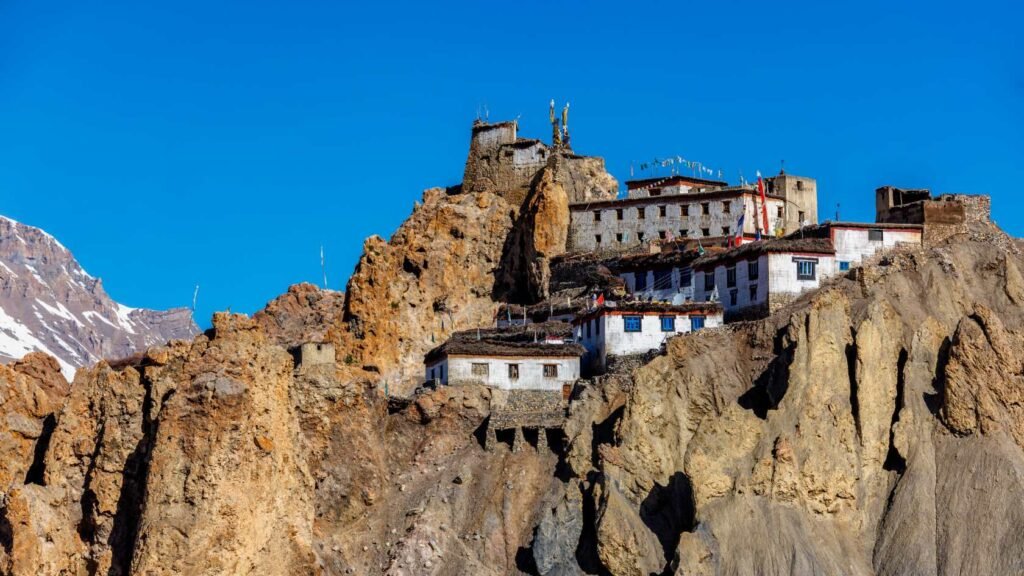
It is the one most tourists skip, which is exactly why we send people there. The old fort monastery clings to a cliff edge, and the short, lung-burning walk up to Dhankar Lake above it is worth the effort for the quiet alone.
Pin Valley
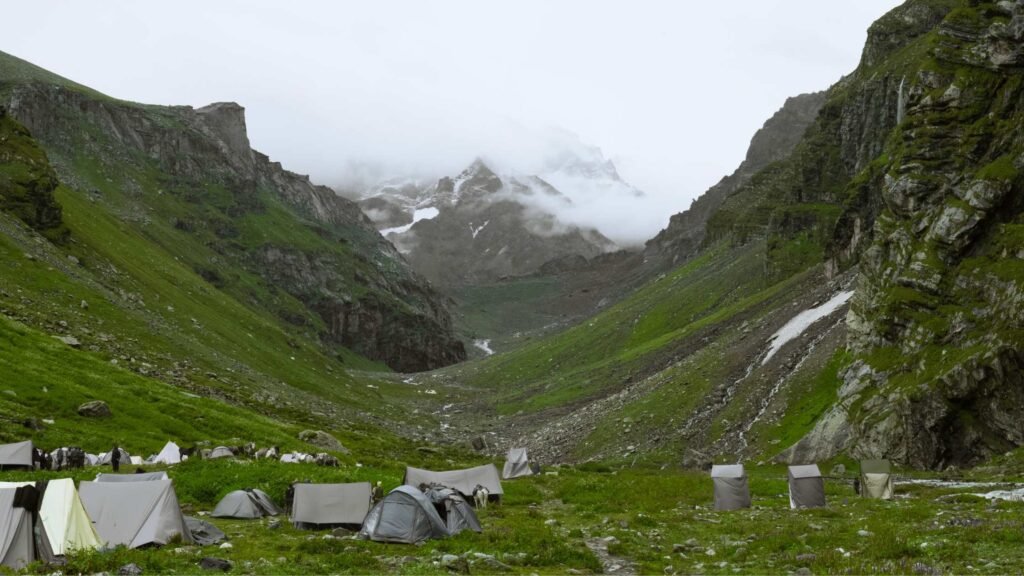
It branches off near Attargo and runs along the Pin River to Mud village. In monsoon it shows patches of green between the brown folds, and the silence at night is the kind cities have forgotten.
Chandratal
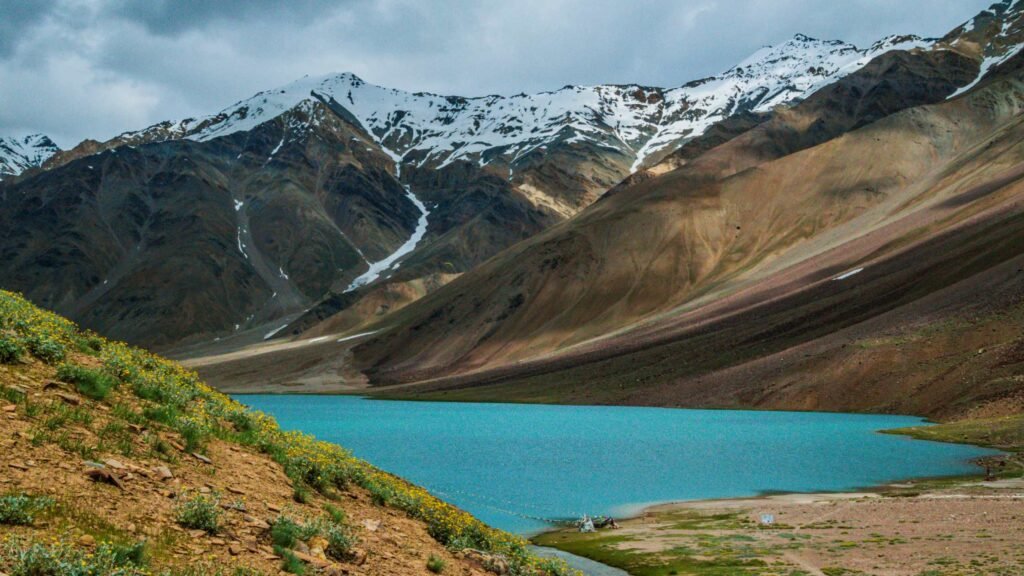
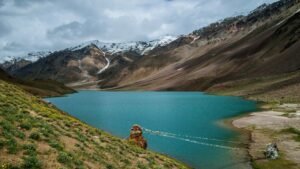
In monsoon is the gamble. The lake usually has road access by mid-June, and the camps run through summer, but the Manali-side approach and the Batal diversion are exactly the stretches that rain disrupts. Treat Chandratal as a bonus on flexible dates, not a fixed promise. Our Chandratal opening and access guide explains the timing in full.
7 Day Monsoon Itinerary for Spiti Valley

This plan enters from the safer Shimla side, climbs gradually, and keeps one full buffer day for the road delays monsoon throws at you. It is the version we run most often in July and August.
Day 1
Shimla to Kalpa or Sangla. Long but scenic drive through Kinnaur along the Sutlej. Stay overnight in Kalpa for the Kinner Kailash views.
Day 2
Kalpa to Tabo via Nako. Cross into the dry zone. Stop at Nako lake and village, then settle at Tabo and visit its thousand-year-old monastery.
Day 3
Tabo to Kaza via Dhankar. Short driving day. Detour to Dhankar fort monastery and the lake walk, then reach Kaza and rest to acclimatise.
Day 4
Kaza local, Key and Kibber. Visit Key Monastery early, then Kibber village and the Chicham bridge. Easy day to let your body adjust.
Day 5
High villages, Langza, Hikkim, Komic. The fossil village, the highest post office and the high monastery, all on one loop above Kaza.
Day 6
Pin Valley or Chandratal. Run Pin Valley to Mud if the Manali side is shut. If Chandratal access is confirmed open, swap this for the lake.
Day 7
Buffer and exit. Keep this free. Use it for a delayed road, a slow morning, or the drive back out. In monsoon, this day is what saves the trip.
Want this shaped around your exact dates and group size? Send us your plan and we will tell you honestly which version of monsoon Spiti works for you.
What to Pack for Spiti Valley in Monsoon

Pack for two climates in the same day. The sun at noon is strong enough to burn you, and the night after sunset can be near freezing. Layers solve this better than one heavy jacket.
Carry a thermal base layer, a fleece or light down mid-layer, and a windproof outer shell. That combination handles a sunny Kaza afternoon and a cold Chandratal morning without you changing your whole outfit.
Add a light rain jacket or poncho. You will not need it inside Spiti most days, but the approach roads in Kinnaur and the Manali side can catch you in a shower.
Sun protection is not optional at this altitude. High SPF sunscreen, UV sunglasses and lip balm matter even on a cloudy day. So does a headlamp, since most homestays and camps have unreliable power.
Carry a basic medicine kit with paracetamol, ORS and anti-nausea tablets, plus Diamox only if your doctor advises it. Bring enough cash from Shimla or Manali for the whole trip, because ATMs out here are scarce and dhabas take cash only.
Monsoon Travel Tips from Our Himachal Team

Start early and drive only in daylight. Mountain roads are hard enough to read in good light. In monsoon, with wet surfaces and possible blockages, night driving is a genuine risk.
Cross the water crossings before noon. The streams between Gramphu and Batal swell through the day as snowmelt and rain build up. A crossing that is easy at 9 in the morning can be a problem by 3 in the afternoon.
Check road status before every leg, not just before you leave home. Conditions here change overnight. The official Lahaul and Spiti district updates and a quick call to a local operator beat any travel forum.
A money tip few mention. Himachal’s state HRTC buses offer women a fare concession on routes inside the state, which can cut the Shimla to Kaza leg cost noticeably if you are travelling on a budget.
Skip forcing the Manali-side entry in peak monsoon if your dates are fixed. People do it to save a day, then lose three sitting at a blocked pass. Enter from Shimla and the worst case is a buffer day, not a ruined trip.
What we tell every monsoon traveller at HimTrails is simple. Keep one full buffer day and treat it as part of the plan, not a waste. That single day is the difference between a relaxed trip and a stressful one out here.
Riders, this route is doable on a bike in monsoon if you already have mountain riding experience, but the wet gravel and water crossings are unforgiving for beginners. If you want the road-trip version with vehicle backup, our 4×4 and expedition trips run the same circuit with support.
How to Reach Spiti Valley in Monsoon
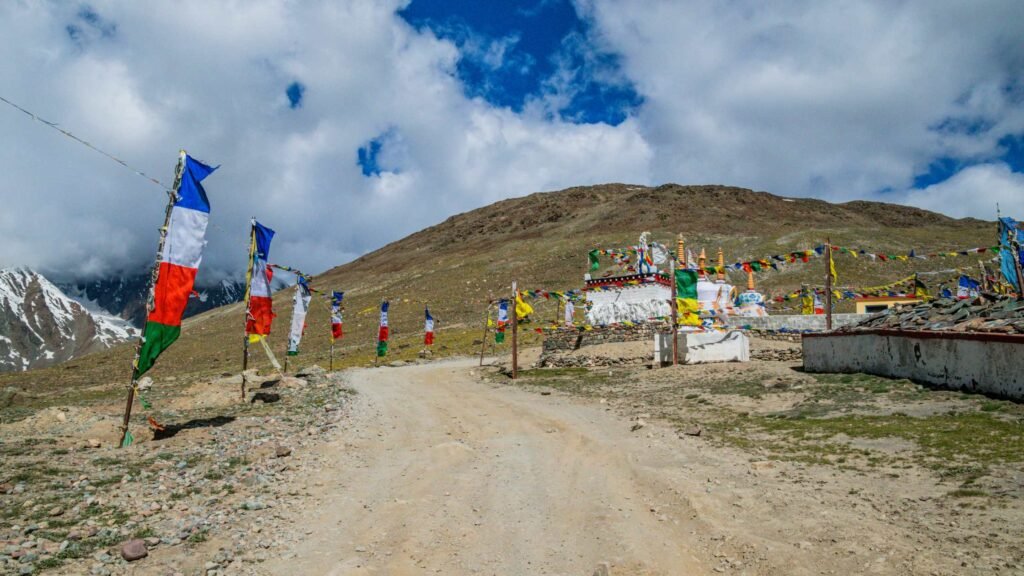
There is no train and no airport inside Spiti. You either drive up from Shimla, drive in from Manali, or fly to Chandigarh and start the road journey from there. In monsoon, how you travel matters as much as when.
By private cab. The most common choice and the one we recommend for the rains. A high-clearance SUV with a driver who knows the road can read a swollen nala or a fresh slide and decide whether to wait or turn back. That judgement is worth the cost.
By HRTC bus. The state buses run from Shimla and Reckong Peo towards Kaza and are very cheap. They are slow and basic, and in heavy rain they can get held up like everything else, but for budget solo travellers they work.
By bike. Popular and beautiful, but a serious call in monsoon. Wet gravel, water crossings and long cold days demand real experience. If this is your first Himalayan ride, do not start in the rains.
By air and rail. The nearest railheads are Chandigarh and Kalka, and the nearest airports are Chandigarh and Shimla. Most travellers fly or train to Chandigarh, then drive up through Shimla and Kinnaur. We coordinate that pickup as part of our trips.
Fill fuel at every chance. There is a pump in Kaza but stock can run out, and there is nothing reliable between Reckong Peo and Kaza. Never let your tank drop below half on a driving day.
How Much Does a Monsoon Spiti Trip Cost?

Monsoon is one of the cheaper windows to do Spiti, since you are off the peak rush. The exact number depends on whether you self-drive, share a vehicle, or book a full package.
Self-drive or shared trip. If you split vehicle costs in a group and use the Shimla route over seven to eight days, expect roughly 10,000 to 20,000 per person for stays, food and local transport. Fuel and vehicle costs are extra if self-driving.
Organised package. A full trip with a driver, handpicked stays and meals usually runs around 24,000 to 30,000 per person for a seven-night circuit, depending on group size and stay standard. Monsoon rates often sit at the lower end because demand is softer.
These are ballpark figures and move with season, fuel and group size. Our Spiti Valley tour packages page breaks down what is included at each price point so you are not guessing.
What to Do If the Road Is Blocked
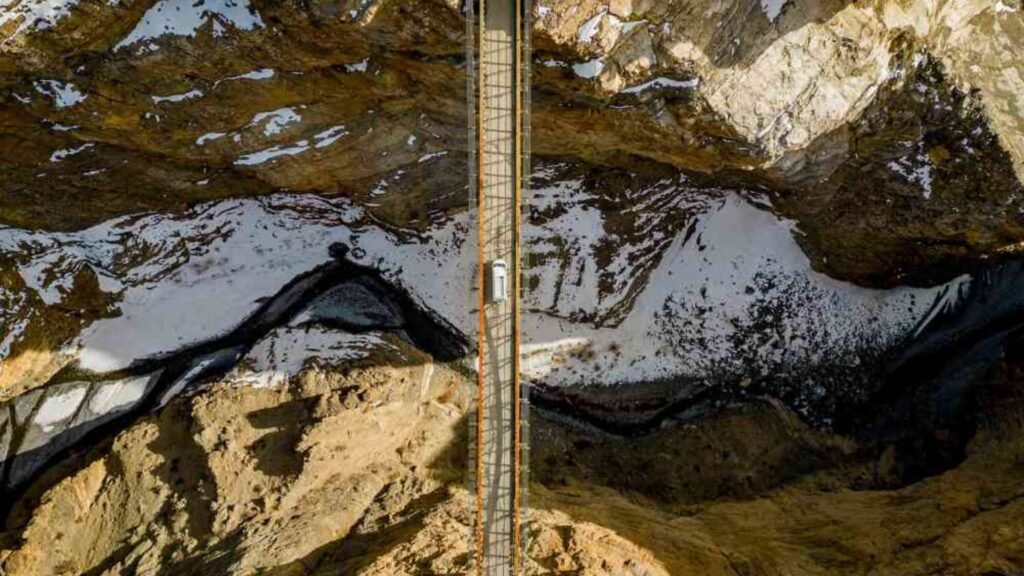
It will probably not happen, but plan as if it might. A landslide or a swollen crossing can hold a road for a few hours to a day in monsoon. How you handle it decides whether the trip is stressful or fine.
First, do not try to force a blocked or half-cleared road in the dark or in heavy rain. Waiting a few hours for the BRO clearing crews is almost always the right call. People get hurt trying to beat a slide.
Second, this is what the buffer day is for. If you lose a day to a blockage, you still make your exit on schedule. If you skipped the buffer, you are now missing a flight or a return.
Third, if the Manali side shuts, you exit the way you came in, through Shimla and Kinnaur. We have turned plenty of trips around this way when Kunzum closed, and travellers barely noticed because the plan already allowed for it. If you want a circuit built with these alternates baked in, our Himachal trips and trails team plans for the road, not the brochure.
Should You Visit Spiti Valley in Monsoon?
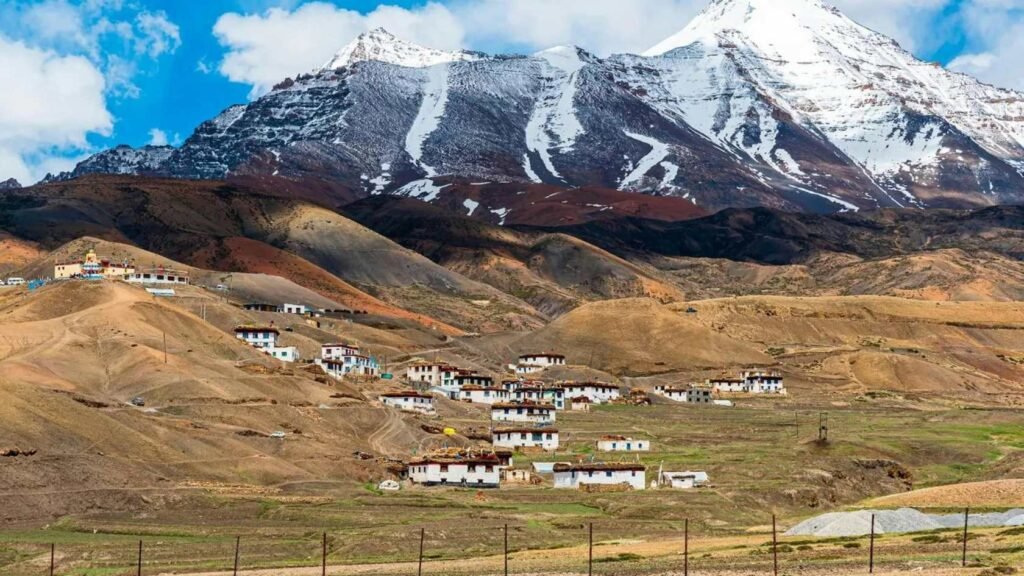
Families. Yes, with older kids and a slower plan. Skip it for very young children or elderly travellers with health concerns, since medical help is far and the drives are long.
Couples. A good call. Fewer crowds, green valleys and unreal night skies make monsoon quietly romantic, as long as you carry warm layers for the cold nights.
Photographers. Strong yes. Green meadows against brown ridges, dramatic monsoon light on the approach, and clear star fields after rain give you frames you will not get in peak summer.
Bikers. Only if you have real mountain riding experience. The wet sections and water crossings punish beginners. Experienced riders get cooler temperatures and emptier roads.
First-time visitors. Yes, but enter from Shimla, keep a buffer day, and stay flexible on Chandratal. If you want zero uncertainty, wait for September instead.
Our honest take after years on these roads. Monsoon Spiti rewards the flexible traveller and frustrates the rigid one. Plan for delays, enter the right way, and the valley gives you a quieter, greener trip than the crowds get in May.
👉 Want this trip? Let’s plan it right.
Frequently Asked Questions
Also Read: Leh Ladakh in Monsoon 2026: Weather, Road Conditions, Safety & Travel Guide
Ready for Your Himachal Adventure?
Get FREE customized itinerary · Best Price Guaranteed · Local Himachal Experts · 3,973+ Happy Travelers