
Spiti Valley Travel Guide 2026 — Everything You Need to Know
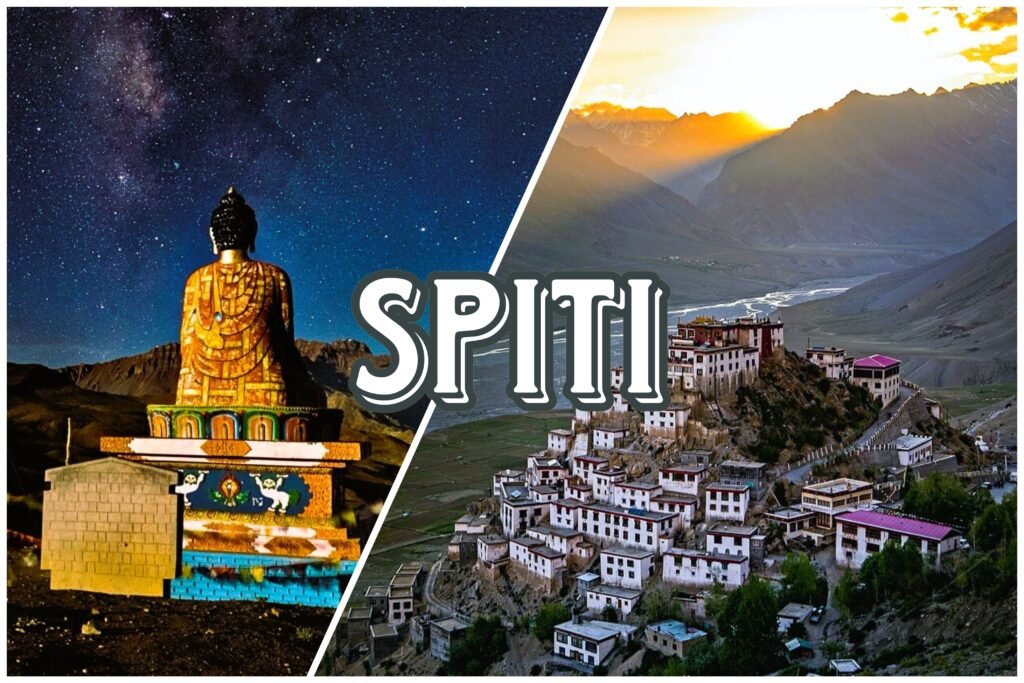
Rudyard Kipling called Spiti ‘a world within a world’, and anyone who’s been there will understand why he reached for that phrase. The landscape doesn’t ease you in — from the moment the green hills of Kinnaur give way to the brown canyon walls of the Spiti Valley, you are in something completely different. The air is thin, the silence is total, and the light has a quality you won’t find anywhere at lower elevations.
Spiti Valley is a cold desert plateau in northeastern Himachal Pradesh, bordering Tibet. It sits at an average elevation of over 3,500 metres and contains some of the oldest continuously inhabited villages and monasteries in the world. At HimTrails, we’ve run Spiti expeditions — by car, by bike, and on foot — across every season the valley allows. This guide is the distillation of those trips.
What Is Spiti Valley Really Like?
Spiti is not a comfortable destination in the conventional sense. Roads are rough. Altitude requires genuine acclimatisation. Mobile signal disappears for long stretches. Power can be unreliable at village homestays. Facilities are basic. And none of that matters once you’re standing at Kibber at 4,200 metres with nothing but mountain ranges in every direction.
The valley runs roughly 150 km along the Spiti River, with the administrative centre at Kaza. Several side valleys branch off — the Pin Valley to the south, the Lingti Valley to the east — each with its own character. Villages like Langza, Hikkim, Komic, and Demul are perched at altitudes that would qualify as significant summits in many parts of the world, yet have been inhabited for centuries.
Spiti rewards patience. The trails that connect villages across ridgelines, the monastery visits that happen before dawn when the monks are at prayer, the evenings when the sky above Chandratal Lake goes from orange to deep violet — these are the experiences that make people plan their second Spiti trip before they’ve finished their first.
Top Places to Visit in Spiti Valley
Spiti is a raw Himalayan landscape of dramatic valleys, ancient monasteries, high-altitude villages, and crystal-clear rivers. From exploring centuries-old Buddhist culture to witnessing some of the world’s highest motorable villages, the valley offers unforgettable experiences for travellers seeking adventure, spirituality, and untouched mountain beauty.
Key Monastery (Ki Gompa) — 4,166 m
Key Monastery is the image most people carry in their head when they think of Spiti. Perched on a triangular hill above the Spiti River at 4,166 metres, it’s the largest monastery in the valley and houses over 300 monks. Founded in the 11th century, damaged by Dogra invasions and earthquake, rebuilt and restored — Key has the layered, lived-in quality of a place that has been continuously cared for.
The interior contains rare thangkas, ancient weapons, scriptures in multiple scripts, and prayer halls where the chanting fills the cold thin air in a way that stays with you. The annual Key Monastery Festival (June–July) features masked dances and is one of the most authentic cultural events in all of Himachal. The walk up from the main road to the monastery gates is itself a worthwhile experience — the view of the Spiti Valley below gets better with every switchback.
Tabo Monastery — 996 AD
Tabo, 47 km from Kaza, is older than Key and arguably more significant. Founded in 996 AD, it’s one of the oldest continuously functioning Buddhist monasteries in the world and has been designated a UNESCO World Heritage Site. The murals inside the main assembly hall — created by craftsmen brought from Kashmir and Tibet — are among the finest surviving examples of early Himalayan Buddhist art. The Dalai Lama has expressed his wish to spend his final years here. That alone tells you what Tabo means.
The meditation caves carved into the hill above the monastery have been used by practitioners for centuries. Visiting Tabo after Key gives you a sense of how Spiti’s Buddhist culture has evolved across a thousand years — the difference in art style, scale, and atmosphere is profound.
Chandratal Lake — 4,250 m
Chandratal, the Moon Lake, is a crescent-shaped glacial lake at 4,250 metres on the road between Manali and Kaza, near the Kunzum Pass junction. The approach road from Batal is rough and requires a 4×4 from the last point — the lake itself is a 5 km walk from the trailhead.
The colour of the water changes through the day — from deep blue at midday to teal at sunset to mirror-black at night. Camping here (designated sites only, strict LNT rules apply) is one of the signature Himalayan experiences. The HimTrails Spiti circuit always includes a Chandratal overnight, and it consistently draws the strongest reactions from our travellers. The star field above 4,250 metres with no light pollution is genuinely extraordinary.
High-Altitude Villages — Langza, Hikkim, Komic, Kibber
Spiti’s high-altitude villages are among the most fascinating inhabited places on Earth. Langza at 4,460 m is known for its giant Buddha statue overlooking the valley and for the marine fossils found in its fields — evidence that this landscape was once an ocean floor. Hikkim at 4,440 m has the world’s highest post office, where you can send a postcard with a genuinely unique postmark. Komic at 4,587 m claims the title of world’s highest motorable village. Kibber, slightly lower but still above 4,200 m, is the starting point for several high-altitude treks including the Kibber–Chicham–Langza trail.
These villages are not tourist constructs — the people who live here have adapted to conditions that most humans couldn’t tolerate. Staying overnight in a village homestay in this part of Spiti is a profoundly humbling experience.
Dhankar Monastery & Lake
Dhankar, perched at 3,894 m above the confluence of the Pin and Spiti rivers, is among the most dramatically positioned monasteries in all of Asia. It’s been on the World Monuments Fund watch list of endangered heritage sites. The small lake above the monastery involves a 1.5 km trail that many visitors skip, but it offers one of the finest views in Spiti — the confluence below, the brown canyon walls on all sides, and the silence that comes with elevation.
The village of Dhankar below the monastery is one of the oldest continuously inhabited settlements in the valley.
Pin Valley & Mudh Village
Pin Valley branches south from the Spiti main valley and leads to the Pin Valley National Park — a cold-desert wildlife sanctuary and one of the best places in India to spot the snow leopard in winter. The village of Mudh at the end of the motorable road is the starting point for the famous Pin–Parvati Pass trek, one of the hardest and most rewarding high-altitude crossings in the Indian Himalayas.
Travelling the Pin Valley trails early morning, when the light catches the canyon walls and the river below is still in shadow, is one of those experiences that defies adequate description.
Best Things to Do in Spiti
Monastery Hopping
Key, Tabo, Dhankar, Kye, Kungri, and Lhalug cover different eras and architectural styles of Buddhist heritage in Spiti.
Trekking
The Spiti circuit offers multiple trail options — Chandrakhani, Pin–Parvati Pass (advanced), Kibber to Langza, and the Parang La crossing into Ladakh (very advanced). HimTrails guides several of these each season.
Stargazing
Spiti’s skies are among the darkest in India. There’s no urban light pollution for hundreds of kilometres. On clear nights above 4,000 m, the Milky Way is visible with the naked eye in full resolution. Chandratal, Kibber, and the Langza meadows are the best spots.
Village Homestays
The best way to understand Spiti is to sleep in it — in a village home, eating local food (dal, rice, thukpa), talking to the family who runs the place. HimTrails works with trusted homestay networks in Langza, Kibber, and Demul.
Fossil Hunting in Langza
The fields around Langza contain ammonite and other marine fossils from the Tethys Sea era. Guides can show you where to look — the fossils are meant to stay in situ, but the experience of finding them is something.
Best Time to Visit Spiti Valley
June to September
It is when Spiti is fully open and accessible. Both the Manali route (via Kunzum Pass) and the Shimla–Kinnaur route are operational. June brings the last of the snowmelt, and wildflowers briefly colour the valley floor. July and August are warm and stable — Spiti lies in a rain shadow and receives very little monsoon rain, unlike lower Himachal. September is possibly the best month: clear skies, moderate temperatures, and the autumn light that photographers come specifically to capture.
October
The Manali route closes after the first snowfall (usually mid to late October). The Shimla route stays open slightly longer. October visits require flexibility — you may need to exit via Shimla regardless of where you entered.
November to May
Spiti in winter is for experienced travellers with proper planning. The valley is snowbound, temperatures drop to -30°C, roads are limited, and many village facilities are reduced. However, the snow leopard sighting probability in Pin Valley peaks in February–March, drawing wildlife enthusiasts who plan well in advance.
How to Reach Spiti Valley
There are two main routes to Spiti, both by road — no airport or railway serves the valley.
Route 1: Shimla–Kinnaur–Spiti (via Wangtoo, Sangla, Kalpa, Nako, Tabo, Kaza)
Distance from Delhi: approximately 700 km to Kaza Travel time: 2–3 days with overnight stops in Sangla and Tabo Open: most of the year (except heavy winter snowfall periods)
Best for: first-time visitors, families, those who prefer better roads This route is longer but gentler — the altitude gain is gradual, allowing better acclimatisation. The Kinnaur valley section through Sangla and Chitkul is spectacular in its own right.
Route 2: Manali–Rohtang–Kunzum Pass–Kaza
Distance from Delhi: approximately 560 km to Kaza Travel time: 1–2 days with overnight in Chatru or Batal
Open: late June to mid October only Best for: adventure seekers, bike expedition riders, those combining with Leh Ladakh This route is shorter but more demanding — the altitude gain after Rohtang is steep and rapid. Kunzum Pass at 4,551 m can be tested by snowfall even in summer. The 4×4 terrain between Batal and Losar requires good vehicles.
HimTrails designs custom Spiti circuits on both routes, including the classic Shimla–in, Manali–out (or vice versa) loop that covers the maximum ground with minimum retracing.
Permits for Spiti Valley
Indian Nationals
No permit required for the main Spiti Valley areas — Kaza, Key Monastery, Tabo, Kibber, Langza, Hikkim, Pin Valley, and the Kunzum Pass road.
Foreign Nationals
An Inner Line Permit (ILP) is required for travel beyond Kaza toward the Tibet border areas. It can be obtained from the District Magistrate’s office in Shimla, Reckong Peo, or Kaza, or arranged through a registered travel agency like HimTrails.
Pin Valley National Park Entry
A separate eco-tourism permit and mandatory guide are required for trekking inside the national park boundary.
Where to Stay in Spiti Valley
Kaza (Main Hub)
Best base for most travellers. Kaza has the largest number of hotels, guesthouses, cafés, bike rentals, and tour operators in Spiti. Ideal for first-time visitors who want easy access to nearby monasteries and villages.
Langza – Hikkim – Komic (High-Altitude Villages)
Perfect for travellers seeking quiet Himalayan village life and dramatic views of the cold desert landscape. Homestays are the main option here, offering authentic Spitian hospitality and star-filled night skies.
Tabo
A peaceful village known for its ancient monastery and relaxed atmosphere. A great stop for travellers exploring the lower Spiti region or those interested in culture and history. Accommodation is simple but comfortable.
Dhankar
Best for travellers wanting stunning cliffside views and a more offbeat experience. Small guesthouses and homestays overlook the Spiti River valley, making it one of the most scenic overnight stops in the region.
HimTrails arranges vetted accommodation across all these areas as part of our Spiti Tour Packages — we work with properties we’ve personally verified.
Spiti Travel Tips
Altitude
Most of Spiti Valley sits above 3,500 m, so altitude sickness is a real possibility. Spend a night in Kaza or Tabo to acclimatise before visiting higher villages like Langza, Hikkim, or Komic. Stay hydrated, avoid alcohol on arrival, and move slowly the first day.
Road Conditions
Roads to Spiti are long and rugged. The route via Rohtang Pass and Kunzum Pass (from Manali) is open mostly June–October, while the Shimla route remains accessible most of the year but is longer. Always check weather and road updates before starting.
Clothing
Even in summer, temperatures in Spiti can drop close to 0–5°C at night. Carry warm layers including thermals, fleece, gloves, and a windproof jacket. Strong sun during the day also means sunglasses, sunscreen, and a cap are essential.
Cash
ATMs are limited in Spiti and mainly available in Kaza. Network connectivity and digital payments can be unreliable in villages like Langza or Dhankar, so carry enough cash for the entire journey.
Local Food
Try Spitian staples like Thukpa (noodle soup), Momos, and Butter Tea served in local homestays. If you’re near Pin Valley, don’t miss traditional barley dishes and homemade apricot products often served by local families.
Yes, Spiti is safe for solo travellers — it has one of the lowest crime rates of any region in India. The main considerations are altitude, road conditions, and weather. Solo travellers, especially those new to high altitude, should share itineraries with someone reliable, carry a satellite communicator or offline maps, and not rush the acclimatisation.
Minimum 7 days for the main circuit (Kaza, Key, Tabo, Chandratal, and a high-altitude village or two). Ten days allows you to add Pin Valley and a proper Chandratal overnight. Twelve to fifteen days covers the full Shimla–Kinnaur–Spiti–Manali loop without rushing.
Dramatic and genuinely challenging. Temperatures drop to -20 to -30°C. The Manali route is closed. Most guesthouses and homestays in the main villages remain open but with reduced capacity. The snow leopard sightings in Pin Valley peak in February–March, making winter a serious draw for wildlife enthusiasts. Extreme cold-weather gear is non-negotiable.
For the Shimla–Kinnaur–Spiti route, a sedan can manage most of it in good conditions. For the Manali–Kunzum–Spiti route, a 4×4 or high-clearance vehicle is strongly recommended — the road from Batal to Losar has river crossings and rough patches that challenge standard vehicles. HimTrails uses well-maintained SUVs and 4x4s on all Spiti circuits.
Spiti is accessible to most reasonably healthy adults who plan properly. The biggest adjustments are altitude and the lack of amenities. You don’t need to be a mountaineer. But you do need to respect the altitude — arrive slowly, stay hydrated, don’t rush, and be honest with yourself if you’re feeling unwell.
Request A Customized Package
Do you have specific requirements? Our Agents will create a personalized package for you in No Time
Related Packages: Himachal Tour Packages | Manali Tour Packages | Leh Ladakh Tour Packages | Spiti Tour Packages | Kasol Tour Packages | Jibhi Tour Packages | Kinnaur Tour Packages | Dharamshala Tour Packages | Bir Billing Tour Packages | Tirthan Tour Packages | Shimla Tour Packages | Narkanda Tour Packages | Chamba Tour Packages
Ready for Your Himachal Adventure?
Get FREE customized itinerary · Best Price Guaranteed · Local Himachal Experts since 5+ years · 3,973+ Happy Travelers