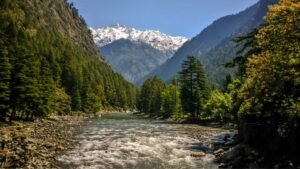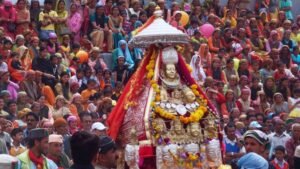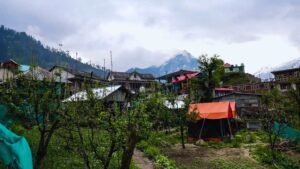
Planning the Kheerganga Trek in September 2026 can be a great choice for travellers who prefer cooler weather, greener mountain views and relatively quieter trails. The early part of September may still bring occasional rain, while the second half usually offers clearer skies and colder evenings. This guide covers the expected weather, trail safety, trekking route and a practical day trek plan to help you prepare for a comfortable and well-planned Kheerganga trip.
Quick Answer
The Kheerganga Trek in September can work, but only when the weather, road and trail have remained stable. September is a transition month in Parvati Valley, so a clear morning or a dry looking forecast does not guarantee safe conditions for the whole day.
The last clearly verifiable Forest Department rule was reported in July 2024. It stopped camping for the time being, asked visitors to reach Kheerganga before 10 am and begin their return journey by 2 pm, and directed overnight visitors towards lower villages such as Nakthan, Barshaini, Kalga and Tosh.
The Manikaran to Barshaini approach faced repeated landslide disruption during 2026, especially around Ghatigad and Ghatigarh. Before leaving, verify the road, live weather, trail condition, access timings and current permit or registration process on the same day.
Do not treat Kheerganga as definitely open throughout September 2026. Build it as a conditional day plan and keep another safe option ready. Our Kasol in September guide will help you plan the wider valley around that flexibility.
👉 Confused? Let locals plan your trip.
Is September a Good Time for the Kheerganga Trek?
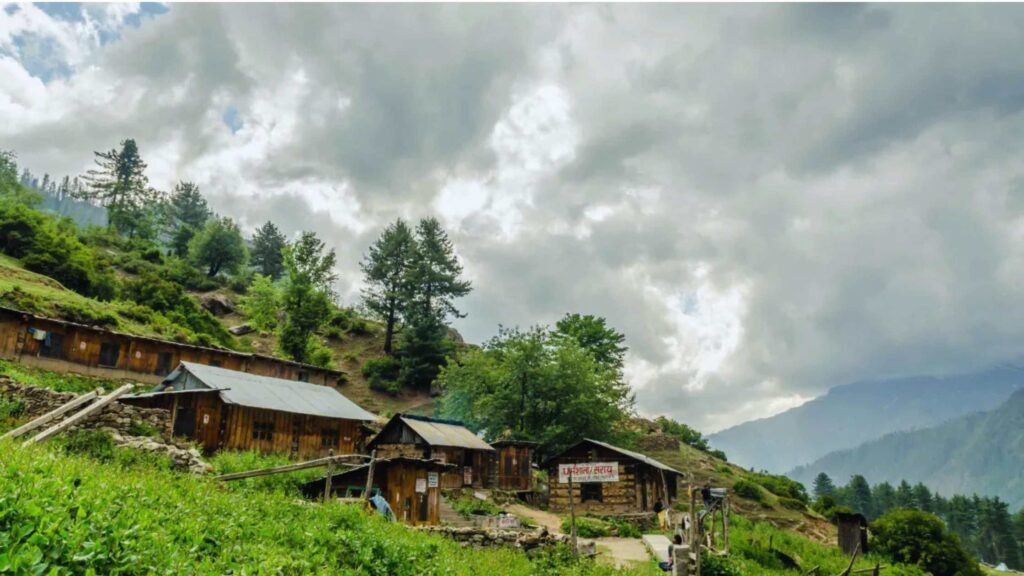
September sits between active monsoon conditions and the start of autumn. The calendar changing on 1 September does not dry the forest, repair a damaged road or settle every slope above the trail.
A better plan is to keep one buffer day, flexible transport and a stay that can be cancelled or shifted. In our experience, flexibility matters far more than chasing one supposedly perfect September date.
What Is Early September Like?
Early September has the greater chance of lingering rain, wet forest sections and road disruption. This is a planning inference from seasonal conditions and recent history, not a forecast that every early September day will be wet.
Attempt the trek only after a stable dry spell and favourable current advice from people who know the road and trail. A dry day after several wet days may still leave roots, stone steps and shaded sections slippery.
Early September also gives you less room for wishful thinking. When the road, checkpoint or weather update is unclear, postponing the trek is the sensible choice, not a missed opportunity.
What Is Mid September Like?
Mid September is usually a transition within the transition. You may get bright, clear days followed by a rain spell, or a calm valley morning while cloud builds higher up the route.
Keep two possible trek dates rather than one fixed date. That lets you use the clearer window without forcing the walk simply because a taxi, guide or room has already been booked.
Do not assume the monsoon has fully withdrawn by the middle of the month. Check the official forecast and local conditions as if rain is still possible, because it is.
Is Late September Better?
Late September generally offers better odds than early September, but it is still a probability rather than a promise. In 2025, the southwest monsoon withdrew from the whole of Himachal Pradesh only on 26 September.
That date shows why the phrase post monsoon should be used carefully. Some years settle earlier, some later, and a separate wet spell can affect the road even after several dry days.
Our team recommends late September when travellers have flexible dates and reasonable fitness, yet we still ask them to check the live forecast during the final week. For wider seasonal planning, read Himachal in September.
What Weather Should You Expect in September 2026?
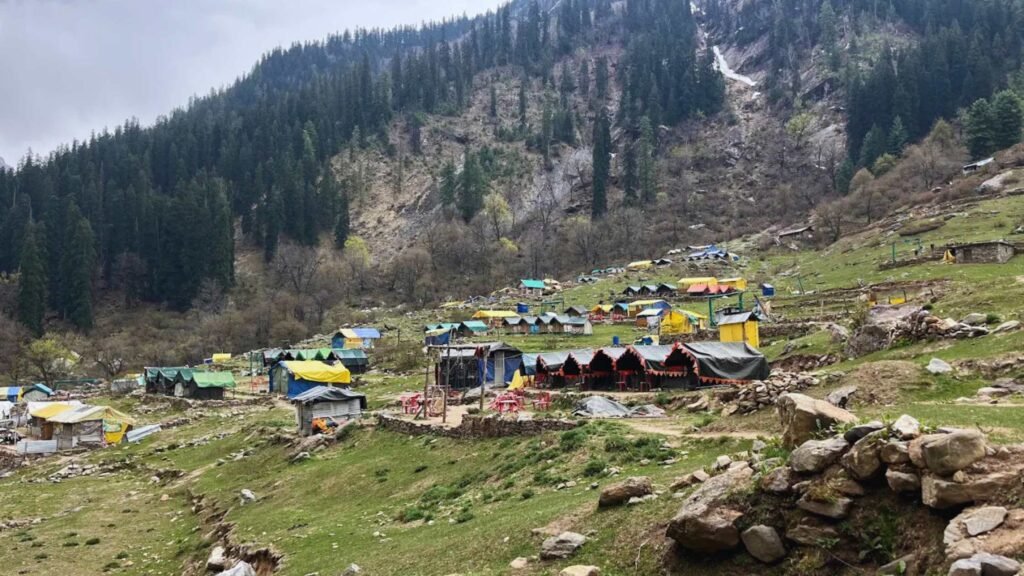
The IMD outlook issued on 1 August 2026 covers August and September together. It says near normal rainfall is likely in parts of northern Kullu, but this is a broad, probabilistic outlook for a large area, not a date specific forecast for the Kheerganga trail.
Recent history gives a useful warning against calling the month automatically dry. Himachal Pradesh received 205.7 mm of rain in September 2025 against a normal 120.6 mm. That was 71 percent above the long period average, and Kullu was in the large excess category.
The practical meaning is simple. Kheerganga trek September weather can vary sharply within the month and even within one day. You need current warnings and local trail information, not a monthly weather graphic saved weeks earlier.
We are not giving a fixed Kheerganga September temperature because prominent sources report conflicting ranges. Altitude, cloud, wind and rain can also change how cold the same number feels, especially after sunset or during a wet descent.
How Should You Check the Forecast?
Check the broad forecast five to seven days before travel to see whether a stable window may be developing. Use it for planning, not for making a final go decision.
Check official warnings again on the evening before the trek and on the morning you plan to start. Prioritise IMD updates, District Kullu information and current local reports over generic monthly weather pages.
Ask about the approach road and the trail separately. A dry forecast for Kasol does not prove that the upper valley road, Ghatigad section or forest path is in suitable condition.
Does September Mean Clear Skies?
No monthly outlook can guarantee a dry trek date. Late September offers a better chance of settled skies than early September, but better chance is not the same as certainty.
Rain somewhere else along the approach can affect your plan even when Kasol looks dry. Debris, drainage damage or a fresh slide can block the Manikaran to Barshaini road after the rain has stopped locally.
For the wider risk picture and safer mountain decision making, use our Himachal monsoon safety guide before locking your route.
What Has Changed at Kheerganga in 2026?
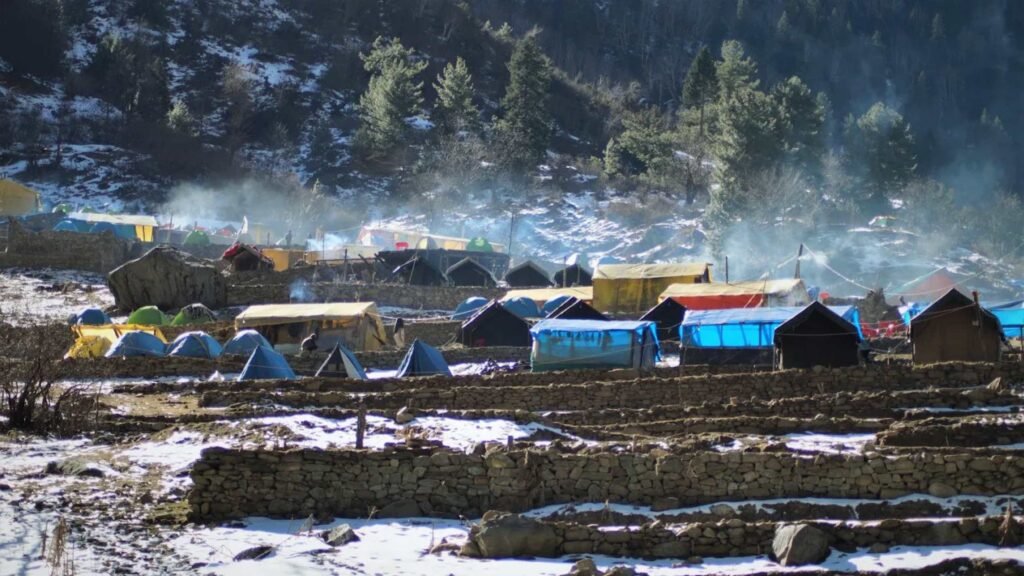
Is Overnight Camping Allowed?
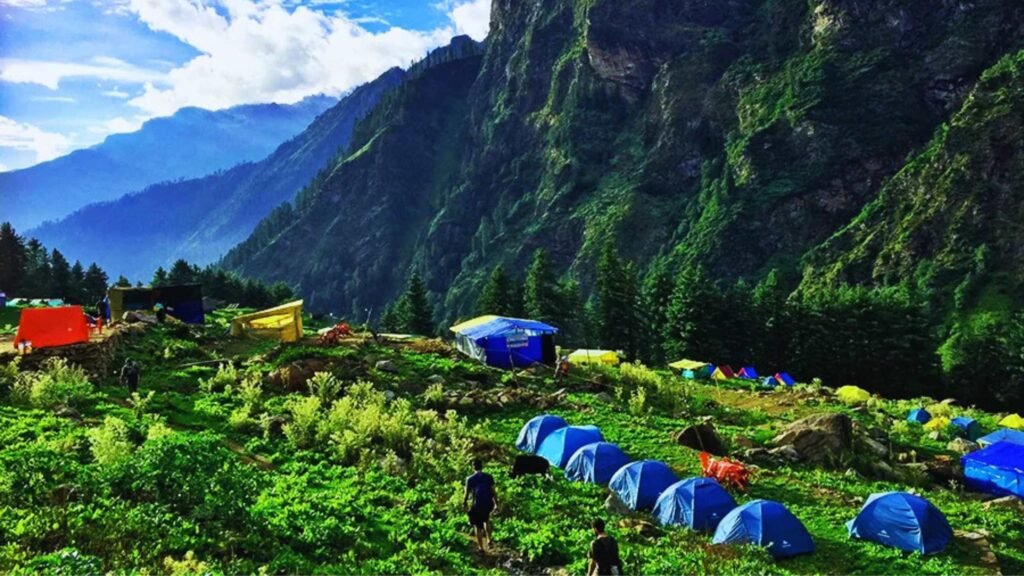
The clearest attributable rule remains the Forest Department restriction reported in July 2024. The Kheerganga camping ban was introduced for the time being after approximately 500 tents had accumulated by April 2024.
Around 400 tents were reportedly removed by operators, with the remaining tents subsequently removed. The restriction was linked to environmental pressure and visitor safety at the upper meadow.
We call this the last clearly verifiable rule because no newer written official Forest Department order setting out a complete 2026 operating procedure was located during the research used for this article.
Do not read that as a permanent ban for every future year. It means you should not camp at Kheerganga or buy an old two day camping plan unless a newer written official rule has been checked first.
What Are the Published Access Timings?
The 2024 report required visitors to reach Kheerganga before 10 am, restricted entry after 10 am and said they must begin their return journey by 2 pm. Its summary also says visitors must leave by 2 pm. No newer written official instruction clarifying the 2026 checkpoint interpretation was located.
Confirm the applicable timing with the Forest Department, the current checkpoint or a reliable local guide. Do not build your day around the more generous interpretation simply because it is easier.
Where Can Travellers Stay Overnight Instead?
The lower overnight bases named in the 2024 report were Nakthan, Barshaini, Kalga and Tosh. These places keep you below Kheerganga while giving you a more practical start than central Kasol.
No particular hotel, homestay or campsite is recommended here because no current property was verified for this article. Confirm legal operation, road access and the latest local rule before booking.
Staying near the trailhead is especially useful under a day visit format. Travelling from central Kasol on the same morning can consume precious time before the walking has even started.
Is a Permit Required?
Current permit information conflicts. One 2026 secondary guide reports a forest permit with photo identification, while another recent guide reports no formal permit.
Do not treat ₹100 as a confirmed permit fee. No 2026 Forest Department or District Kullu notice located for this review states that amount, and the current registration process is not officially published in the sources found. A February 2025 report quoted the DFO and SDM describing a planned checkpost, a daily carrying capacity limit of 320 visitors and trekker record keeping, but no official 2026 operating notice confirming implementation was located. Carry valid photo identification and cash, because a digital payment or mobile signal should never be assumed at a mountain checkpoint.
Ask what is required on your actual date rather than copying a screenshot from another month. The process may be a permit, registration, checkpoint entry or no formal charge, depending on the latest instruction.
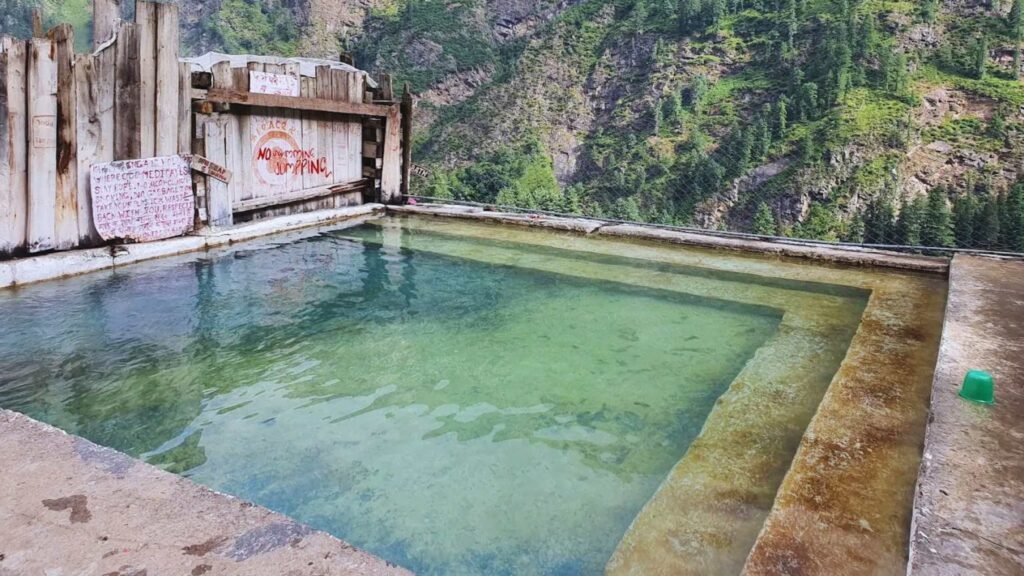
Is the Hot Spring Open?
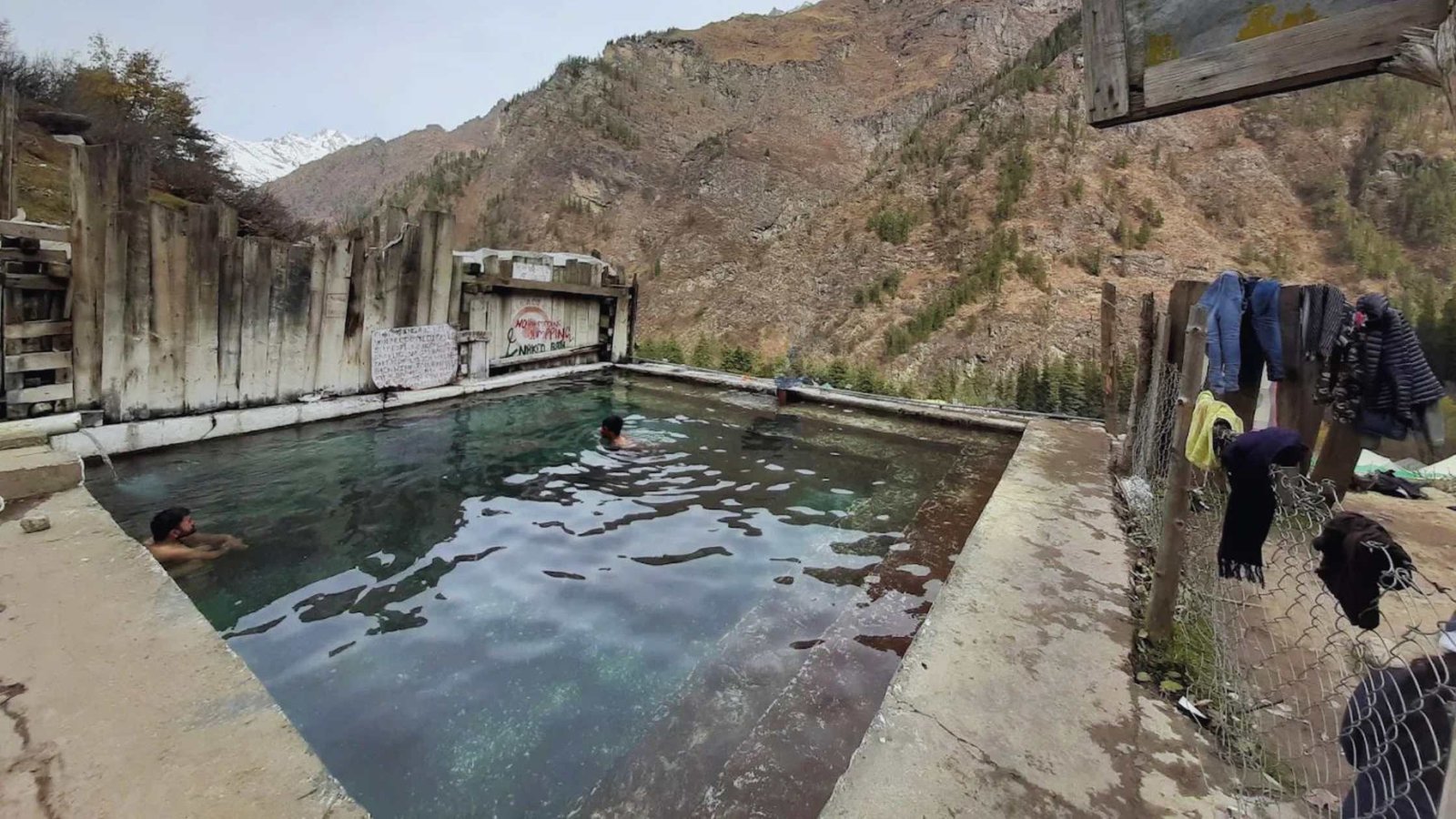
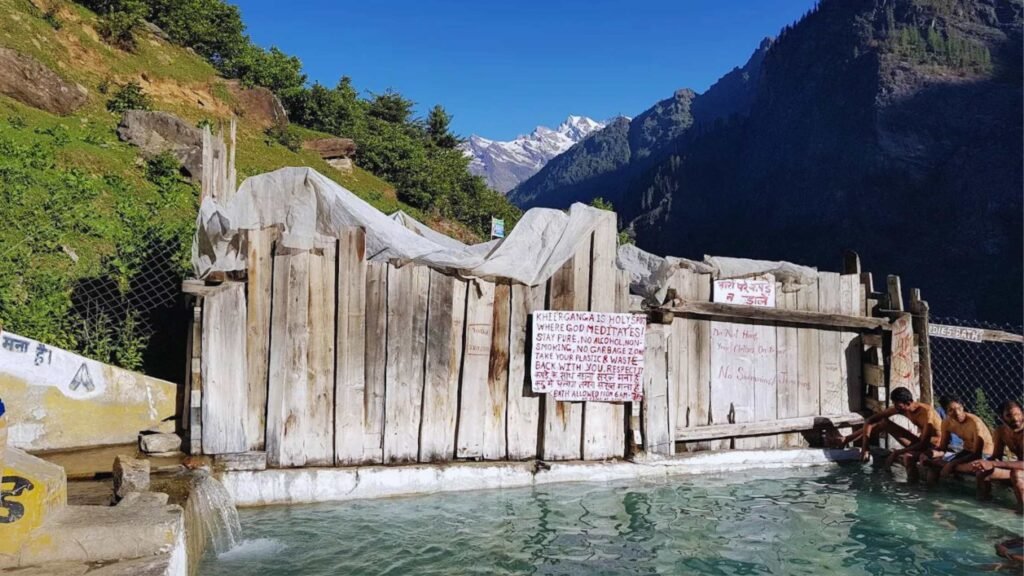
Current secondary sources disagree about the bathing arrangement and the status of the old pool. Hot spring access is not officially verified for 2026; recent secondary and visitor reports suggest hot water may still be available, but they disagree on whether bathing is through the old pool, separate bathing areas or pipe fed facilities. Nobody should promise that you will be able to bathe.
Treat the spring as a possible bonus, not the reason the trek must go ahead. Weather, road safety, access rules and the return window come before a bath at the top.
Our experience is that people make better decisions when the summit is not loaded with one must do expectation. A shortened halt or no bathing is a perfectly good outcome if it protects the descent buffer.
Is the Kheerganga Trek Safe in September?
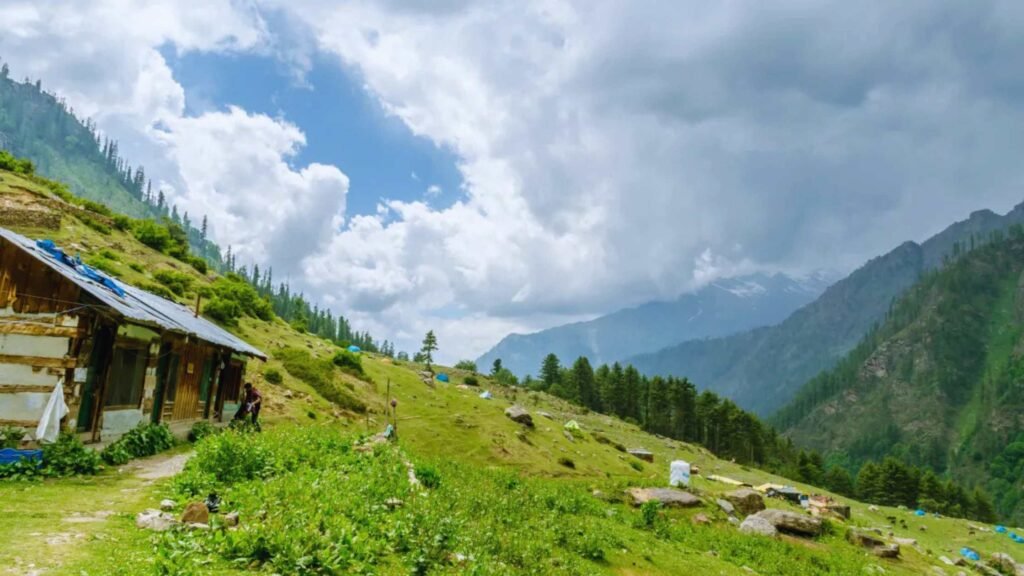
The trek is neither completely safe nor completely unsafe for the whole month. Safety depends on current rainfall, road access, trail condition, daylight, group fitness and compliance with local restrictions.
A wet descent can be harder than the ascent. Tired legs, slick stones and damp roots reduce control just when people are tempted to hurry back towards Barshaini.
What Should Be on the Morning Go or No Go Check?
First confirm that no active heavy rain warning applies to the area or approach. A trek should not begin because the sky happens to look bright outside your room while an official warning remains active.
Confirm that the Manikaran to Barshaini road is usable and that no fresh slide has blocked the Ghatigad or Ghatigarh section. A driver who has used the road that morning is more useful than an old social media post.
Confirm the trail, checkpoint, current access timings and permit or registration process. Then assess honestly whether everyone in the group can complete a long return walk within the applicable window.
The final check is emotional. If the group is already bargaining with warning signs before starting, the answer is usually no go.
When Should You Turn Back?
Turn back if persistent rain begins, visibility falls, streams rise, the trail becomes increasingly slippery or Forest Department staff, villagers or your guide advise against continuing.
Turn around before fatigue or failing daylight removes your safety margin. A decision made thirty minutes earlier can prevent a rushed and risky descent later.
Money already spent on transport, a guide or accommodation is never a reason to continue in unsafe conditions. The mountains do not refund poor judgement, so protect the people in your group first.
Which Kheerganga Route Is Better in September?
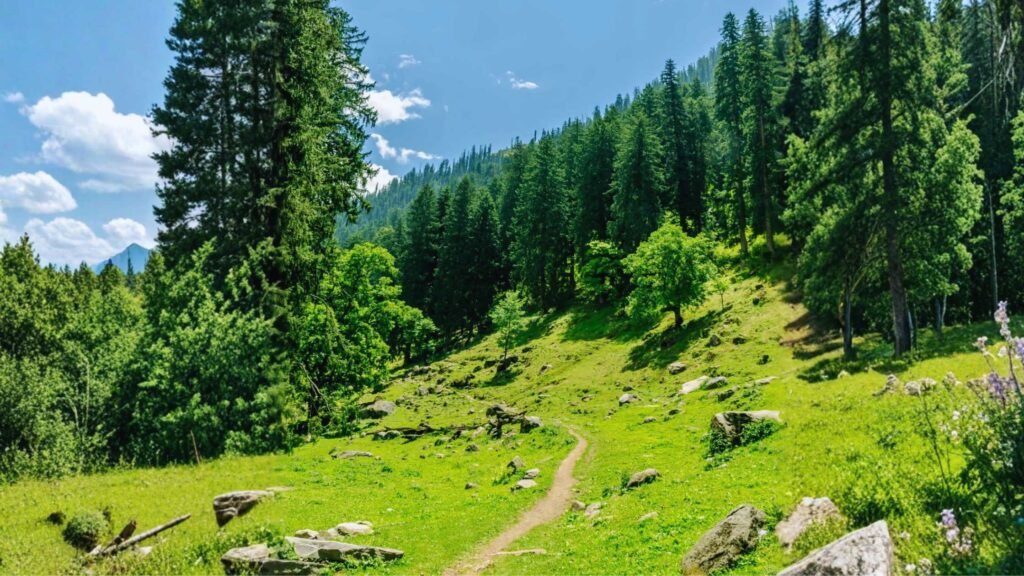
Barshaini, Nakthan and Rudranag Route
The commonly reported main route runs from Barshaini to Nakthan to Rudranag to Kheerganga. Travel guides generally describe it as the clearer option for first time visitors.
That does not make it foolproof in rain or low visibility. Junctions, stream crossings and slippery sections still need attention, and conditions can change between the climb and descent.
Do not depend on food stalls, cafés or help being available across the full route. Carry enough food and water to complete the day without relying on unverified summit facilities.
Kalga Forest Route
The Kalga route is a quieter, more forested alternative. Its shade and forest feel can be lovely in stable weather, but wet ground and route forks may be harder to read when cloud or rain reduces visibility.
First time or solo trekkers should take current local guidance when conditions are uncertain. A route that feels obvious to someone who walks it regularly may not feel obvious to a tired visitor returning in fading light.
Should You Use the Tosh Side?
Treat Tosh as an alternative approach or an additional village stop, not the default route for a first visit. Confirm the road and trail before adding it to the plan.
Do not create a circular route unless it has been checked locally for that day. A neat loop on a screen can hide a blocked link, confusing fork or unsafe section on the ground.
👉 Pick the right stay & route — we’ll help.
How Long, Far and Difficult Is the Kheerganga Trek Now?
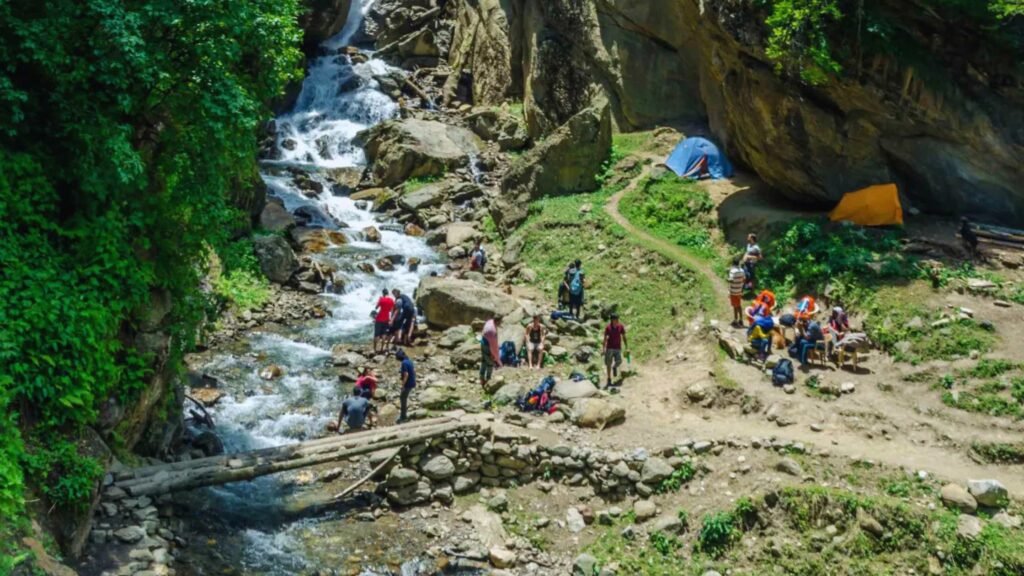
Approximately 12 km one way from Barshaini is the most commonly reported measurement. Published distances range from about 9 to 14 km, depending on the starting point and route used.
Using the common measurement, the return distance is approximately 24 km. The ascent is commonly reported as 4 to 6 hours, while the descent is commonly reported as 3 to 5 hours.
Pace, weather, breaks and trail condition can change those timings. A group that moves comfortably on a dry path may take much longer when every stone and root needs a careful foot placement.
The trail is commonly rated easy to moderate from a technical perspective. Under the current same day format, however, it becomes a substantial endurance day and should not be called easy without that qualification.
A beginner should be reasonably fit, comfortable with a long walking day and willing to turn around. Kheerganga trek difficulty is shaped as much by the return deadline and wet descent as by the gradient.
How Can You Plan a Rule Compliant One Day Itinerary?
Stay Near the Trailhead the Previous Night
Choose a currently permitted lower valley base such as Barshaini, Kalga or Tosh only after confirming road access and legal accommodation. The goal is to reduce morning travel before the trek begins.
Travelling from Kasol on trek morning may consume too much of a limited access window. A Kheerganga day trek works better when you wake close to the practical trailhead and already know how you will reach it.
What Time Should You Start?
The reported 4 to 6 hour ascent and the requirement to arrive before 10 am imply a dawn or pre dawn start for many trekkers. Working backwards gives a latest arithmetic departure of about 4 am for a six hour ascent or 6 am for a four hour ascent, before adding breaks and a safety margin; the practical start time must still be confirmed locally.
Do not copy a universal departure time from a blog. Confirm it with the current checkpoint, Forest Department or a local guide who understands the rule and your group pace.
A good start time includes margin for slow walkers, short breaks, route checks and changing weather. It is not simply the fastest online time counted backwards from 10 am.
How Long Should You Stay at the Top?
Keep the halt at Kheerganga subordinate to the official return requirement and the weather.
The summit is not the place to discover that your descent buffer has disappeared. Do not build the itinerary around a guaranteed hot spring bath. Eat, rest briefly, follow current instructions and leave enough margin to descend without rushing.
What Happens After the Descent?
Confirm return transport before you start walking. A long day feels much longer when a tired group reaches Barshaini with no clear ride or legal place to stay.
Keep a lower valley stay available in case the road is delayed. Avoid booking a tightly timed long distance bus connection for the same night.
You can arrange the wider trip around realistic travel days with our Himachal trip itinerary planner, then adjust the trek date after live checks.
How Do You Reach Barshaini and Check the Road Status?
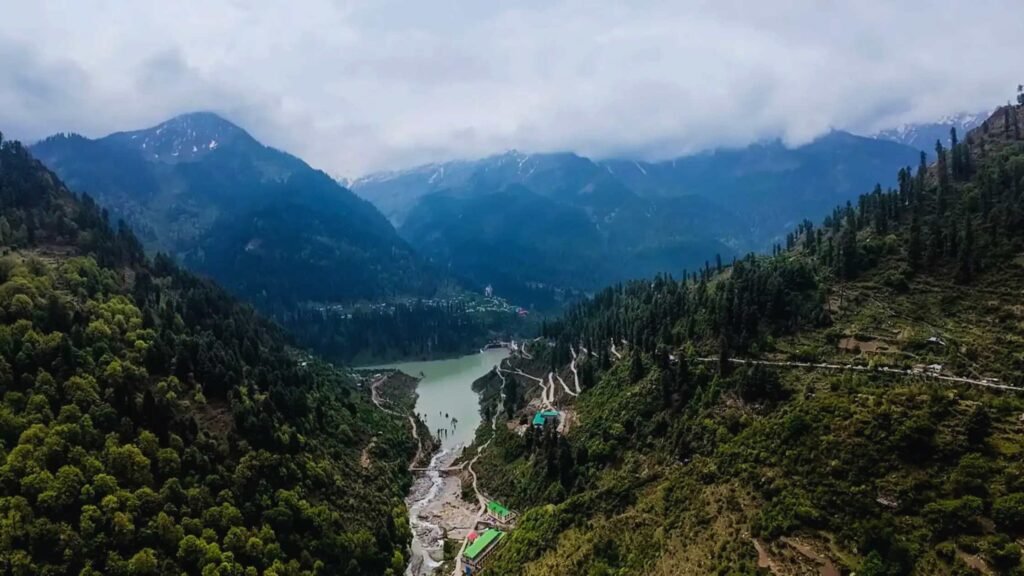
Kasol is commonly used as the main visitor base, while Barshaini is the standard practical trailhead. Kasol to Barshaini is approximately 16 km by road, although published estimates vary with the measuring points used.
Do not rely on a fixed driving time. Road condition, traffic, stopping point and measuring point can change the duration significantly.
What Happened at Ghatigad in 2026?
An April 2026 report said the fragile Ghatigad stretch of the Manikaran to Barshaini road was being forced to close two to three times each week.
On 21 July 2026, another report described the Manikaran to Barshaini road as closed at Ghatigarh after repeated landslides and road damage.
These are dated reports, not a forecast for September. They show why Kasol to Barshaini road status must be checked live and why the road cannot be described as definitely open for your dates.
What Should Travellers Check in September?
Check District Kullu notices, current local administration information and a same morning update from a reliable driver or HimTrails. Ask whether the full stretch to the point you need is usable, not merely whether traffic is moving somewhere in the valley.
District Kullu regulated heavy vehicles and Volvo buses on the Bhuntar to Manikaran road from 14 April to 31 August 2026. As of 4 August 2026, no September extension or replacement was listed on the District Kullu notices page; the published notice still showed an end date of 31 August 2026. Recheck near travel because the signed order itself describes the restriction as continuing until the end of the tourist season.
Never cross an active landslide zone on foot. A temporary gap in falling debris is not proof that the slope is stable.
What Should You Pack for Kheerganga in September?
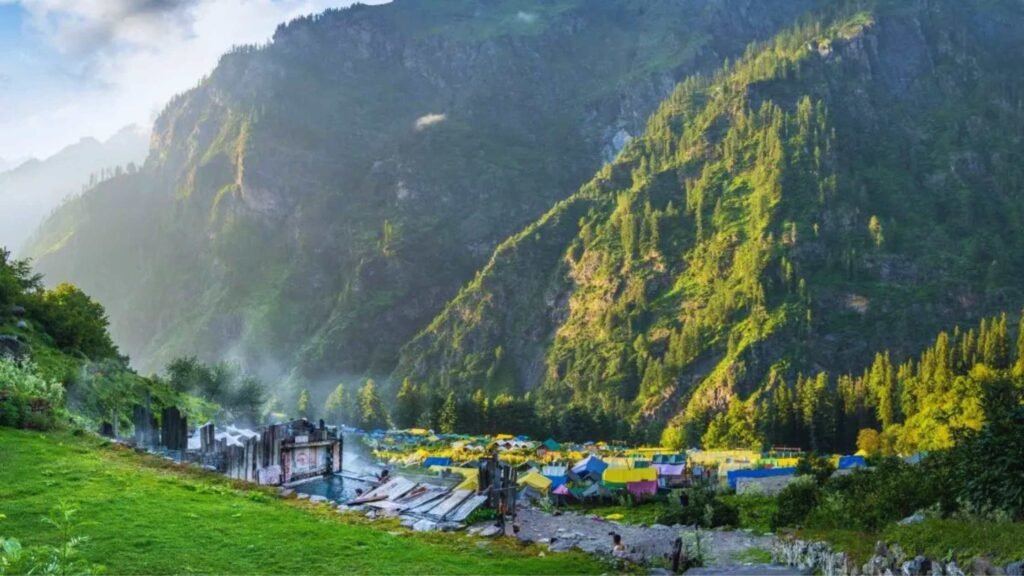
Wear trekking shoes with dependable grip and carry rain protection that can cover you and your pack. Quick dry clothing, a warm layer and spare socks help when the forest stays damp or the weather turns cool.
Carry a headlamp, waterproof bag protection, a charged phone, a power bank, valid photo identification, cash, an offline map and personal medication. Do not assume mobile signal, charging or digital payment will work when needed.
Bring sufficient food and water so you are not dependent on unverified facilities at Kheerganga or along the trail. Pack light enough to walk efficiently, but not so light that one closed stall creates a problem.
Carry a waste bag and bring every wrapper and disposable item back down. A Kheerganga packing list is incomplete without a clear plan for your own rubbish.
Who Should Attempt Kheerganga in September?
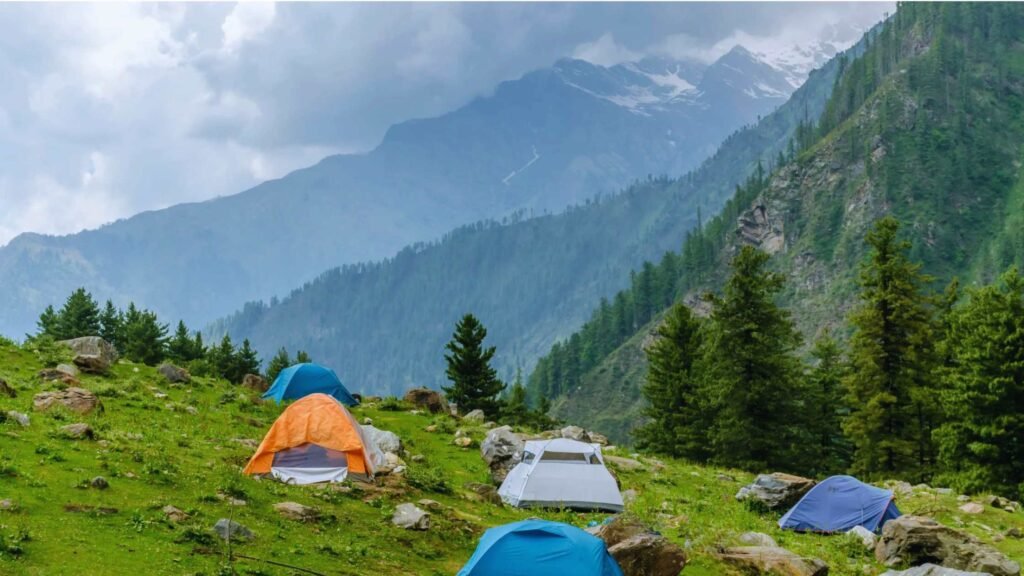
Is It Suitable for Beginners?
Walking fitness and experience with long days matter more under the current same day format. Practice walks before the trip so your first long outing is not a wet mountain return of roughly 24 km.
A complete beginner should avoid attempting the trek during wet or unstable weather. Kheerganga trek for beginners makes sense only when the person is reasonably fit, conditions are favourable and turning back is accepted from the start.
Can Solo Travellers Do It?
Solo trekking may be possible on a clear, well used route, but September weather and forest forks increase the value of local guidance. Experience, route knowledge and the live situation should decide.
Share your route and turnaround time with another person before starting. Do not assume mobile signal, immediate rescue or a steady flow of other trekkers.
Is It Suitable for Families?
There is no honest universal minimum age for this day. Judge each traveller by fitness, walking history, current weather and the ability to complete a long return distance within the applicable rule.
Travellers with medical conditions should obtain personalised medical advice before trekking. Family pressure should never turn a tired person into the weakest link on a wet descent.
What Does a Kheerganga Trek in September Cost?
No reliable fixed, rule compliant 2026 price was verified. Build the budget around transport to the trailhead, a legal lower valley stay, food and water, a guide fee and any current registration or permit charge.
Treat the permit amount as unconfirmed: no official 2026 notice located for this review verifies a ₹100 charge. Weekend demand, road disruption, group size and guide requirements can change the total, so avoid copying an old overnight camping package price.
For a current estimate based on your dates, group and road situation, contact the HimTrails team. Ask for the cost categories separately so you understand what changes if the trek is cancelled.
What Can You Do If Weather Cancels the Trek?
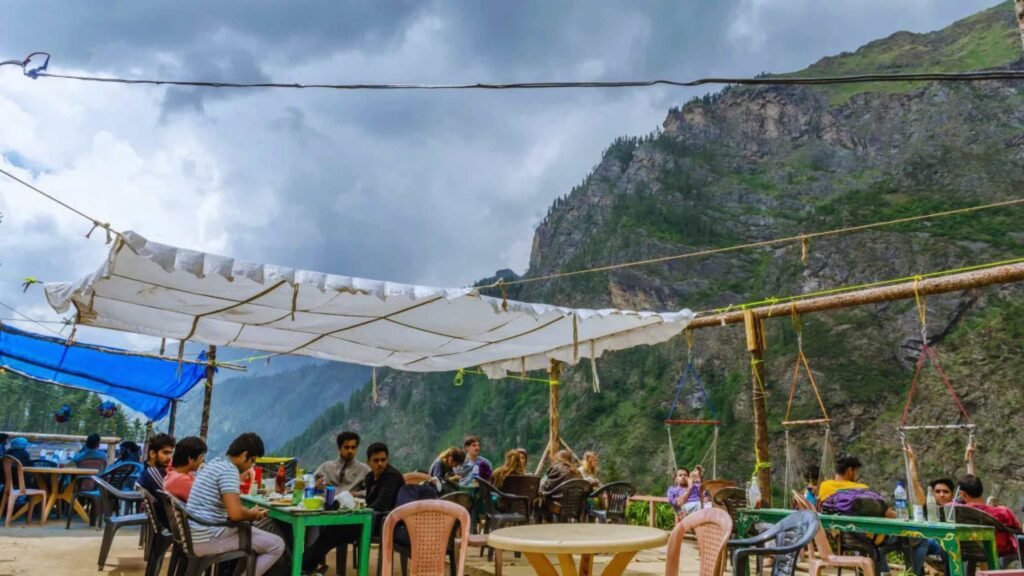
A cancellation is sensible mountain judgement, not a failed holiday. Keep one buffer day so a wet forecast does not force an immediate choice between taking a risk and going home.
Kasol, Manikaran or low commitment local plans can work when their relevant road, river and walking conditions are safe. Do not replace Kheerganga with another forest trek under the same heavy rain warning.
How Can You Trek Responsibly?
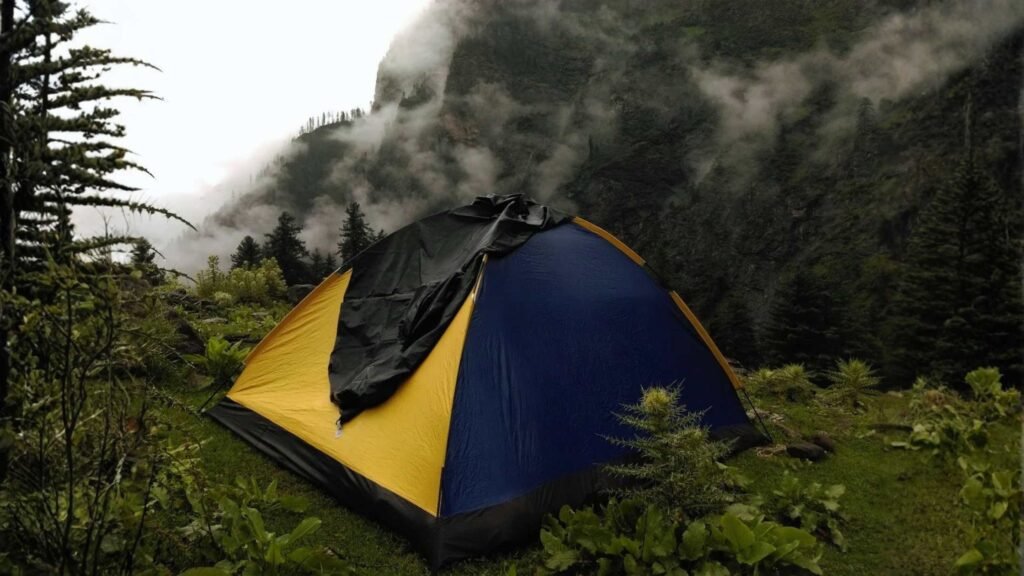
Do not camp at Kheerganga unless a newer official rule explicitly permits it. Carry all waste back, avoid disposable plastic and leave the upper meadow cleaner than you found it.
Kheerganga has religious and environmental significance. Respect bathing area rules and follow the instructions of Forest Department staff, local administration and your guide.
Responsible trekking also means accepting a closed road, a turnaround call or a shorter summit halt without argument. Access is not more important than the place or the people protecting it.
Should You Do the Kheerganga Trek in September 2026?
Yes, conditionally. The Kheerganga Trek in September 2026 can suit reasonably fit and flexible travellers after a stable dry spell, with live confirmation of the road, trail, access rules, permit process and return timing.
Late September is preferable to early September only as a better probability. It is not a promise of clear weather or a guaranteed open route.
Postpone when any key part cannot be confirmed. In our experience, the best Kheerganga stories come from good decisions, and sometimes the best decision is saving the trail for another day.
👉 Want this trip? Let’s plan it right.
Frequently Asked Questions
Also Read: Chandratal in September 2026: Weather, Road Status, Camping & Best Time Guide
Ready for Your Himachal Adventure?
Get FREE customized itinerary · Best Price Guaranteed · Local Himachal Experts · 3,973+ Happy Travelers