The Phulaich Festival Kinnaur is not a stage show built for visitors. It is a village festival where sacred alpine flowers, local deities, departed ancestors and community memory come together.
Most tourists get one thing wrong. They search for one fixed date and one main venue, while the celebration moves by village and each place follows its own calendar.
Quick Answer
The Phulaich Festival Kinnaur is also called Ukhyang and is popularly known as the Festival of Flowers. Villagers collect sacred alpine flowers, offer them to local deities and remember family members who have passed away.
A 2024 research study documented 47 plant species linked with Phulaich rituals. The festival falls across different dates in Kinnaur, so every 2026 village date needs local confirmation before you book travel.
Kalpa is one of the liveliest bases for travellers who want to understand the festival. Himachal Tourism describes its Fulaich celebrations as especially vibrant, but its official pages do not provide a 2026 venue, procession route or public-access schedule. Confirm those details locally.
For wider route planning, keep our Kinnaur travel guide open beside this article. It helps you place Kalpa, Sangla, Chitkul and the larger district in one clear trip.
👉 Confused? Let locals plan your trip.
What is Phulaich Festival?
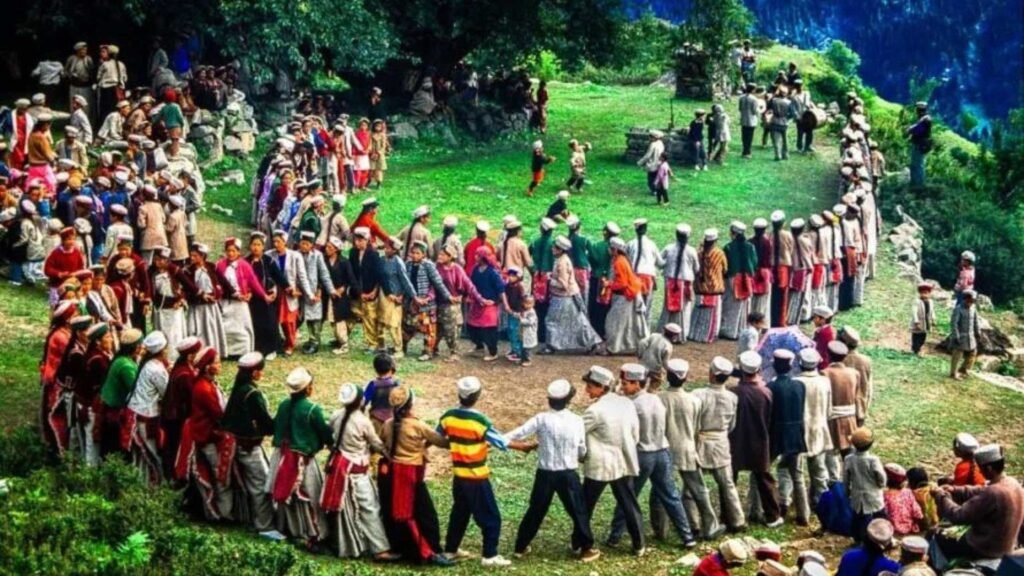
The Phulaich Festival Kinnaur is an annual community celebration in Kinnaur district of Himachal Pradesh. Locals also know it as Ukhyang.
The festival centres on flowers gathered from alpine and sub alpine areas. Villagers carry these flowers back, offer them to their local deities and share them within the community.
Phulaich also carries a quieter meaning. Families remember departed ancestors, so the mood can move between celebration, prayer and personal memory in the same village space.
Festival of Flowers Himachal: The Meaning Behind the Name
People often search for the Festival of Flowers Himachal because flowers give the event its public identity. Yet the flowers are not decoration for tourists.
They hold ritual value. The journey to collect them, the first offering, the return to the village and the final distribution all carry meaning inside local tradition.
Ukhyang Festival: The Local Name Travellers Should Know
The name Ukhyang Festival helps when you speak with homestay owners, village elders or local organisers. Different spellings may appear, including Fulaich and Phulaich.
In our experience, using both names saves confusion. Ask, “Is Phulaich or Ukhyang happening here on my dates?” and then confirm the exact village programme.
Why is it celebrated?
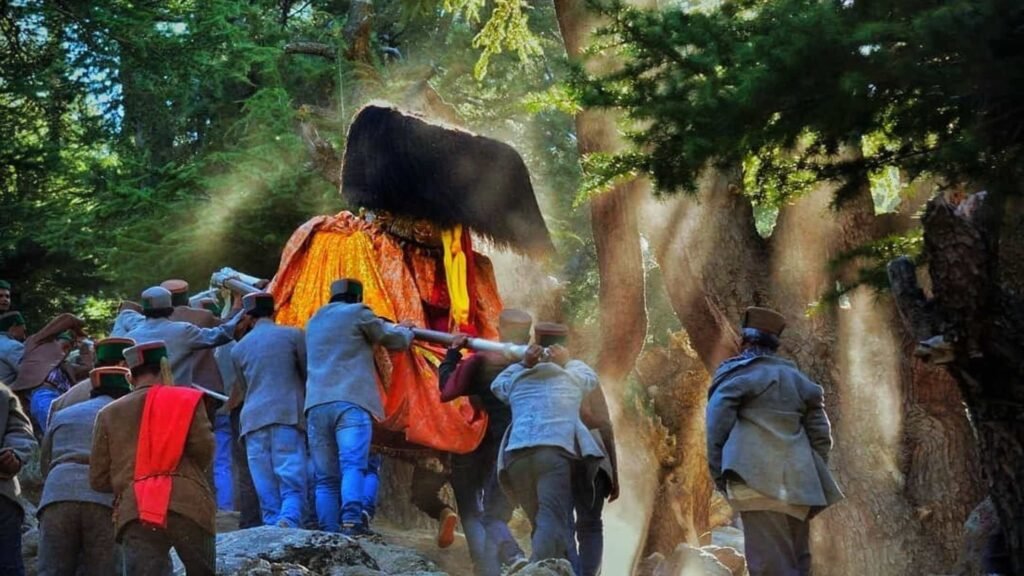
Phulaich celebrates the relationship between Kinnauri villages, sacred flowers and local deities. Villagers gather flowers from higher ground and offer them with respect.
The festival also commemorates people who have died. This ancestor remembrance gives Phulaich a depth that a quick cultural performance cannot explain.
Research also links the celebration with community solidarity and cultural identity. The ritual brings households together around one village deity and one shared calendar.
Kinnaur Culture Lives Through Flowers, Memory and Community
Kinnaur Culture here does not sit behind glass. People carry it through songs, flowers, food, dress, ritual duties and the way each household joins the celebration.
That is why visitors should not treat Phulaich as a photo stop. You are watching living custom, and some moments belong first to the village.
Our team recommends staying patient. A procession may pause, move or change timing because local ritual comes before the visitor schedule.
History
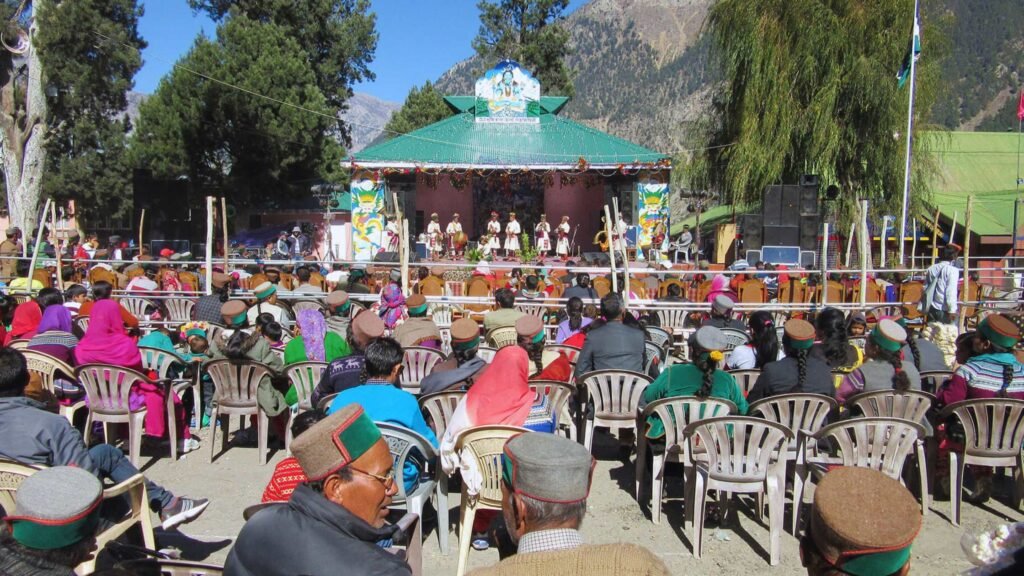
The 2024 Indian Journal of Traditional Knowledge study describes Fulaich as an annual Kinnauri tradition but does not assign it a founding year or century. Avoid any precise origin date unless a named archival or local source supports it.
What we can say safely is that Phulaich forms part of long held Kinnauri custom. A 2024 study recorded practices, plant use and village variations across the district.
The study describes the festival as one of Kinnaur’s major annual traditions. It connects worship, plant knowledge, community duties, ancestor remembrance and local songs.
How the History Survives Without One Central Organiser
Phulaich does not need one district stage to remain alive. Each village keeps its own deity, timing, selected flower gatherers and ritual sequence.
This local control explains why schedules differ. It also explains why a date copied from another village can ruin your plan.
In our experience planning Kinnaur trips, travellers do better when they choose a base first and confirm the nearby village event second. Reversing that order creates confusion.
The absence of one founding date does not weaken the history. It shows how village memory, ritual duty and plant knowledge have travelled through practice rather than one written announcement.
Elders, priests, deity caretakers, flower gatherers, women preparing garlands and families making offerings all carry different parts of that memory. A visitor sees only the public layer.
For the published article, avoid adding a dramatic legend unless a named local source confirms it. One wrong origin story can damage trust with the same community the article hopes to respect.
Festival dates
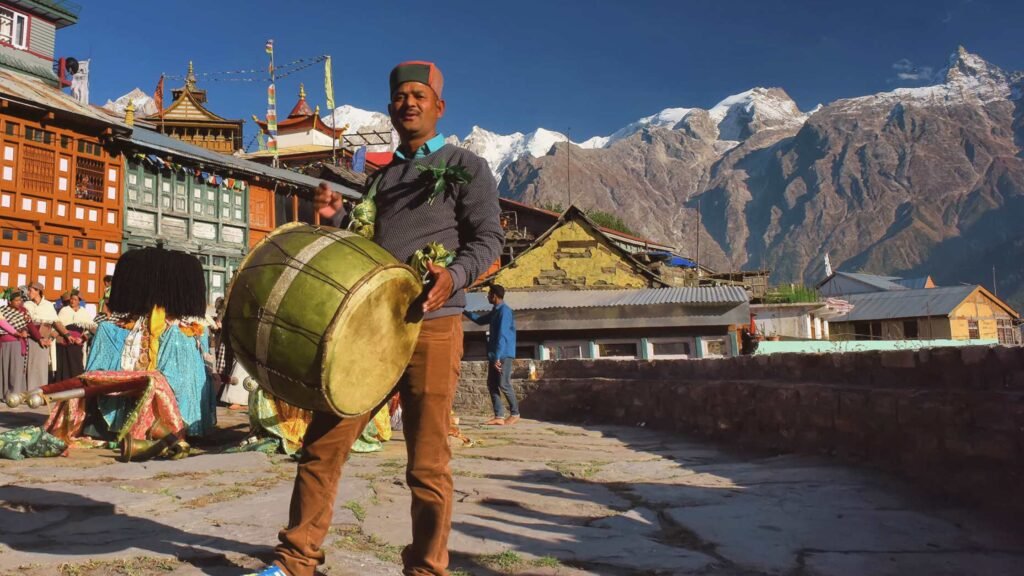
Research records a broad annual celebration window from 10 August to 26 October. Lower, middle and upper parts of Kinnaur can celebrate in different months.
Middle Kinnaur commonly brings Phulaich into September, while some lower areas celebrate earlier and some upper areas later. Village calendars still decide the final day.
No single official 2026 date covers Kalpa and every other village. The sources checked provide the traditional August-to-October window and general mid-September guidance for Kalpa, so confirm the chosen village before paying for rooms, cabs or a fixed itinerary.
Why One 2026 Date Cannot Cover All of Kinnaur
Festival dates vary from village to village. The duration, public gathering and ritual route may also change by location.
Research describes some celebrations lasting several days. It records Ribba’s traditional seven-day sequence from 16 September to 22 September. Treat those as documented customary dates, not an official 2026 public programme, and reconfirm locally.
Do not build your trip around an old poster. Ask your stay to confirm with the local temple committee or panchayat contact close to travel.
Ask four clear questions during confirmation. Which village hosts the event, which day has the public flower return, what time should visitors arrive, and where should outside vehicles stop?
A reply that only says “September” is not enough. Kinnaur covers many valleys, and the same date can mean a ritual day in one place and an ordinary day in another.
Keep screenshots of the latest confirmation, but still call again before leaving Shimla. Mountain events can change through local decisions that never reach a travel website.
For month specific road and weather planning, read our Kinnaur in September guide. Use it for travel preparation, not as proof of a festival date.
Complete celebration process
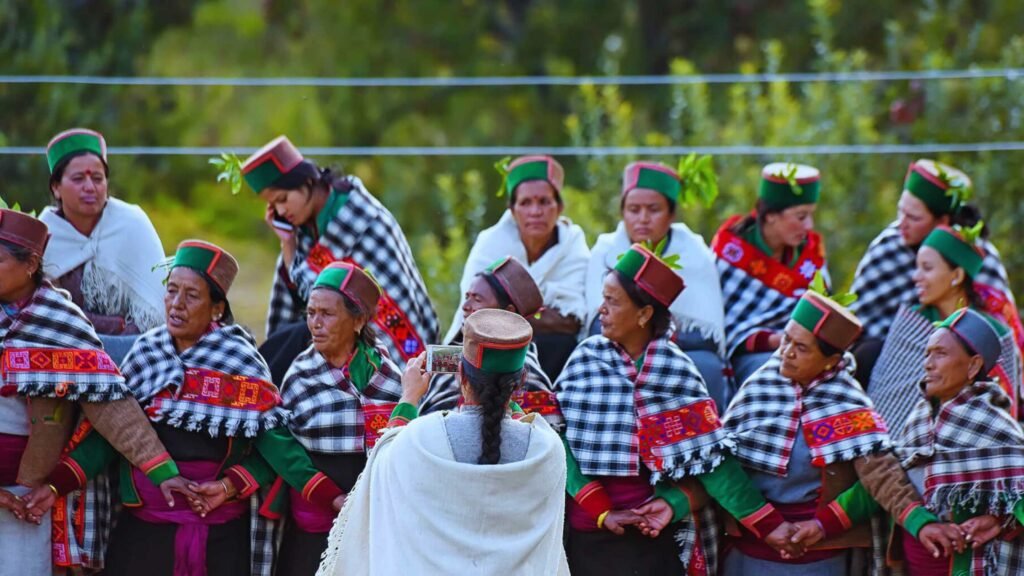
The exact sequence changes across villages, but research gives a clear picture of the common flow. Think of it as a village process, not one uniform programme.
The Village Selects Flower Gatherers
Villagers hold a planning meeting and choose people who will go to alpine and sub alpine areas. The study records groups ranging from two to fourteen people.
Selection carries responsibility. The gatherers represent the village, follow local ritual instructions and return with flowers meant for the deity and community.
The Journey to the High Meadows
The selected group walks toward high pastures to collect flowers. Some village traditions involve a same day return, while others include a night or several days away.
Before collecting, participants perform village specific rituals. The first flower goes to the mountain deity as an act of respect.
The research describes flower baskets made from local plant material. It also records a rule in some places that gatherers return without looking back.
The Return to the Village
Near the village, gatherers arrange flowers on a birch branch and women help prepare garlands. The exact arrangement and welcoming point vary by village.
People then move toward the village temple. Songs, dancing and the presence of the local deity turn the return into the public heart of Phulaich.
The First Offering Goes to the Local Deity
Villagers offer the collected flowers to the local deity before distributing them. This order matters and visitors should never interrupt it for a photograph.
After the offering, people may place flowers on caps and the upper pockets of woollen coats. Households may also receive flowers to keep until the next year.
Ancestors Are Remembered
Phulaich includes rites for departed family members. Research from Ribba records food and drink offerings connected with remembrance of the dead.
This part needs sensitivity. A smiling camera pose can feel wrong when a family treats the moment as remembrance rather than entertainment.
Songs, Dance and the Closing Rituals
Village songs praise flowers, deities and mountain powers. Research names a special Phulaich song called Ukhayang geetang.
It also records dances called Yam Kayang and Jagro in the Ribba sequence. The same Ribba account names Sangpuling Chasham and Uo Changan Chasham; the study does not identify dance names for the other villages surveyed.
What we tell our travellers is simple. Watch the order first, follow the villagers’ lead and join only when someone invites you.
Planning the full Kinnaur circuit around the festival can get messy. Our Kinnaur tour packages page shows the live routes HimTrails currently builds around Kalpa, Sangla and nearby valleys.
Sacred flowers
A 2024 study in the Indian Journal of Traditional Knowledge documented 47 plant species associated with Phulaich rituals.
The recorded group includes flowering herbs, trees and shrubs. Researchers counted 41 angiosperms and 6 gymnosperms across 38 genera and 20 families.
Which Flowers Appear in Phulaich Rituals?
The study lists species such as Saussurea obvallata, Saussurea gossypiphora, Bistorta affinis, Aconitum violaceum and several Delphinium species.
It reports that Saussurea obvallata plays a role across the villages studied. Local names, collection rules and the final bouquet can still vary.
Why Visitors Should Never Pick These Flowers
The ritual collection follows community rules. Research notes that people avoid casual picking and link collection with timing, taboo and respect for the deity.
Do not pluck a flower because it looks rare or because someone online called it sacred. Take a photograph from the path and leave the plant where it grows.
This is one local insider tip generic guides miss. The flowers matter because the community follows a controlled ritual, not because visitors carry them home.
Villages where it is celebrated
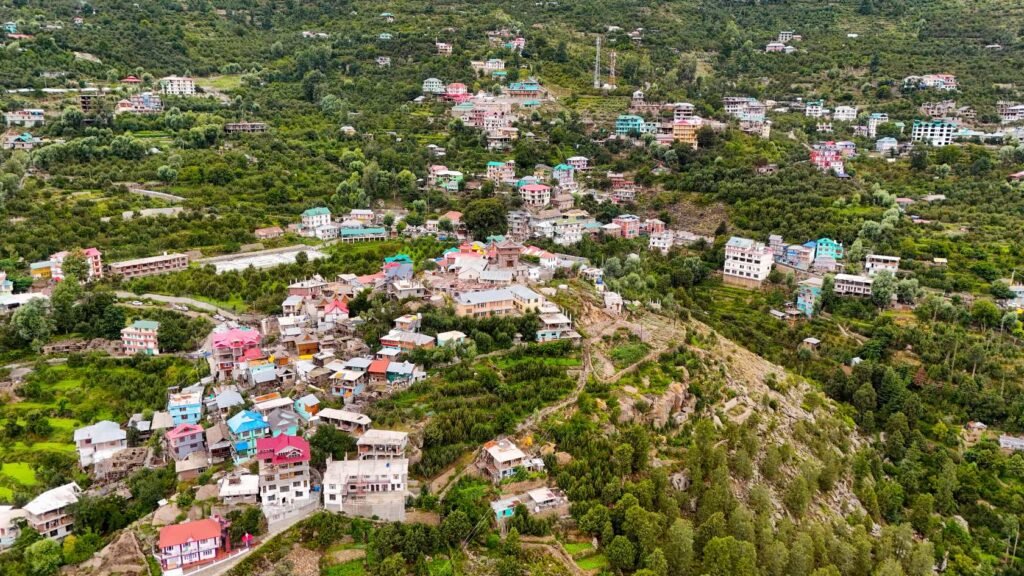
Phulaich appears across valleys and villages in Kinnaur district. Research mentions the Sutlej, Bhaba, Baspa, Tidong, Jangram, Gonyul, Gymthing and Hangrang areas.
It also documents practices in Rupi, Ropa, Thangi, Purbani, Moorang, Nesang and Ribba. Each place keeps its own schedule and form.
Kalpa as a Base for Visitors
Kalpa is one of the strongest places for travellers to base themselves during the season. It has better trip planning support than a very small village.
Himachal Tourism describes Kalpa as a vibrant Fulaich centre, but its official pages do not publish a 2026 ritual venue, entry arrangement, procession route or start time. Ask where the community wants visitors to stand.
Our team recommends keeping one free day in Kalpa. A flexible day costs less than shifting every hotel when the local date changes.
Ribba and the Longer Festival Sequence
The 2024 study gives the most detailed account for Ribba. It describes a multi day hilltop and village sequence with songs, flowers, food and deity rituals.
Treat those details as Ribba specific, not as a script for all of Kinnaur. The study records the customary 16-22 September sequence, but it is not a 2026 public-access notice; confirm visitor timing locally.
Thangi, Moorang and Nesang
Research describes villagers and local deities moving toward high places called kanda in Thangi, Moorang and Nesang.
These are high-altitude, multi-day village movements rather than published tourist programmes. The district lists rest houses at Moorang and Ribba, but it does not publish festival-day road access, accommodation at the kanda or visitor permissions; confirm all three locally before travelling.
A ready made Kalpa, Sangla and Chitkul family circuit can give you a practical route base, then the festival day can stay flexible.
Traditional dances
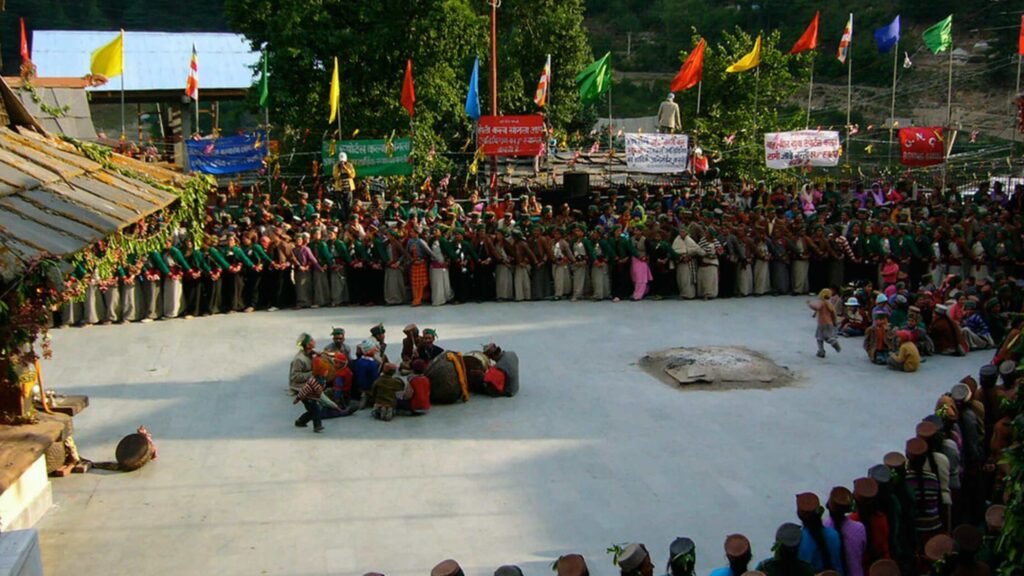
Dance enters Phulaich after the flower return and deity rituals. The movement belongs to the community sequence, so tourists should not push into the centre.
Research records village singing and dancing, the Yam Kayang dance, and a Jagro dance linked with a specific Ribba ritual cycle.
Kinnauri Dance Is Not One Tourist Performance
The keyword Kinnauri Dance can make people expect one fixed show. Phulaich does not work like that.
Songs, steps, participants and ritual meaning can change by village. The named forms in the 2024 study – Sangpuling Chasham, Uo Changan Chasham, Yam Kayang and Jagro – are all documented in Ribba; do not apply them district-wide.
In our experience, the best view comes from standing back. You see the formation, the deity movement and the community response without blocking anyone.
Traditional dress
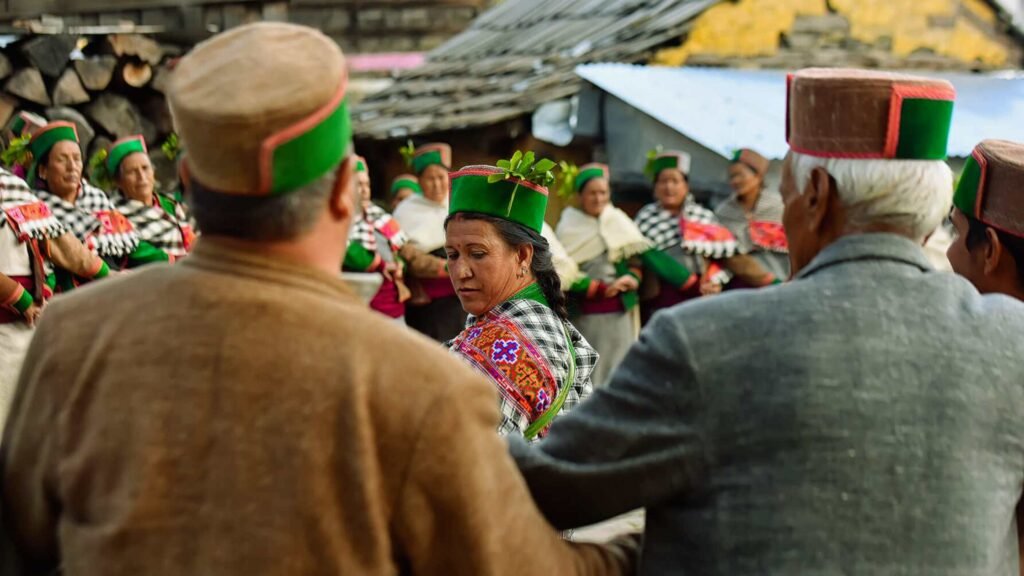
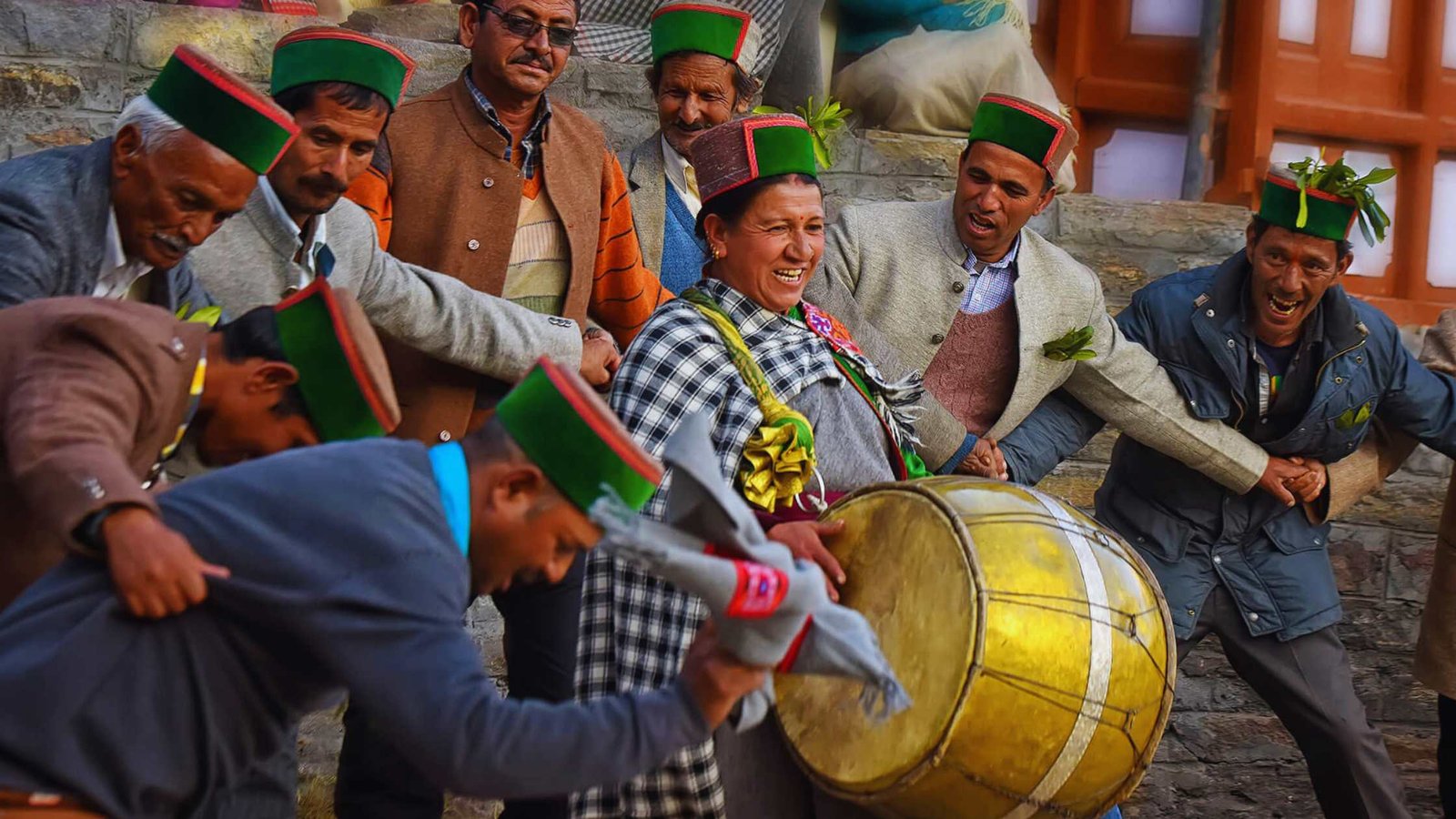
Research describes villagers wearing festival flowers on their caps and the upper pockets of woollen coats. Women also help prepare flower garlands.
District Kinnaur’s official culture page describes a round woollen thepang cap, chamn kurti and chhuba for men, and the dohru and choli for women, with several cap-band colours and changing modern use. Festival attire still varies by place, family and occasion, so avoid one costume description for all Kinnaur.
How to Dress as a Visitor
Wear clean, modest clothes that let you sit or stand comfortably near a temple space. Carry layers because the programme may continue outdoors.
Do not copy ceremonial clothing only for photographs unless a local host invites you. Renting a costume does not give access to a sacred ritual.
Food
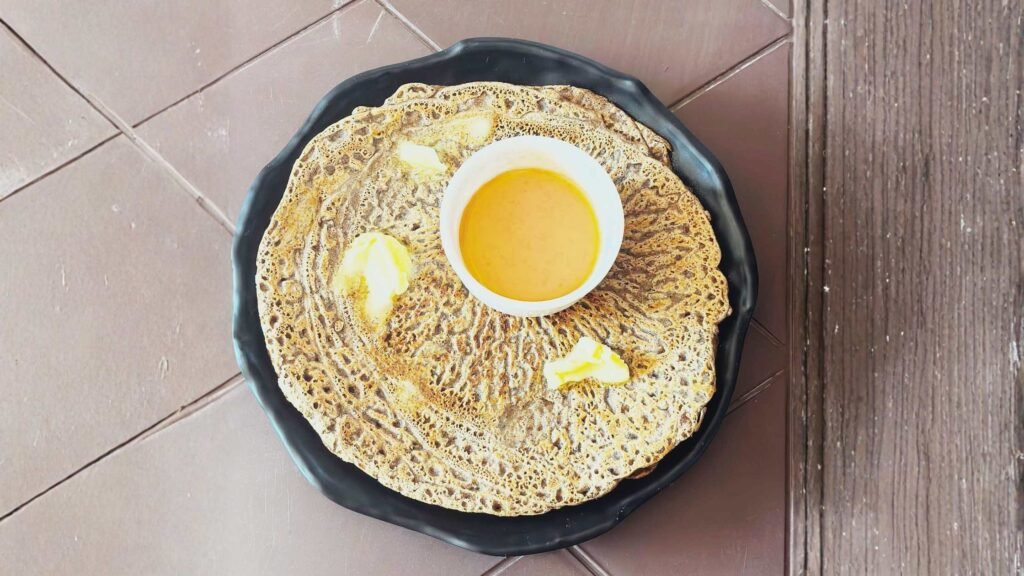
Festival food changes by village and household. The research account from Ribba records ritual foods made from buckwheat, wheat and barley flour.
It names Dhu, a salted preparation from buckwheat flour, Posat, a sweet wheat preparation, and Pya, made with barley flour.
The same account mentions a large buckwheat bread called Mahasu roti for a specific Ribba ritual. The study documents these foods as ritual preparations; it does not say they are sold or served to tourists.
Where to Eat Without Disturbing the Festival
Do not assume a community meal works like a paid buffet. Ask your host what visitors may eat, where to sit and whether an offering must finish first.
Reckong Peo is the district headquarters and its main market is a practical place to buy tea or snacks before leaving for a village event. Choose an open shop on the day rather than relying on a named outlet or fixed opening time.
Carry a simple snack and water. This saves money and keeps you from leaving the village at the exact moment the public procession starts.
Can tourists attend?
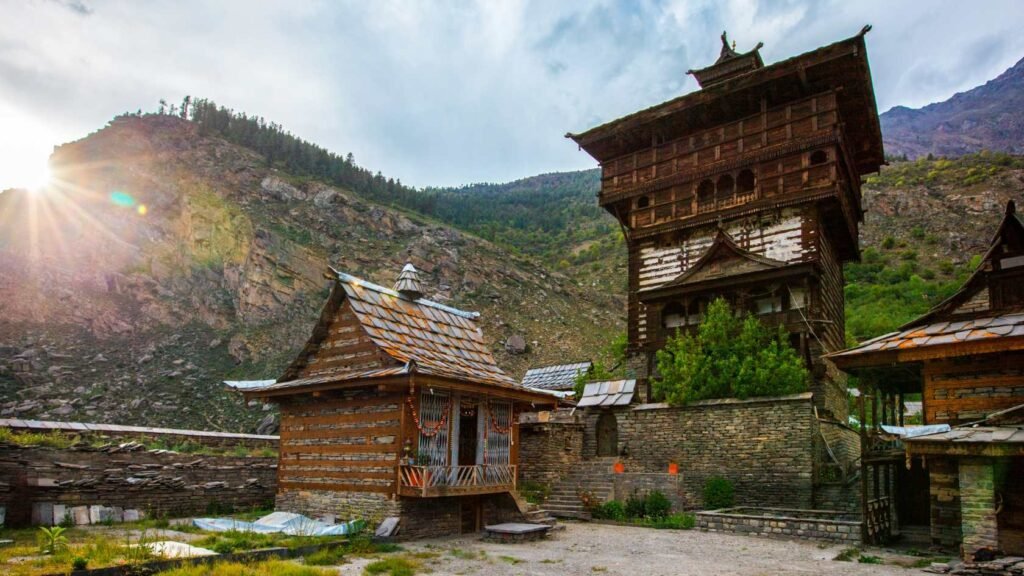
Tourists can witness public parts in some villages, but access does not automatically cover every temple ritual, family rite or flower collection journey.
Ask locally before entering a temple courtyard, following a deity procession or joining a dance. A clear invitation matters more than what another tourist did last year.
What Most Tourists Should Skip
Skip any package that promises a fixed Phulaich show before the village calendar comes out. It sells certainty that local custom does not provide.
Also skip the idea of covering three festival villages in one day. Road time and changing programmes can turn the trip into nothing but waiting in a car.
A Better Way to Attend
Choose one base, keep one buffer day and confirm the event with two local sources. Your stay and a village contact should agree before you travel.
This two source check is also our scam warning. Do not pay an agent only because they send an old poster or a social media reel.
A respectful visitor also accepts a no. A family may welcome you in the street but keep a temple room or remembrance rite private, and that boundary can change during the day.
Parents should keep children close near a moving procession. Do not let anyone run between musicians, flower bearers or people carrying the local deity.
Photography etiquette
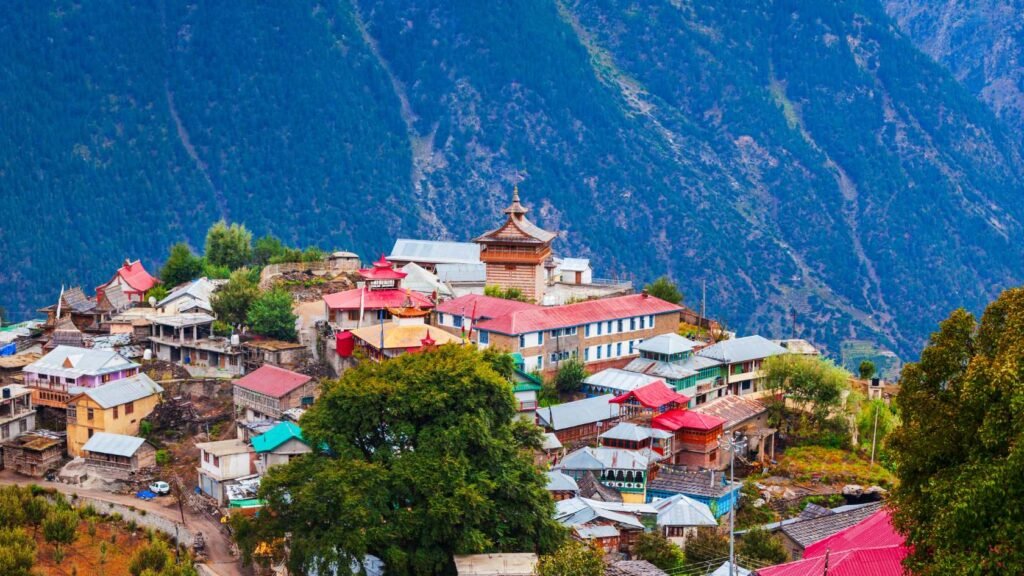
Ask before photographing people at close range. A public street does not cancel personal consent, especially during ancestor remembrance.
Stand away from the deity path. Do not touch flower baskets, garlands, ritual food, musical instruments or ceremonial objects.
When to Keep the Camera Down
Put the camera down during family remembrance, private offerings and any moment when villagers ask for space. Watching respectfully is still participation.
Avoid flash inside temple areas unless organisers clearly allow it. Before flying a drone, check the latest Digital Sky airspace map and obtain any required aviation and local permissions. Photography of military or security installations in Kinnaur’s protected areas is prohibited, and festival organisers may restrict professional filming.
Do not ask a flower gatherer to repeat a ritual walk for your video. The real moment matters more than a clean reel.
👉 Pick the right stay & route — we’ll help.
How to reach Kinnaur
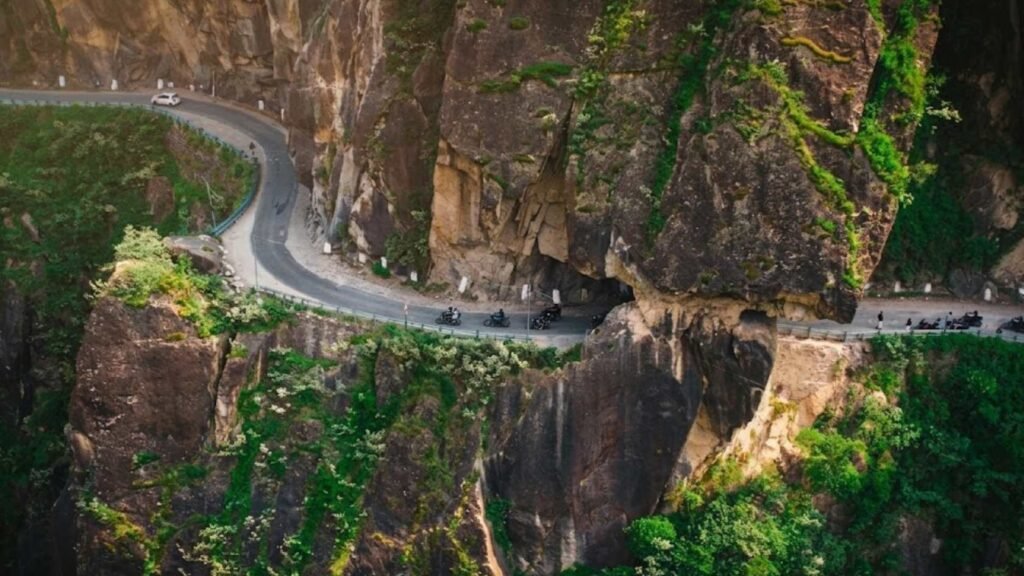
The Kinnaur district administration places the district about 235 kilometres from Shimla. Most festival trips therefore use Shimla as the practical road gateway.
Reckong Peo is 235 kilometres from Shimla by road. HRTC and the district administration warn that bus operation and arrival times depend on road and weather conditions; check the current HRTC timetable, road status and a fresh taxi quote close to departure.
Reaching Kinnaur from Shimla
Plan the road journey through the Shimla side and avoid fixing a late night arrival in a festival village. Daylight gives you more room for delays.
Our Shimla tour packages page helps you plan the gateway stay. It also keeps the first day separate from the longer Kinnaur drive.
Moving Between Kalpa and Other Festival Villages
Do not assume every celebration happens beside the main road. The official sources checked do not publish festival-specific parking points or final walking routes, so get the exact village, drop-off point and walking instructions from the host or organiser.
Our team recommends a local mountain driver for a multi village plan. The driver still needs the same festival confirmation as you.
Combining Kinnaur with Spiti
Some travellers continue beyond Kinnaur toward Spiti. Keep that extension separate from the festival day because road and permit needs can change.
Use our Spiti tour packages page only after the Phulaich village date is clear. A rigid onward booking can remove the flexibility the festival needs.
Best time to visit
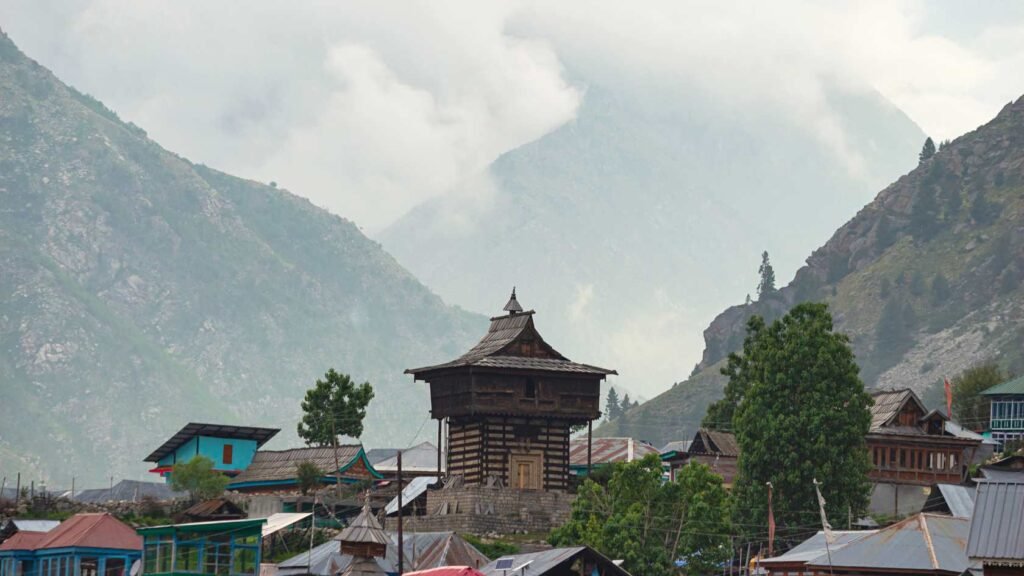
For Phulaich itself, the documented season runs from August to October. Middle Kinnaur often celebrates in September, while other areas can come earlier or later.
Best Time to Visit Kinnaur for Phulaich
The Best Time to Visit Kinnaur for this festival depends on the village you want to see. Start with the village calendar, not a generic weather chart.
For Kalpa, official tourism sources describe Fulaich generally as a mid-September celebration but do not publish a dated 2026 public programme. Keep your stay flexible around the locally confirmed day.
Our Himachal in September guide explains the wider month across the state, while the festival date still needs village level confirmation.
Travel tips

Book a flexible room, not the cheapest non refundable room. One date change can cost more than the small saving.
Carry warm layers, walking shoes, water and a simple snack. Keep your bag small so you do not block narrow temple or village spaces.
Leave one hour before the locally confirmed public gathering. Parking, village lanes and last minute changes can take more time than expected.
Local Tips Our Team Gives First Time Visitors
Confirm the festival with two local sources within a few days of travel. Ask the exact village name, temple name, public start time and parking point.
Save the village contact and maps offline. TRAI directs travellers to each operator’s current coverage map, but mapped coverage cannot guarantee a working signal at a remote road or high-altitude ritual site.
Carry cash for small local expenses. The district lists several bank branches in Reckong Peo’s main market, but it does not provide reliable village-by-village ATM coverage; arrange cash before leaving the main town. Do not flash large notes or bargain during a religious gathering.
Safety and Respect Matter More Than a Perfect Itinerary
Do not follow flower gatherers into high meadows without explicit permission and proper local support. The collection journey is not a casual tourist trek.
Do not drive after dark simply to catch another village programme. Missing one event is better than rushing on an unfamiliar mountain road.
Keep a copy of your identity document. District guidelines require foreign visitors to obtain a Protected Area Permit for listed border-area villages in Pooh Block, including Moorang, Thangi, Nasang (Nesang) and Ropa; confirm route-specific rules with the district tourism office or the relevant SDM.
A Simple Money Saving Plan
Base yourself in one place and use one confirmed festival day. Changing hotels every night adds transfer cost and removes your buffer.
Eat a normal breakfast before leaving. The published research documents ritual foods in Ribba but does not describe a public meal for tourists, so do not depend on festival food being available.
Choose a stay that answers the phone and knows the local village network. A cheaper room far from the event can cost more once you add an urgent cab and lost time.
Tell the host that the festival matters more than covering every sightseeing point. This gives the local team permission to remove a rushed stop when the ritual timing shifts.
Keep the morning after the festival light. Late songs, changing return times and village traffic can make a fixed early departure stressful.
Use the HimTrails contact page for a route check if your dates sit between two village schedules. Ask for the honest option, even when that means seeing less.
Conclusion
The Phulaich Festival Kinnaur brings sacred flowers, local deities, ancestor remembrance and village responsibility into one living tradition.
Come for the flowers, but stay long enough to understand the silence around remembrance, the patience behind collection and the care villagers show their customs.
In our experience, the best Phulaich trip is not the busiest one. It is the trip where one confirmed village, one respectful day and one flexible plan come together.
👉 Want this trip? Let’s plan it right.
Frequently Asked Questions
Also Read: Bir Billing in September 2026: Weather, Paragliding, Costs and Itinerary
Ready for Your Himachal Adventure?
Get FREE customized itinerary · Best Price Guaranteed · Local Himachal Experts · 3,973+ Happy Travelers