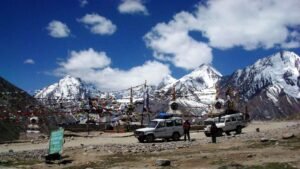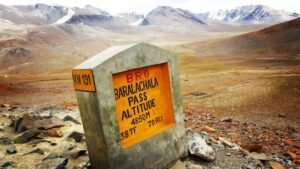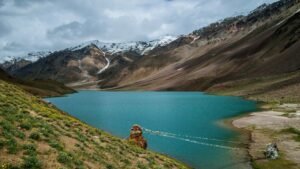
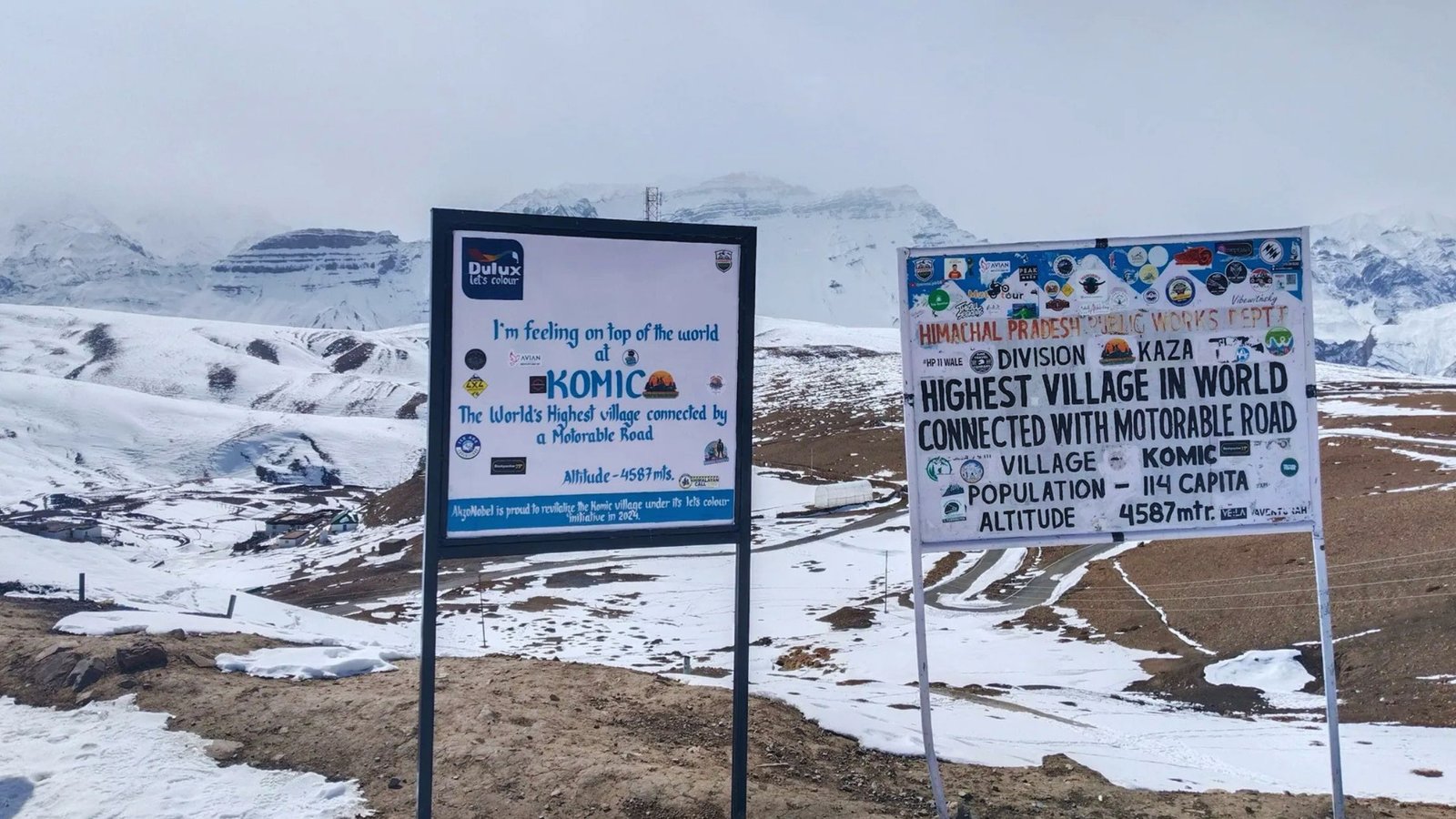
You can plan a trip to Spiti Valley in winter, but the route runs through Shimla and Kinnaur, not Manali. The Lahaul & Spiti district describes the Shimla–Kinnaur–Kaza road as an almost all-weather route. The Keylong–Kaza road over Kunzum Pass generally stays closed from about October/November to June/July. So you enter and leave through Kinnaur, skip Chandratal, and check every outing beyond Kaza on the day you plan to go.
Quick Answer: Winter Spiti at a Glance
Plan winter Spiti through Shimla and Kinnaur, enter via Sumdo and Tabo, and come back the same way. Do not plan around Manali, because Kunzum Pass generally stays closed in winter even when Atal Tunnel is open. An open main road does not mean Chandratal, the high villages, hotels or buses are available. The trip suits prepared, flexible travellers who accept long road days, gradual altitude gain and simpler sightseeing. Reconsider it if you need fixed return dates, guaranteed snow or the classic summer circuit.
Is Spiti Valley Open in Winter?
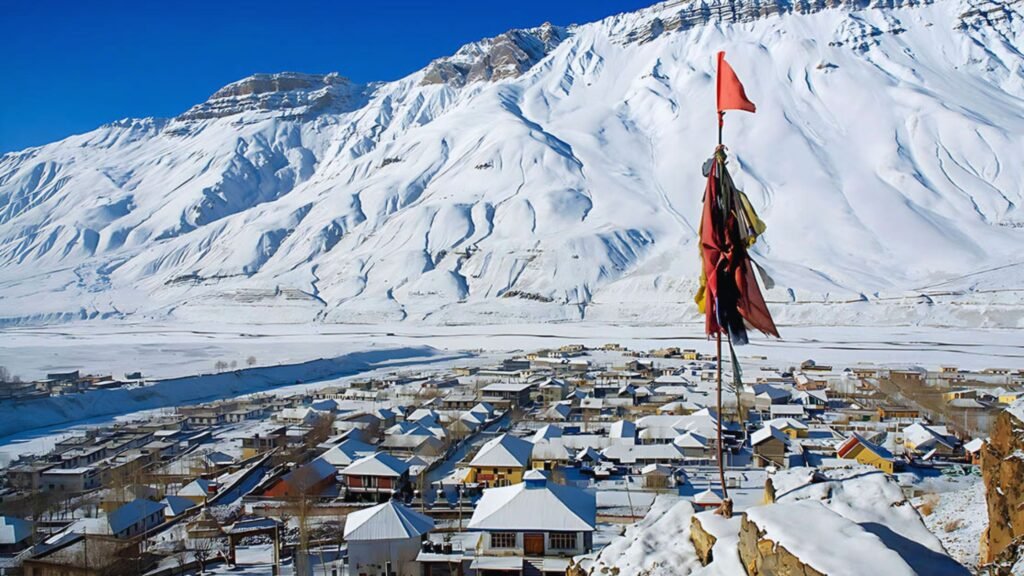
The most common winter planning mistake is treating Atal Tunnel as a winter doorway to Kaza. The tunnel gives road access towards Lahaul and Keylong. The road from Keylong to Kaza still has to cross Kunzum Pass, so a Manali-based plan leaves you on the wrong side of a closed pass.
The confusion is understandable. Many summer Spiti circuits use Manali, and a tunnel sounds like a way around the mountains. The better choice is to plan the whole winter trip from Shimla.
Kunzum Pass is the high crossing on the Keylong–Kaza road that links Lahaul with Spiti. All-weather access means a route is the one most likely to stay usable through winter. It does not mean the road never closes. The district calls the Kinnaur approach almost all-weather, and that word matters.
| Route or place | Winter position | What it means for your plan |
| Shimla–Kinnaur–Kaza | The district describes it as an almost all-weather route | This is your planning route, but it still depends on road and weather conditions each day |
| Manali/Keylong–Kunzum–Kaza | Kunzum generally closed from about October/November to June/July | Not a winter route to Kaza, even when Atal Tunnel is open |
| Chandratal | Access relies on the seasonally restricted Kunzum-side corridor | Leave it out of a normal winter road itinerary |
| Kaza-local sightseeing roads | The main-road status tells you nothing about these | Check each village road and path separately before you set out |
The geography never changes: Kunzum always sits between Lahaul and Spiti. The closure is seasonal, and the district gives an approximate window rather than confirmed closing or reopening dates. The daily state of the Kinnaur road depends on the date, so you have to check it for your actual travel days.
For background on the region itself, start with our Spiti Valley travel guide.
Spiti Valley in Winter Month by Month

Treat each month as planning context, not a forecast. The district describes Spiti as a region with severe winter cold and snow, and road access depends heavily on weather, snowfall and road conditions.
That is why this guide gives no monthly temperature table and no snow promise. IMD Shimla publishes forecasts, alerts and warnings for Himachal Pradesh. Use those for your actual dates.
November in Spiti Valley
November falls inside the district’s approximate window for the Kunzum closure. Treat it as the month when Spiti planning switches fully to the Kinnaur approach. Two checks matter more from now on: the road condition for your dates, and whether your chosen stay is actually operating then.
Our separate guide to Spiti Valley in November covers the month in more detail.
December in Spiti Valley
December is a full cold-season month. Drop any plan built on a Manali-to-Kaza circuit and plan the trip as Shimla–Kinnaur–Kaza and back.
We cover the month’s specific planning points in Spiti Valley in December.
January in Spiti Valley
January is deep winter, so base every decision on official checks made close to departure. That means IMD Shimla’s forecast and warnings, plus district road updates. Do not plan around a temperature or a snowfall you read about from another year.
February in Spiti Valley
February does not change the core rule. The district’s seasonal description keeps Kunzum generally closed until about June/July, so the Kinnaur approach is still the planning route. Judge February by the actual road and weather conditions for your dates. Do not assume roads ease faster because winter is ending.
March in Spiti Valley
Some March days may feel milder, but milder weather does not mean Kunzum has reopened. Keep the plan on the Kinnaur route and return the same way.
How to Reach Spiti Valley in Winter
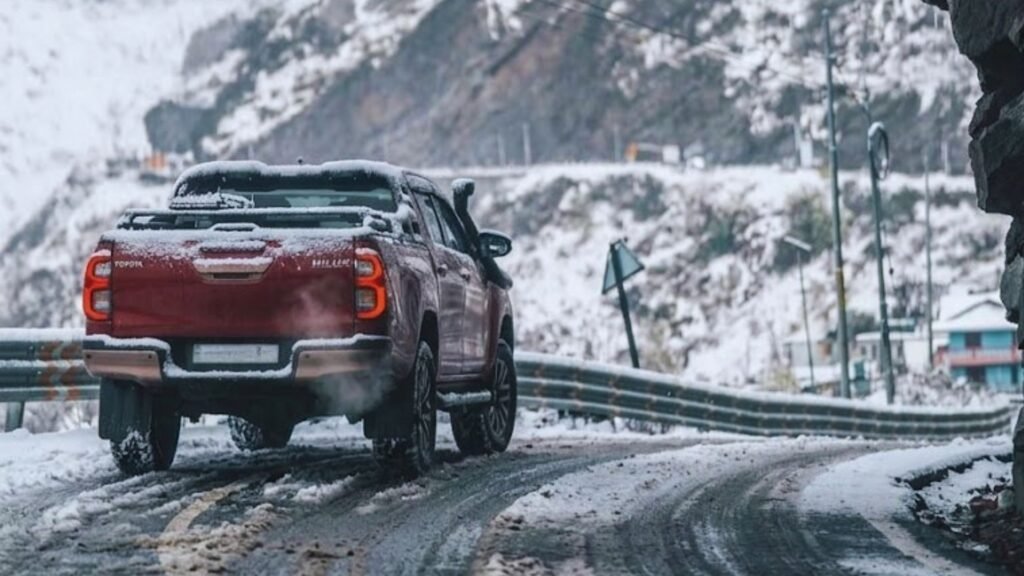
Reaching Spiti Valley in winter means following one line into the valley and the same line back:
Shimla → Kinnaur, with an overnight stage → Sumdo → Tabo → Kaza
The district lists the Shimla–Kaza journey at approximately 412 km, with about 20 hours of travel excluding an overnight halt. Treat both figures as the district’s route basis, not a winter arrival time. Road and weather conditions set the real pace of each day.
Do not confuse the 412 km figure with distances quoted from Delhi or along other road alignments. If you start from Delhi or Chandigarh, treat the journey to Shimla as a separate leg from the Kaza drive.
Splitting the drive is the most practical decision on this route. Reckong Peo, which Kinnaur district lists at 2,670 m, is a sensible overnight stage if your stay there is confirmed. It shortens the next day and gives you a night at an intermediate elevation before you climb further into Spiti.
Himachal Road Transport Corporation (HRTC) has an official online booking portal. The portal does not prove that a Kaza service runs on your winter date. Check the specific service and date there before you build a plan around a bus.
If you travel by private vehicle, a 4×4 does not make a closed road passable. When authorities restrict a road, the restriction applies to every vehicle, including yours.
For the stages on the approach, use our Kinnaur travel guide.
A Practical Winter Spiti Itinerary

Build a winter Spiti itinerary in stages, not fixed days. Start each stage only when the road ahead is confirmed. The number of nights then depends on conditions, not on a brochure schedule.
- Start in Shimla. Rest before the long road days begin.
- Travel into Kinnaur. Stop overnight at a confirmed stay, such as Reckong Peo.
- Continue towards Nako, Tabo and Kaza when conditions permit. Split this section if the road or your energy calls for it.
- Rest in Kaza. Give yourself time to adjust to the altitude before any excursion.
- Take local outings from Kaza. Go only after checking the specific road and path.
- Return via Kinnaur. Stage the return with an overnight halt, as on the way in.
- Keep spare time. Weather or road disruption can hold you in place.
Sangla, Chitkul, Langza, Hikkim and Komic often appear in Spiti and Kinnaur itineraries. In winter, treat each one as conditional and confirm the road before you give a day to it.
No fixed number of spare days is guaranteed to be enough. Build in flexibility anyway, and keep onward plans such as flights loose.
You can map your days with the Himachal trip itinerary planner. Its published full-circuit example is not a ready-made winter route. Replace any Kunzum or Manali-side legs with the Kinnaur return.
Places You May Visit in Spiti During Winter
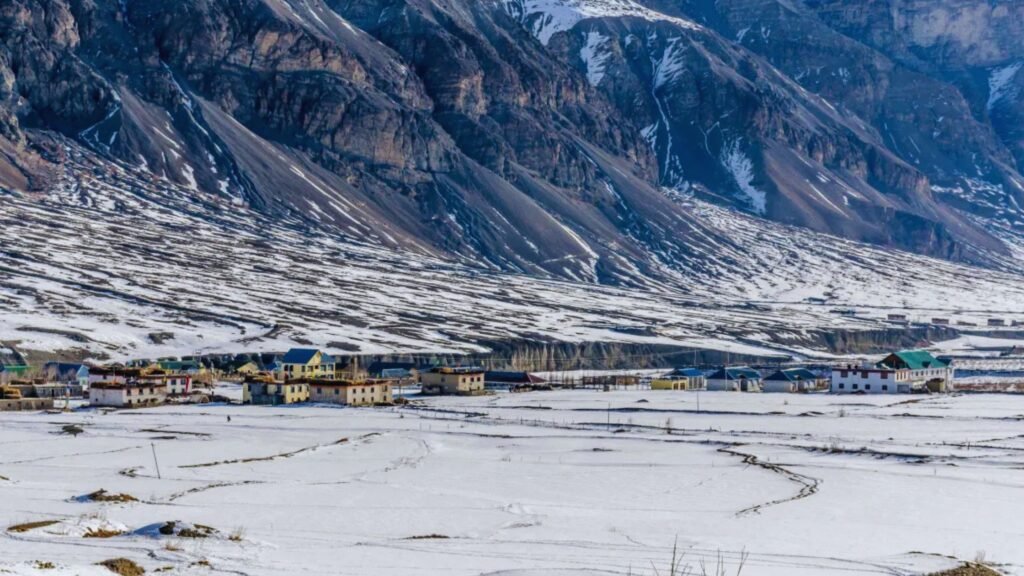
In winter, every sightseeing plan is conditional. Before each outing, check the nearest usable road and the path from it.
Kaza is Spiti’s sub-divisional headquarters. Its district-listed services make it the logical base from which to judge local excursions. Our Kaza visitor guide covers the town in more depth.
Tabo sits on the approach route, so it is easy to include when the road allows.
Key Monastery and Kibber are natural outings to consider from Kaza. Kibber sanctuary is a high-altitude protected wildlife area. Do not plan a winter trip around a snow-leopard sighting. Sightings are never guaranteed, and neither is park access.
Leave Chandratal out of a standard mid-winter road itinerary. This is about seasonal access, not the lake’s appeal. Its road access relies on the Kunzum-side corridor that generally closes in winter. If Chandratal matters to you, plan a separate trip for the season after Kunzum reopens.
Where to Stay in Spiti During Winter
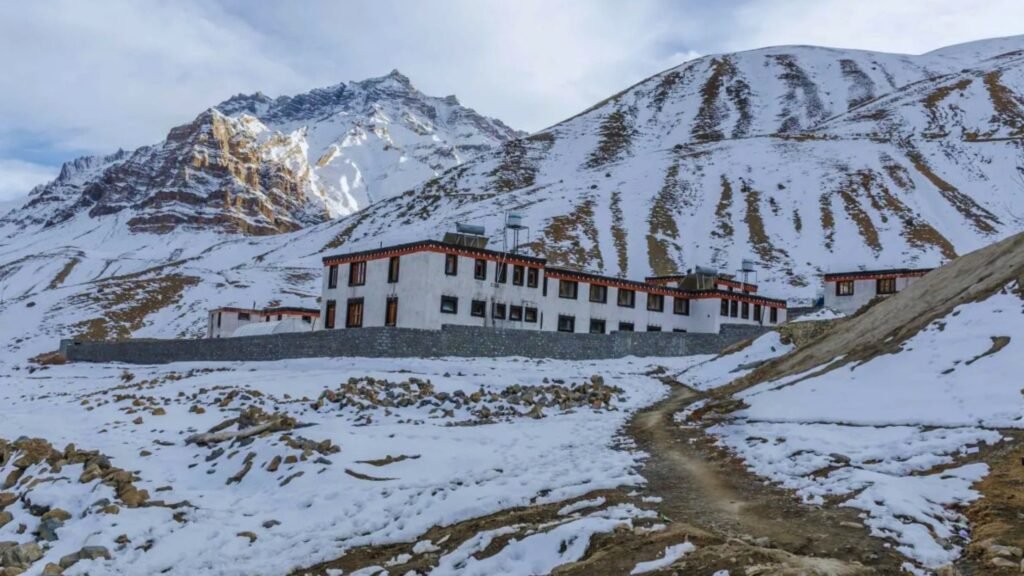
In winter, you need to know more than a property’s location. You need to know whether it is actually set up for the cold. Kaza in winter remains an administrative centre with district-listed services, but that does not mean every private facility stays open.
Confirm these points directly with the property before you pay:
- Exact dates it will operate
- Room heating, and whether it costs extra
- Hot water and bathroom arrangements
- Meals and kitchen availability
- Parking and how far you carry luggage
- Electricity and any backup arrangements
- Cancellation terms for weather disruption
Do not assume a listing or an old review answers these questions. Ask the host directly and keep the reply in writing.
For a local food experience, ask your confirmed host about salted butter tea. The district documents it as a traditional local drink. Accounts of winter homestay-style stays in Key village describe butter tea as part of breakfast there. Availability depends on the host and the season, so ask for it rather than expecting every kitchen to serve it.
Winter Spiti Trip Cost: What Should You Budget For?

Your winter Spiti trip cost depends on how many days the road demands, not just how many places you see. The main costs are long-distance transfers from Shimla, a vehicle suited to winter conditions, accommodation, room heating where it is charged separately, meals, local excursions from Kaza, permits where they apply, and money set aside for extra nights.
We do not publish a fixed winter price here. A winter quote only means something when you know its dates, services, vehicle and occupancy.
The simplest way to protect your budget is to stop paying for things winter cannot deliver. Before you compare quotes, remove any inclusion that depends on the Kunzum corridor, such as Chandratal or a Kunzum crossing. Then compare only quotes that cover the same dates, services, vehicle and occupancy. You get a shorter sightseeing list and spend more effort comparing upfront, but you avoid paying for stops you cannot reach.
You can look through our Spiti tour packages to see how a trip can be put together. Treat any published rate there as general, not a confirmed winter price.
Permits for Indian and Foreign Travellers
A Protected Area Permit is the permission that applies to relevant foreign nationals visiting notified border areas. These rules do not apply in the same way to a standard Indian tourist itinerary. Indian travellers should still carry valid photo ID and follow local instructions.
For foreign nationals, Kinnaur district’s guidance lists notified locations such as Nako, and its Spiti list includes Tabo and Dhankar. The guidance refers to eligible groups of two or more people with sponsorship from a recognised Indian travel agency. Official pages differ on how Kaza itself is treated. Foreign travellers should confirm their exact requirements with the district authorities.
Safety, Altitude and Winter Travel Precautions
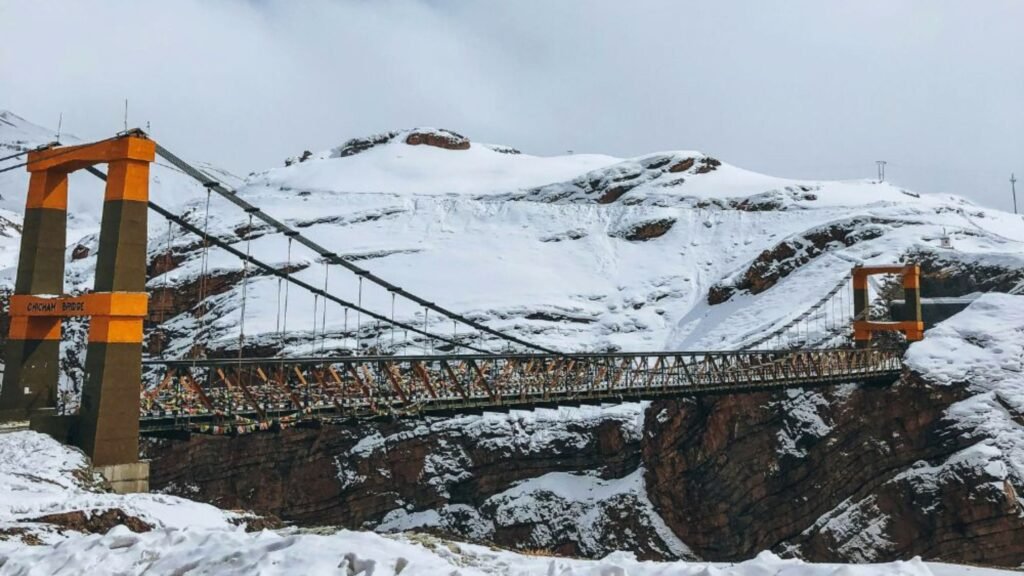
Altitude is the part of winter Spiti that planning cannot fully control. High-altitude exposure can cause illness, and climbing quickly increases the risk. Acclimatisation means giving your body time to adjust as you gain height, and a staged route supports it.
CDC guidance recommends raising your sleeping elevation by no more than 500 m per night once you are above 3,000 m. It also notes that spending 2–3 nights around 2,450–2,750 m before going higher, when feasible, gives meaningful protection against acute mountain sickness. Reckong Peo’s listed 2,670 m falls inside that range, though no single stop guarantees that you will acclimatise.
If altitude symptoms get worse, descend promptly and get medical help. If you have a relevant medical condition, speak to a doctor familiar with high-altitude travel before you book. Medication decisions belong with your doctor, not a travel guide.
Kaza is a district-listed major fuel location for Spiti. The district also advises planning fuel in advance, because availability is limited in remote parts of Lahaul and Spiti. A listed pump does not guarantee stock on the day, so do not let the tank run low expecting to fill up later.
The district lists a Community Health Centre in Kaza and a Primary Health Centre in Tabo. Note where they are, but do not assume advanced or specialist care is available there.
Check IMD Shimla’s forecasts, alerts and warnings before each road day, and read district updates. Follow every road restriction, even when it costs you a day.
Checking Spiti Valley Winter Road Conditions Before Each Stage
Spiti Valley winter road conditions can change between the day you book and the morning you drive. Check official conditions before each road stage, not just once before the trip. Plan each day so you do not depend on uncertain access late in the day. If a stage looks doubtful, wait instead of setting off and hoping.
A road-status page with no visible date or time does not clear the road for your departure day. Look for a fresh, dated confirmation. Treat any promise of guaranteed road access or guaranteed snowfall as sales talk, not fact, whoever makes it.
What Most Tourists Get Wrong About Winter Spiti
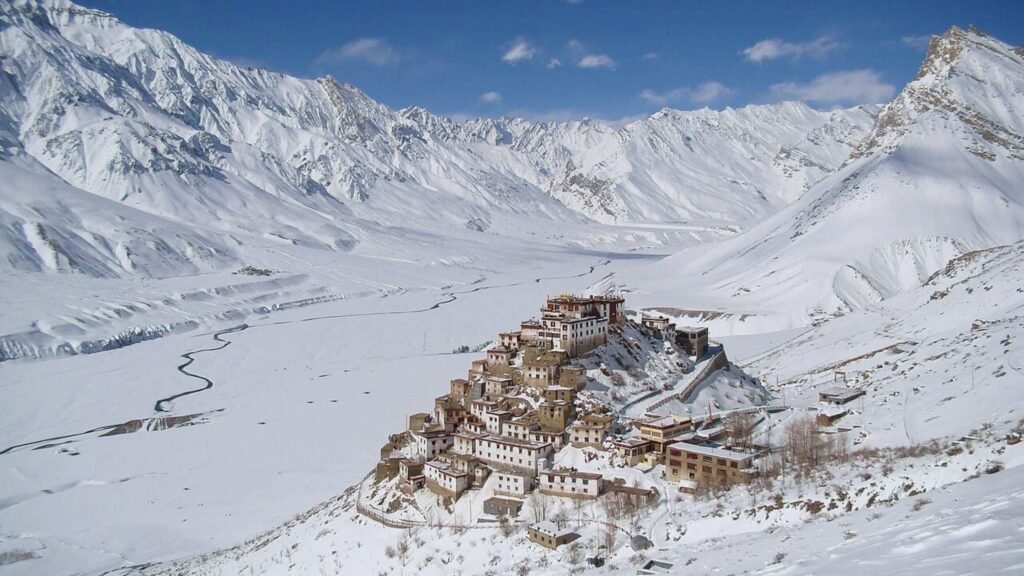
Thinking an open Atal Tunnel means Kaza is reachable from Manali. The tunnel serves Lahaul, and Kunzum still blocks the onward road in winter. Plan from Shimla instead.
Expecting to cross Kunzum Pass. The district says the pass generally stays closed from about October/November to June/July. Plan to return through Kinnaur.
Booking Chandratal as a standard winter stop. Its access depends on the Kunzum-side corridor. Remove it and use the day for rest or a confirmed local outing.
Assuming every high village is reachable because Kaza is. Main-road access tells you nothing about village roads. Check each one before you go.
Planning around guaranteed snowfall. No month guarantees snow. Choose winter Spiti for the cold-season journey itself, and treat snow as a possibility.
Who Should Visit Spiti in Winter, and Who Should Reconsider?
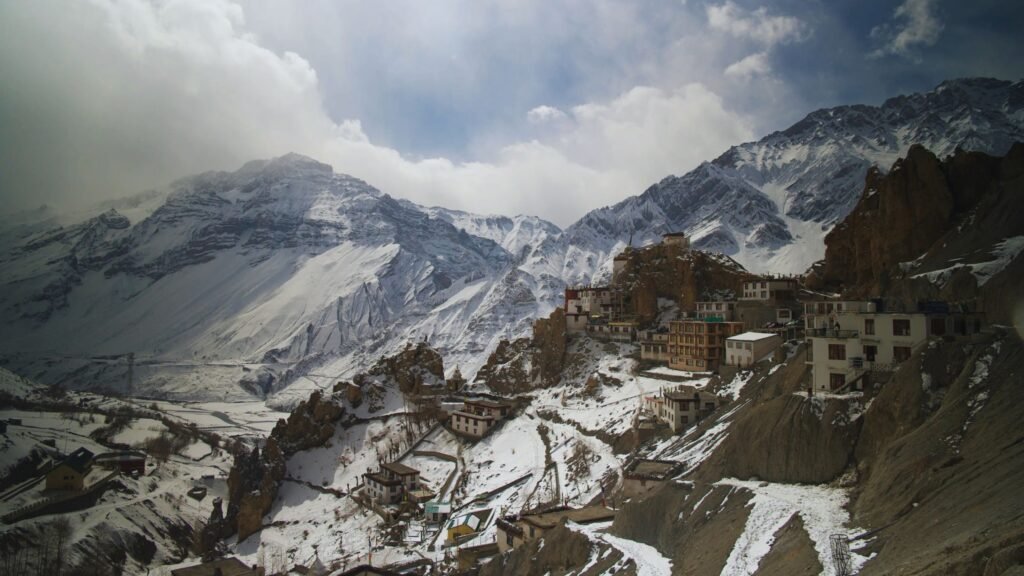
Winter Spiti suits travellers who want a quiet cold-season mountain journey and can accept long drives, simpler sightseeing and changes at short notice.
Reconsider it if you want the complete Manali–Spiti circuit, Chandratal camping, guaranteed snowfall, predictable winter transport or fixed return dates.
There is no blanket yes or no for families with children, senior travellers or anyone with a medical condition. The real questions are how each person handles severe cold, long days in a vehicle and altitude. Anyone with a relevant medical condition should get individual advice from a doctor familiar with high-altitude travel.
The biggest drawback is repetition. While Kunzum is closed, you normally return along the same Kinnaur approach, so you drive the long road twice instead of completing a circuit. An overnight halt on the return reduces the strain, but it adds a night to the trip.
Final Verdict: Is Winter Spiti Worth It?
Yes, Spiti Valley in winter is worth it if you are prepared and flexible. Plan through Shimla and Kinnaur, confirm your stay and road conditions, gain altitude gradually, and treat every excursion beyond Kaza as a bonus rather than a promise.
It is a qualified no if you need a conventional circuit, Chandratal, predictable buses or a fixed return date. For that kind of trip, plan for the season after Kunzum reopens.
Frequently Asked Questions
Also Read: Shimla in Winter 2026–27: Snow, Weather & Trip Guide
Ready for Your Himachal Adventure?
Get FREE customized itinerary · Best Price Guaranteed · Local Himachal Experts · 3,973+ Happy Travelers