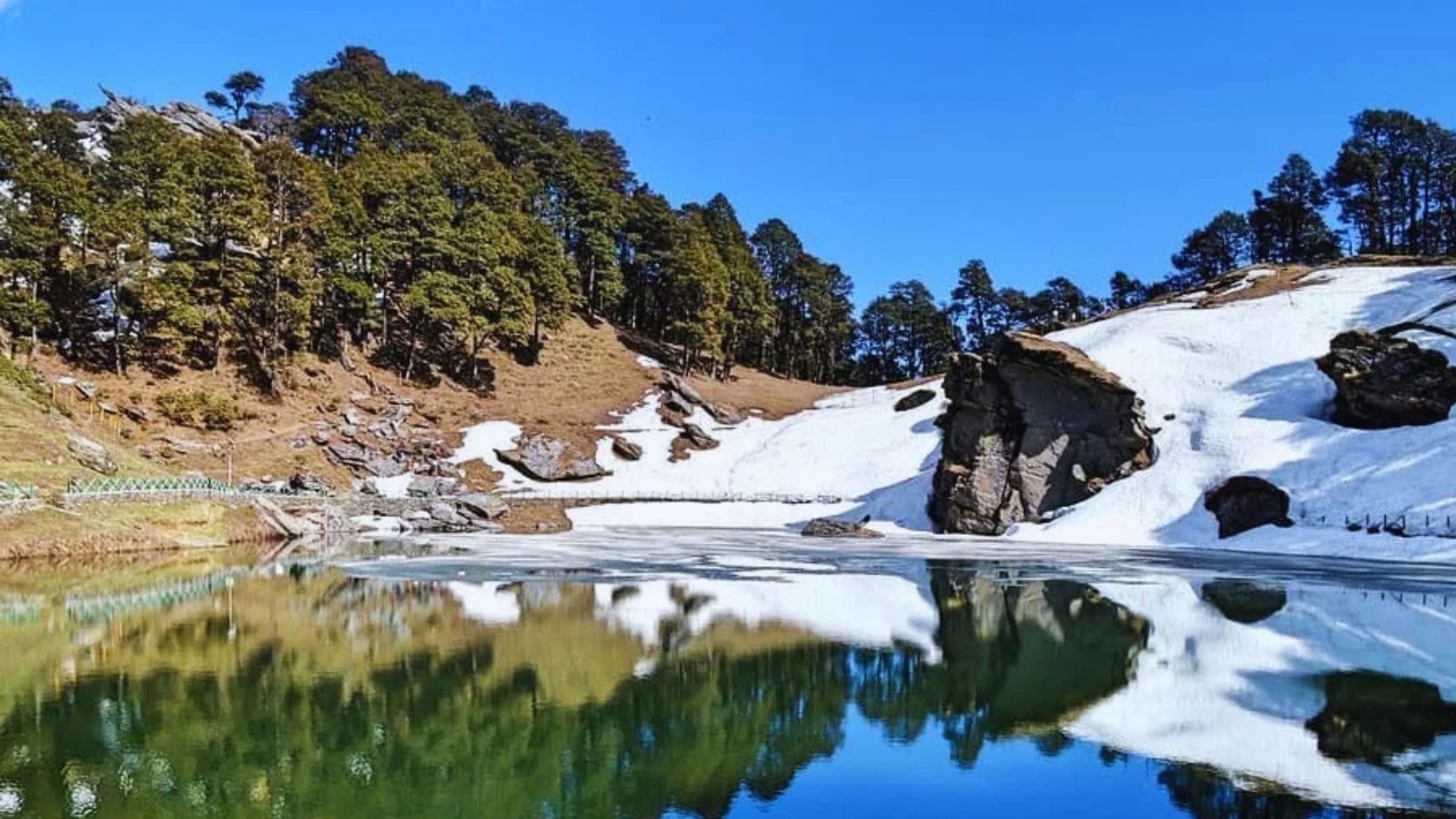
Jalori Pass in December is a conditional outing, not a fixed sightseeing stop. The pass is a mountain road crossing, and winter snowfall can close that road when it becomes unusable. Serolsar Lake adds a second hurdle, because you reach it only on foot along a forest trail that starts at the pass. December snow can affect the road and the trail differently. The dependable plan is a flexible Jibhi-based holiday with both higher outings kept optional.
The most common planning mistake is assuming that reaching Jalori Pass means you can also complete the Serolsar Lake walk. Travellers make this mistake because the two names usually appear in the same day trip. After snowfall, a usable road and a snow-covered forest trail are very different things. Treat them as two separate decisions, and settle for the pass alone when the trail is unsuitable.
Quick Answer
You may be able to visit Jalori Pass in December, but no date is guaranteed because snowfall can close the road. Serolsar Lake needs a further walk from the pass, approximately 5 km one way on the usual forest trail. An open road does not prove the trail is usable, because snow, ice and poor visibility can make it unsuitable. Confirm road access and trail conditions separately before committing to the full outing, and keep a Jibhi-based backup plan.
👉 Confused? Let locals plan your trip.
Jalori Pass in December: What to Expect

Jalori Pass is a mountain road crossing on NH-305 in Kullu district. It connects the Banjar and Jibhi side with the Ani side, and HimTrails places it at approximately 3,120 metres above sea level.
Most visitors come up from Jibhi or Shoja. The road distance from Jibhi is roughly 12–14 km via Shoja, which makes the pass look like a short excursion. In December, that distance tells you nothing about how long the drive will take or whether it will be possible.
The pass is also the starting area for two separate walks, one to Serolsar Lake and one to Raghupur Fort. That is why many Jibhi itineraries treat it as the main day out.
Expect a cold, high mountain setting rather than any particular weather. Conditions can differ between the start and end of the month, and December weather changes from year to year. Someone else’s photos from an earlier winter are no guide to your dates. The HimTrails Jalori Pass travel guide covers the pass in more general detail.
Is Jalori Pass Open in December?

There is no universal date when Jalori Pass closes or reopens. The road closes when snowfall makes it unusable, and that depends on each winter’s weather, not the calendar.
The previous winter shows how much this varies. Snowfall blocked the road on 23 January 2026. It was restored to traffic on 18 February 2026, and HRTC bus services resumed on 24 February 2026. Those dates describe winter 2025–26 only. They do not tell you whether December 2026 will be open or closed.
Access can also differ between the Banjar side and the Ani side. You might be able to approach the pass from Jibhi while the full crossing towards Ani stays unavailable.
Do not assume that an easy drive into Jibhi means the upper road is fine. Jibhi lies on the lower approach, while the pass sits much higher on the same route.
The honest conclusion is that a fixed December excursion to the pass is unreliable. A 4×4 does not change this. Never treat any vehicle as permission to enter a closed, restricted or unsafe road.
Jalori Pass Snowfall in December: What Can You Expect?

Snowfall is possible during December, but nobody can promise it for your dates. Plan for snow as a chance, not as a booked attraction.
Snow also does not affect the route evenly. The pass itself, the approach road above Shoja and shaded sections that see little sun can each be in different condition on the same day.
There is a real trade-off here. The snowfall that makes the pass appealing for winter sightseeing can also close the road or make the drive unsafe. More snow does not mean a better trip if you cannot reach the top.
Before travelling, check official weather warnings and forecasts from the IMD Meteorological Centre Shimla. Use a forecast as guidance for the coming days, not as a guarantee of what you will find at the pass.
How to Reach Jalori Pass from Jibhi and Shoja in December

The usual approach runs Aut → Banjar → Jibhi → Shoja → Jalori Pass. You can reach Jibhi from Aut and Banjar without crossing the pass, which is why it works as a winter base.
From Jibhi, the road climbs through Shoja to the pass, approximately 12–14 km in total. Treat that number as distance only, not as a December driving time.
Shoja lies on the way up, so it may be reachable on days when the final stretch to the pass is not. Be ready for your excursion to end there.
Reaching the pass from the Banjar side is also different from crossing it towards Ani. If your route continues over the pass, confirm that the whole crossing is open, not just your side.
Self-drivers should check the road status first, then judge honestly whether the driver is confident on snowy or icy mountain roads. Official restrictions override every other consideration.
For public transport, use the official HRTC bus information portal. No December service towards Jalori has been confirmed, so do not build a plan around a bus you have not checked. The HimTrails Jibhi travel guide helps with the lower-valley part of your trip.
Serolsar Lake in December: Is It Accessible?

Serolsar Lake is accessible in December only when the road to Jalori Pass and the forest trail beyond it are both usable.
This is the detail many first-time visitors miss. Serolsar is not a drive-up destination, and ordinary visitors cannot take a vehicle to the lake. The usual approach is on foot, along a forest trail starting at Jalori Pass.
That creates two checks. First, the pass must be reachable. Second, the trail must be in a condition you can walk safely. A motorable road to the pass does not settle the second question.
Snow, ice and poor visibility can make the forest route more difficult or unsuitable for ordinary visitors. These conditions can exist even when vehicles reach the pass without trouble.
For most December tourists, the lake belongs in the “maybe” column. Treat it as a conditional add-on you decide on the day, not as a stop your itinerary depends on. The Serolsar Lake trek guide explains the lake and its normal route in more detail.
Serolsar Lake Trek in December: Distance, Route and Difficulty
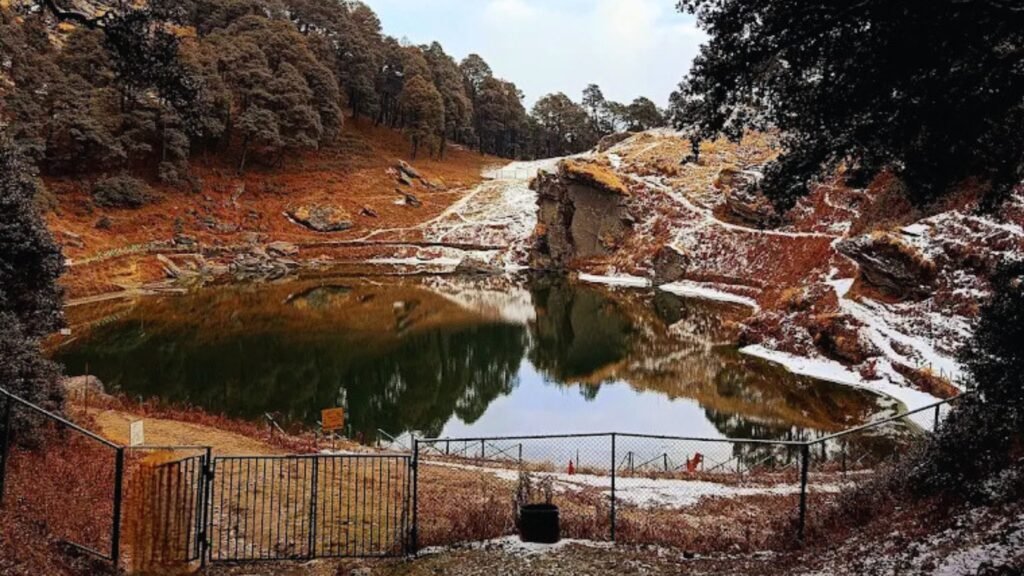
In normal conditions, the walk follows a forest trail from Jalori Pass to the lake. The commonly described route is approximately 5 km one way, although route measurements vary. Remember that you must walk the same way back.
HimTrails gives about 2–3 hours each way as a normal planning estimate. That figure describes a fair-weather walk on a clear trail. It is not a reliable December trekking time.
The route is often described as easy to moderate in normal conditions. That label does not carry over to a snowy December day. Snow underfoot, icy slopes and a trail that is harder to follow can make the same path far more demanding.
This is where plans go wrong. A traveller reads “easy to moderate”, sees “2–3 hours” and books a December lake trek for the whole family. On a snowy day, neither description may hold.
A guide brings local knowledge, but having one does not make the route automatically safe. A guide cannot remove ice or restore visibility.
The Himachal trek map shows general trail information for the region. Its normal trail ratings do not certify December safety.
Serolsar Lake After Snowfall: What Changes?
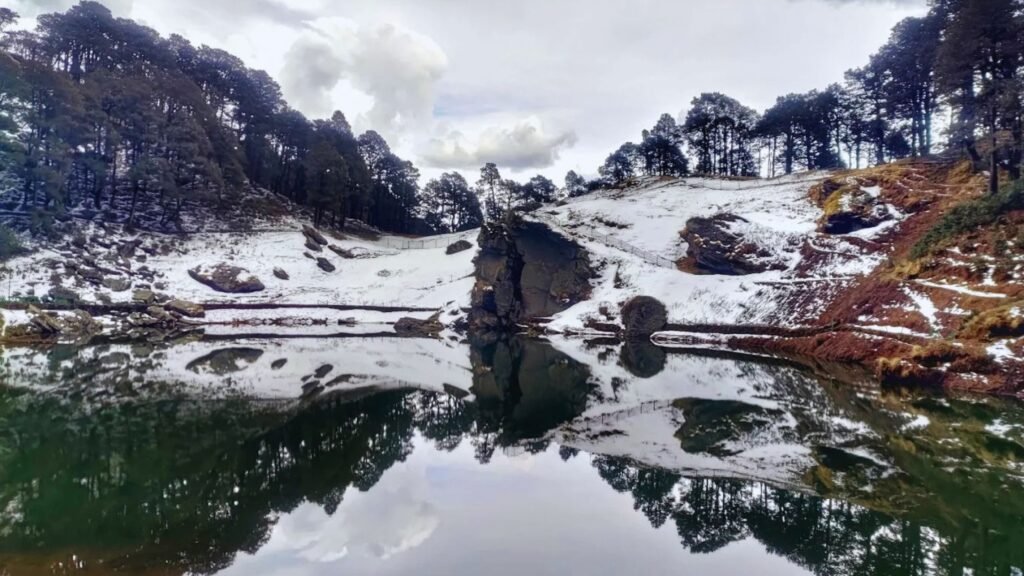
Reaching Jalori Pass is only the first part of reaching Serolsar Lake. After snowfall, the second part can change completely.
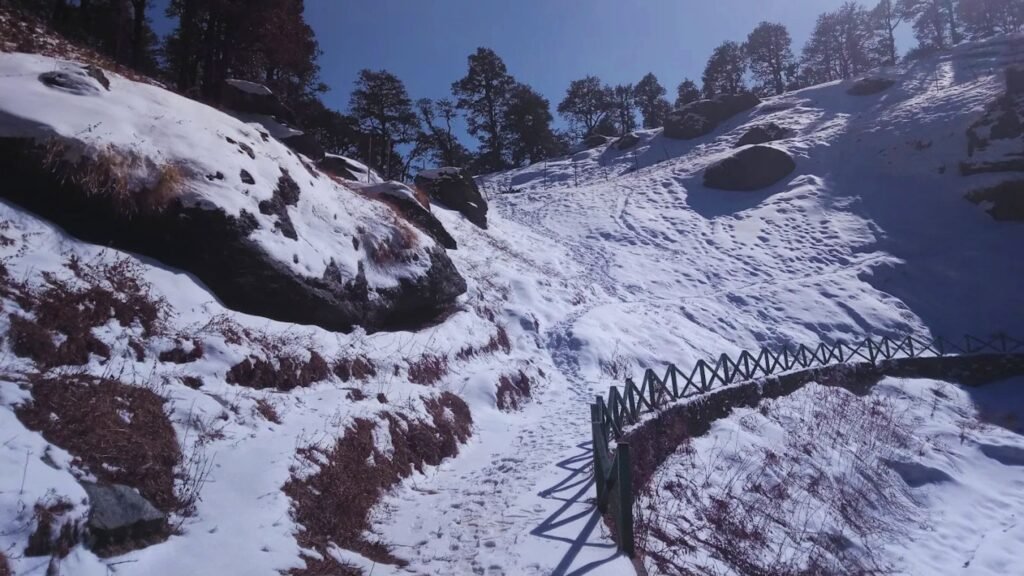
On a clear day, the forest trail is visible and the ground is predictable. After snow, the path can become hard to follow, surfaces turn slippery and your walking speed becomes difficult to judge.
That is why turning back matters. Start any approved upper-pass outing early enough to complete the full return in daylight, and agree a clear turnaround point before leaving the pass. If progress is slower than expected, head back without debate.
Before deciding to walk at all, get a local assessment of current trail conditions from a responsible, qualified source. Do not enter a snowbound forest route without appropriate professional support.
Walking through snow on this trail is not an ordinary family activity. Do not count on the pass to resupply you either, because food stalls and toilets there are limited and seasonal.
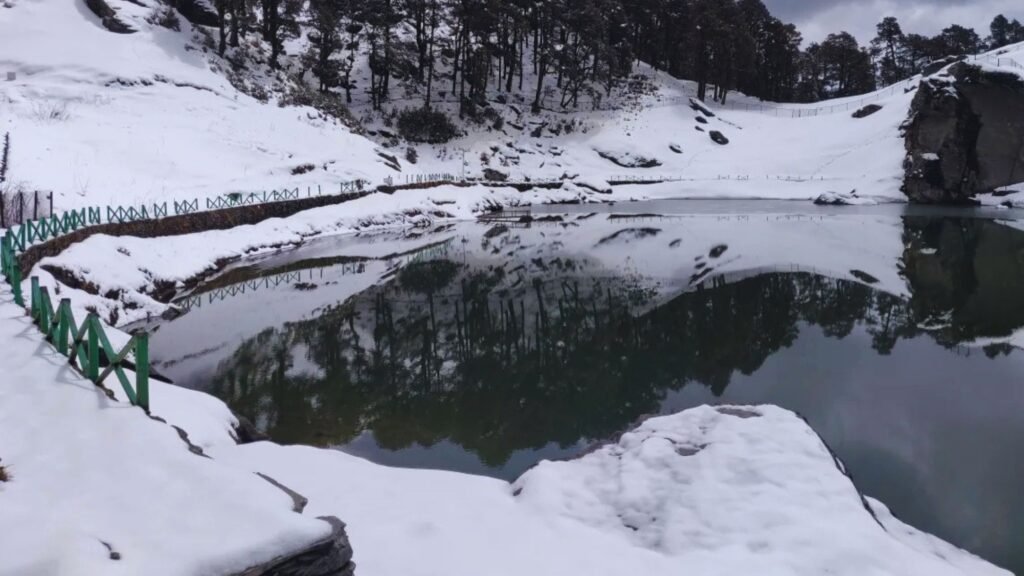
Serolsar Lake, Budhi Nagin Temple and the Winter Setting

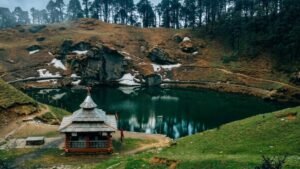
Serolsar Lake is associated with the goddess Budhi Nagin and holds local religious significance. Treat the lake and the shrine as a place of worship, not only as a viewpoint. Keep your voice low, respect any customs local people ask you to follow and carry all your litter back.
The winter setting can be striking, but do not plan the trip around one particular scene. A frozen lake or fresh snow around the shrine cannot be promised for December.
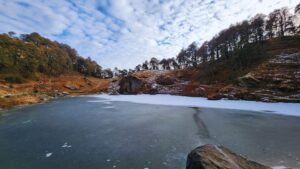
If you find ice on the lake, stay off it. Never step onto lake ice for a photograph or to reach the water’s edge.
👉 Pick the right stay & route — we’ll help.
Jalori Pass vs Serolsar Lake in December: Which Is Easier to Visit?
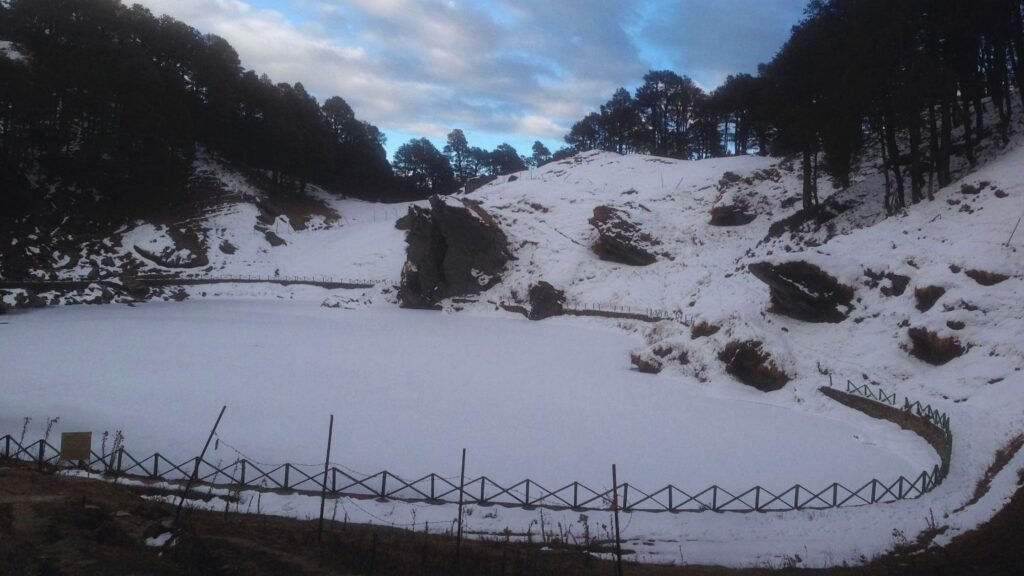
Jalori Pass is clearly easier. When the approach road is usable and permitted, the pass works as a road-accessible viewpoint. Serolsar Lake needs everything the pass needs, plus a forest trek of approximately 5 km one way.
The key misconception to correct is that Serolsar is just another short roadside stop after the pass. It is a separate walking outing with its own conditions.
For families and first-time visitors, a pass-only outing is the less demanding choice on a day when the road is open and safe. You reach the high-altitude setting without committing to a long walk in uncertain conditions.
For experienced trekkers, Serolsar can be considered, but only after an assessment of the actual trail conditions that day.
One rule links both destinations. If Jalori Pass is closed, ordinary access to Serolsar Lake is compromised too, so your backup plan should sit in the lower valley.
Where to Stay in December: Jibhi, Shoja or Tirthan Valley?
Jibhi and Shoja are the common bases for outings towards Jalori Pass and Serolsar Lake. Each suits a different December traveller.
Jibhi is the practical choice for most people. You reach it from Aut and Banjar without crossing Jalori Pass, so your stay does not depend on the upper road.
Shoja is closer to the pass, which shortens the excursion when the road is open. It also lies farther uphill, so access to your property matters more after snowfall.
Tirthan Valley gives you a wider base with more room for alternative sightseeing. The Tirthan Valley travel guide covers that option.
Wherever you stay, ask the property directly about winter road access, heating, hot water, meals and cancellation arrangements. Do not assume any of these from a listing.
A Practical December Itinerary for Jalori Pass and Serolsar Lake
Build your December plan around three possible situations. These are planning examples, not promises that any outing will operate.
Option A: road and trail both assessed as suitable. Head to Jalori Pass early. Consider Serolsar Lake only if the trail assessment, your daylight margin and everyone’s walking ability support it.
Option B: road accessible, trail unsuitable. Visit the permitted pass area and return. Do not force the lake trek simply because you have already made the drive.
Option C: road inaccessible. Spend your days around the accessible parts of Jibhi and the wider lower valley, including Tirthan Valley where conditions allow.
One substitution to skip is swapping Serolsar for Raghupur Fort when the lake is inaccessible after snow. Both walks begin in the Jalori Pass area, so the pass must be reachable first, and neither walk is automatically usable in snow. Switching walks does not solve the access problem.
The simplest way to keep these options open is to keep the upper-pass day movable. You can map out a flexible Jibhi-area trip with the Himachal trip itinerary planner and slot the pass in as an optional day.
Food, Chai, Facilities and Money-Saving Tips
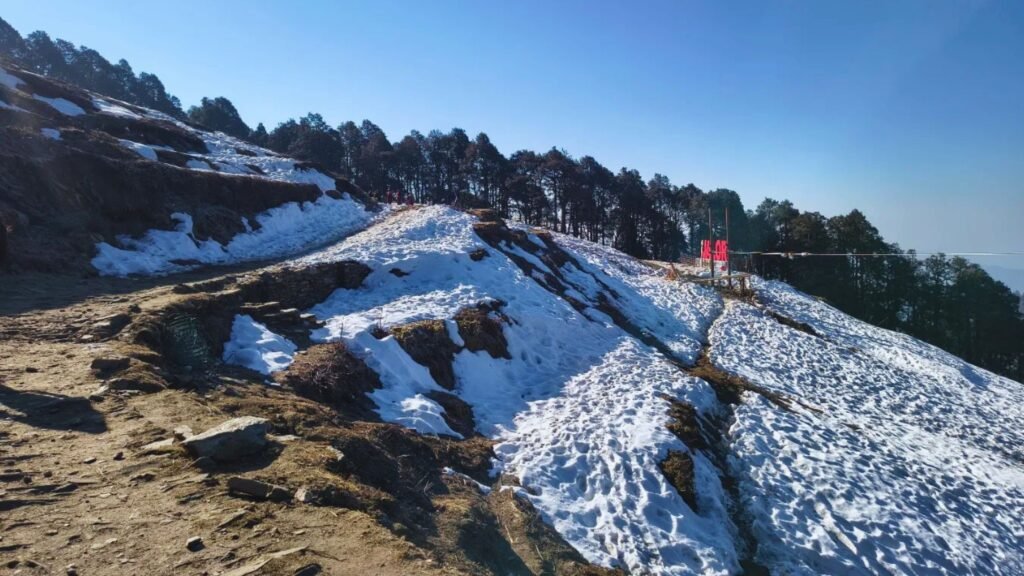
For a hot drink on the way up, check The Rustic Café in Shoja, which sits on the road towards Jalori Pass. Its operator lists chai, coffee and cooked food. Confirm that it is operating in December, and on your day, before counting on it.
Do not plan meals around the pass itself. Food stalls, toilets and other basic facilities at Jalori Pass are limited and seasonal, and you cannot rely on them in winter.
Carry food and drinking water before leaving the lower villages. This matters even more if you plan to walk towards Serolsar Lake.
The money-saving step happens before you pay. Ask your taxi or excursion provider exactly what happens if the road is closed or the weather turns, and get a clear answer before committing to a dedicated trip to the pass. You give up the comfort of a fixed, pre-booked day, but you avoid paying for an outing that cannot run as described.
Winter Safety, Packing and Road-Status Checks
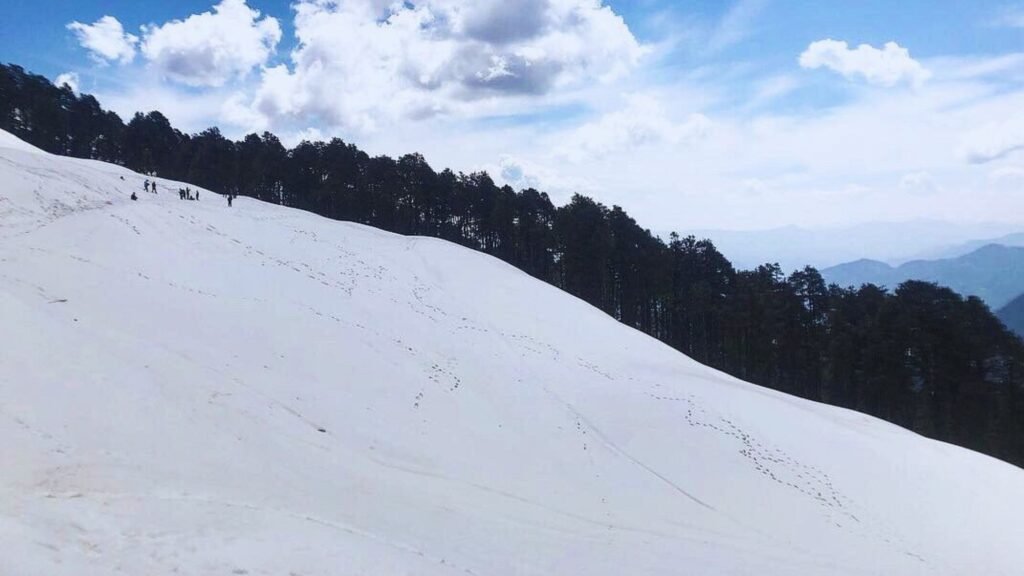
Pack for cold, changing mountain weather, even for a pass-only outing:
- Warm layered clothing and protective outerwear
- Footwear with good grip for snow or wet ground
- Drinking water and snacks
- A fully charged phone
- A plan that leaves enough daylight for the full return
Before any upper-pass outing, check these sources:
- Official notices from the District Kullu administration
- Weather warnings and forecasts from the IMD Meteorological Centre Shimla
- HRTC bus schedules, if you are using public transport
- Current road and trail conditions from a responsible, qualified local source
Ice and route uncertainty are the main risks. Upper-road facilities are limited, so carry what you need rather than expecting to buy it there.
Do not buy an excursion on the assumption that December road access, snow sightseeing or the lake trek is guaranteed. No vehicle, driver or trekking guide can guarantee safe passage.
Never attempt a closed road, and do not continue onto a trail whose conditions are uncertain. Turning back is a sound decision, not a failed trip.
Are Jalori Pass and Serolsar Lake Worth Visiting in December?

A December trip to the Jibhi area can make good sense, provided neither high-altitude outing is the only reason you are going. Base yourself in Jibhi, enjoy the lower valley and treat the pass and lake as possible bonuses.
If seeing Jalori Pass in December is your main goal, reconfirm access close to your travel day and keep the excursion movable.
If completing the full Serolsar Lake trek is your main goal, December is not a dependable ordinary trekking season. Some December days may work, but you cannot plan a holiday around them.
Families, nervous drivers and inexperienced walkers should give priority to accessible lower-valley plans. If the complete lake walk matters most, a different season may suit you better, and the HimTrails guide to Jalori Pass in October is a useful comparison.
If you prefer a ready-made structure, you can browse Jibhi tour packages and ask how each handles weather-related changes before choosing.
A December holiday here works perfectly well without Jalori Pass or Serolsar Lake. Neither should be sold to you as a guaranteed winter outing.
👉 Want this trip? Let’s plan it right.
अक्सर पूछे जाने वाले प्रश्न
Also Read: Prashar Lake in December: Snow, Road Access and Trek Rules
क्या आप अपने हिमाचल एडवेंचर के लिए तैयार हैं?
Get FREE customized itinerary · Best Price Guaranteed · Local Himachal Experts · 3,973+ Happy Travelers