If you are looking at the Bhrigu Lake Trek in July 2026, here is the honest local truth before you book anything. July is one of the greenest, most alive windows on this trail, but it sits right in the monsoon. The meadows turn into a carpet of wildflowers, the lake is mostly thawed, and on a clear morning the whole place feels unreal.
But July also brings rain, slippery mud, low clouds, and the occasional landslide on the approach road from Manali.
We are HimTrails, a Shimla based team that walks these Manali trails every season. This guide gives you the real picture of weather, difficulty, route, cost, and the small local tips most blogs skip.
Quick Answer: Is Bhrigu Lake Trek Good in July?
Yes, the Bhrigu Lake Trek in July is doable and genuinely beautiful, but it is monsoon season, so plan for rain. You get green meadows, summer wildflowers, and on higher sections in early July you can still hit a few snow patches near the lake.
Expect wet trails, cloud cover, and a real chance of road delays on the Manali side. Go with a buffer day, waterproof gear, and a guide. Do not go chasing guaranteed blue skies in July.
👉 Confused? Let locals plan your trip.
What Is Bhrigu Lake Trek Famous For?
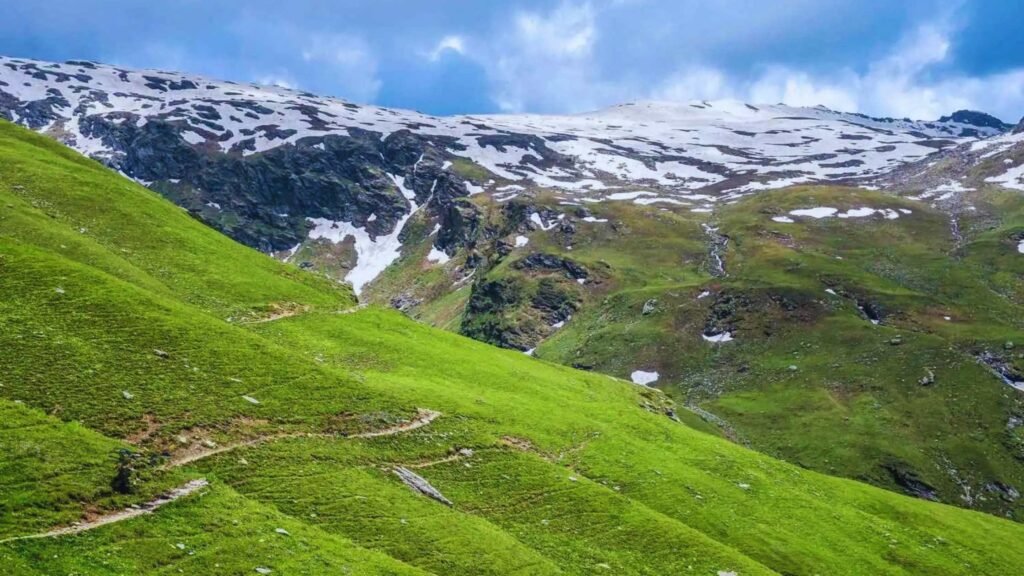
Bhrigu Lake is a short high altitude trek near Manali in Kullu district, Himachal Pradesh. It is named after Sage Bhrigu, and locals treat the lake as sacred.
HPTDC lists the route as Manali, Gulaba, Rola Khuli, Bhrigu Lake. So your trek really begins from the Gulaba side once you leave the road.
The lake sits east of Rohtang Pass and is roughly 6 km from Gulaba. That short distance is misleading, because you climb a lot in those kilometres.
What people remember most is not even the lake. It is the open meadows on the way up.
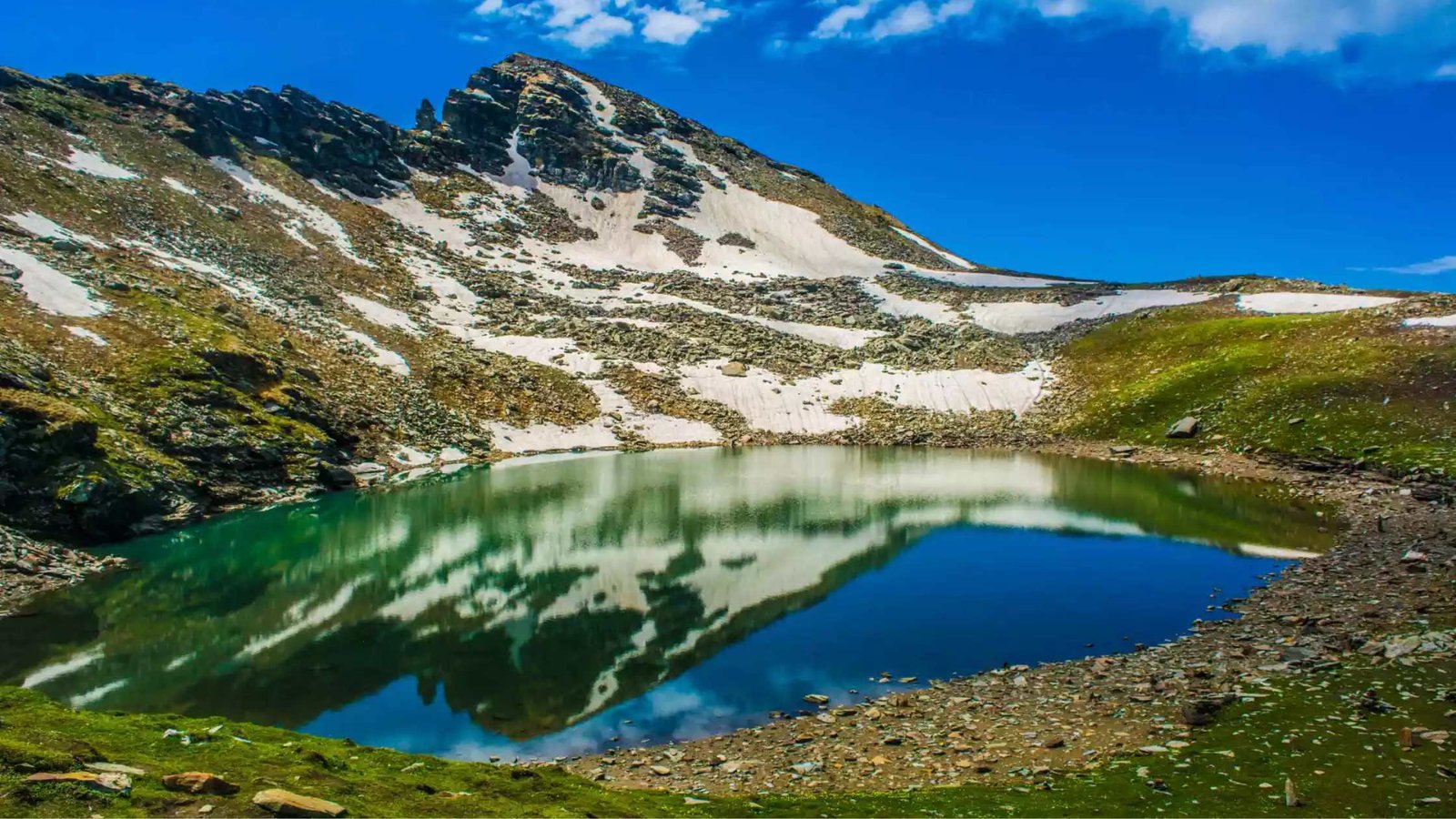
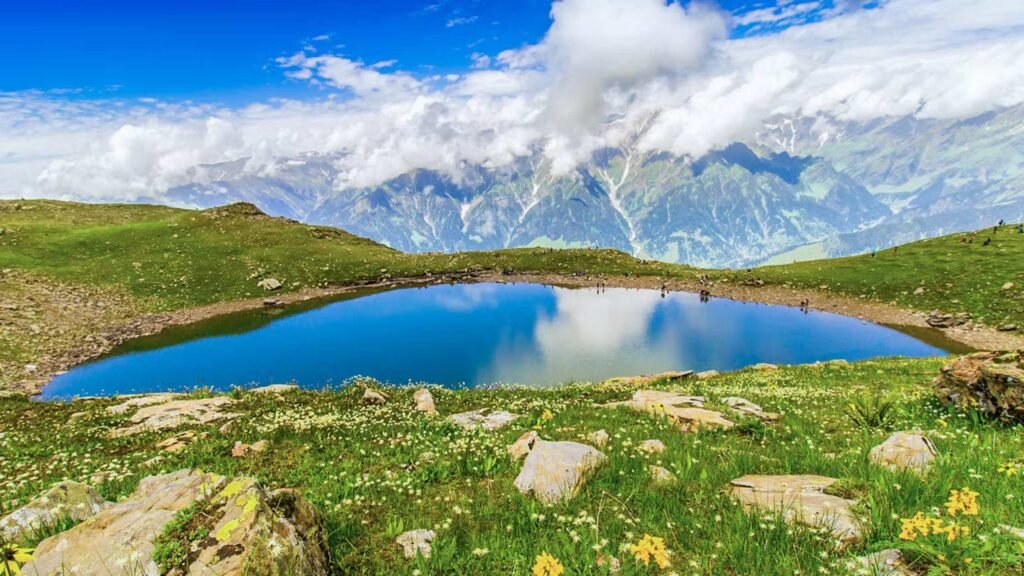
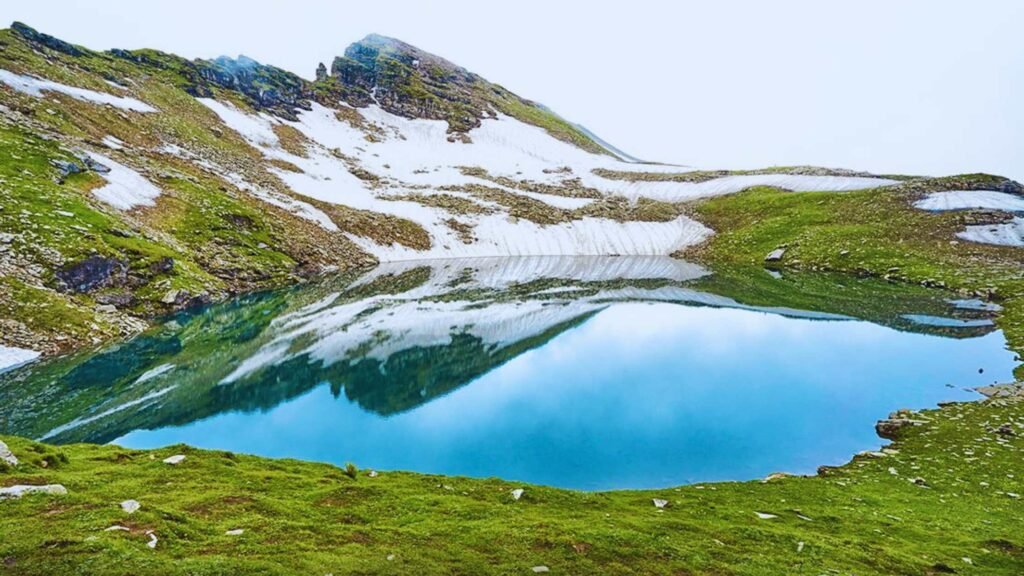
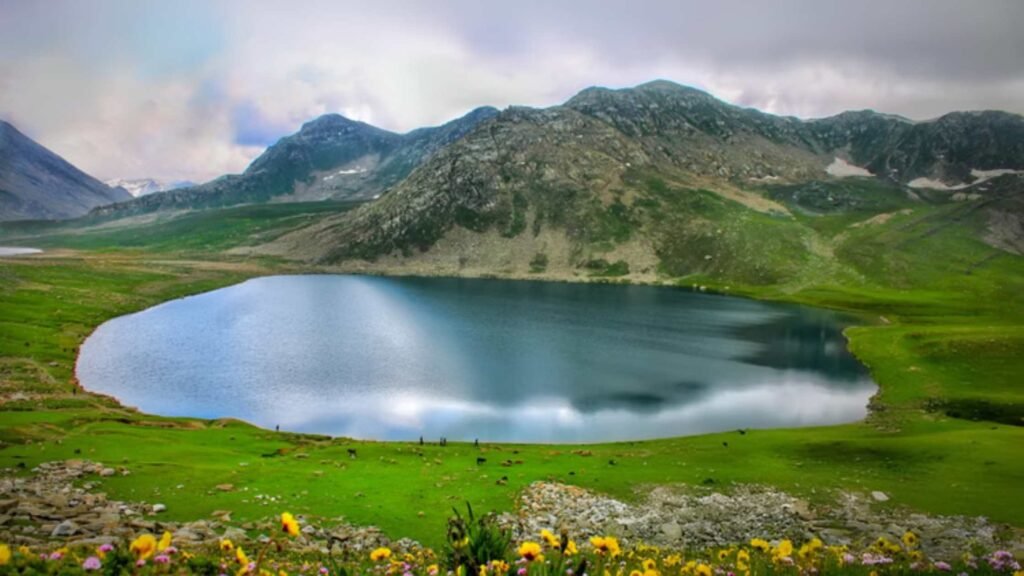
You walk through wide green pastures where shepherds graze sheep, with snow peaks sitting right on the skyline. Then the trail opens to the lake, a glacial pool ringed by bare ridges.
The other reason this trek is so loved is access. You can reach a high alpine lake at around 14,000 ft in just a few days from Manali, which is rare.
If you want to pair the trek with a relaxed mountain stay, our Manali tour packages work well as a base before or after the walk.
What Is Bhrigu Lake Like in July?
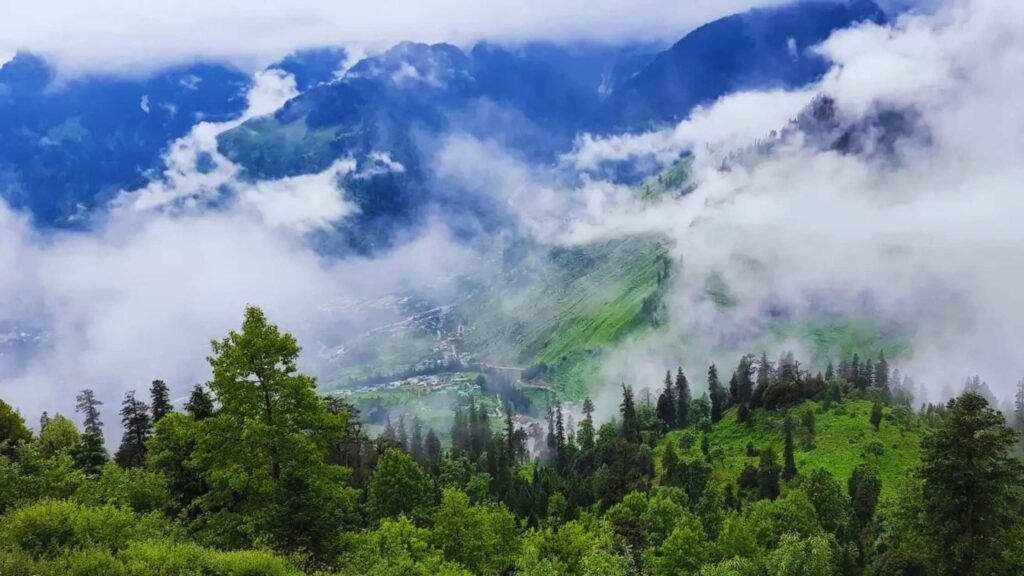
July is the monsoon face of Bhrigu Lake. The brown spring slopes turn deep green, and the meadows fill with wildflowers that you simply do not see in the colder months.
The lake is mostly thawed by July, so you see open water instead of ice.
Here is the catch most first timers miss. Early July can still have snow patches near the lake, and the higher meadows can hold leftover snow.
So in the first half of July, do not be surprised by a cold white patch on a slope while the valley below is green.
Clouds are the bigger July story. Heavy cloud cover rolls in fast and often, which means your peak views are a gamble.
Honestly, July is more about green meadows and flowers than crystal clear mountain panoramas. If you come expecting postcard blue skies every day, you will be let down. If you come for green, mist, and wildflowers, you will love it.
Bhrigu Lake Trek July Weather and Temperature
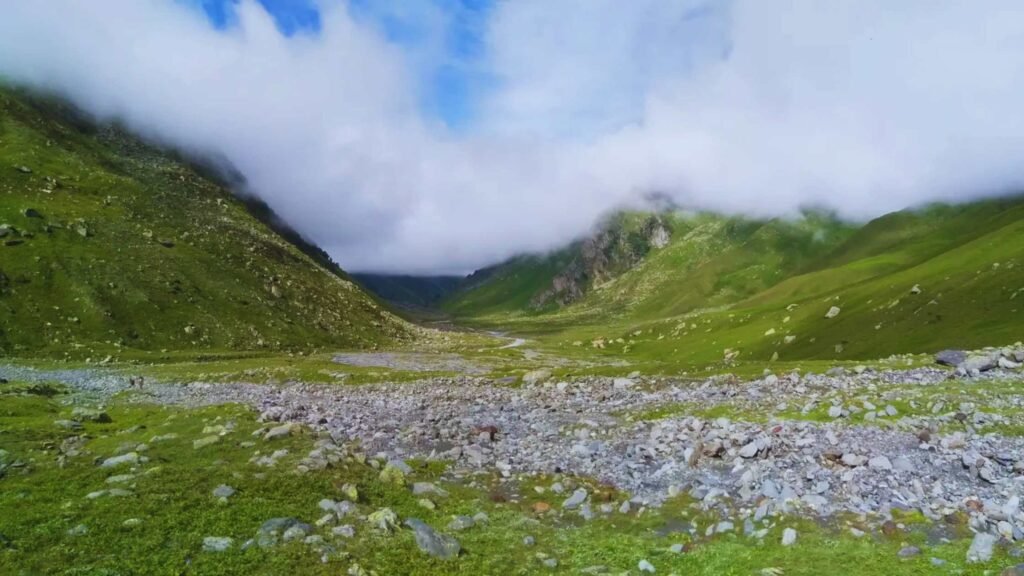
Daytime weather on the Bhrigu Lake trek in July is mild when the sun is out, but it shifts quickly.
eUttaranchal gives a July and August daytime range of around 10°C to 20°C, with nights around 5°C to 8°C. MountRoutes puts July roughly between 6°C and 17°C.
Treat these as an approximate range, not a guaranteed forecast. Mountain weather does not read the brochure.
Now add the things numbers do not show. Rain can arrive within minutes. Wind chill at the campsites makes a 7°C evening feel a lot colder once you are wet.
In our experience running July treks, the people who struggle are not the unfit ones. They are the ones who packed for a sunny picnic and got caught in a two hour drizzle with no rain layer.
Is Bhrigu Lake Trek Safe in July Monsoon?
July can be done safely, but safety here depends on rain, road status, guide support, and your own fitness. None of these are optional.
The trail gets slippery and muddy in the rain. Open meadow sections can turn into soft, ankle grabbing ground.
Visibility drops when clouds sit low, and that matters more than people think. The trail can fade across the meadows, where there is no clear single path.
That fading trail is exactly why solo trekking in July is risky. One thick cloud bank and a wrong meadow turn, and you are off route at altitude.
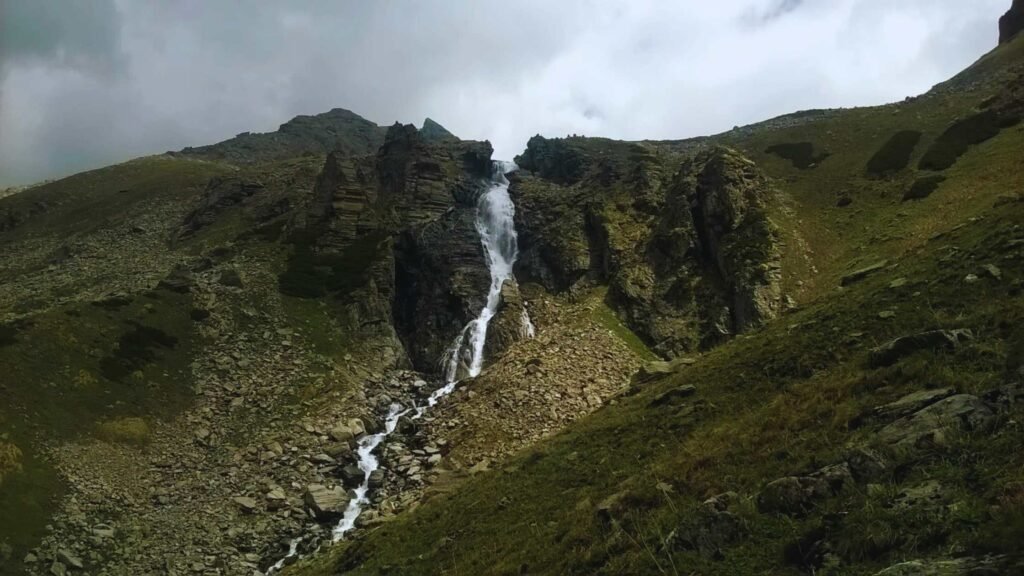
There are also stream crossings that swell after rain, and the approach roads near Gulaba and Rohtang are landslide prone in monsoon.
Our rule is simple. Check the weather 24 to 48 hours before the trek, and again on the morning you start. If the read is bad, we move or pause. We do not push a group into a wet whiteout to keep a schedule.
You can browse how we structure safety across all our Himachal treks, because the same weather first approach applies to Bhrigu.
Bhrigu Lake Trek Difficulty in July: Beginner-Friendly or Not?
The honest rating for Bhrigu Lake trek difficulty is moderate for fit beginners.
You will see mixed labels online. HPTDC calls it easy. Bikat calls it level 2 and fairly easy. Himalayan Hikers calls it moderate.
The truth sits in between, and July rain pushes it toward the harder end.
The main challenge is the steep ascent and the rapid altitude gain. You climb fast toward around 14,000 ft, and the air thins above 10,000 ft, where AMS becomes a real risk.
So the trek is not technical, but it is not a casual stroll either. Wet ground and thin air together can humble a gym fit person who never walks on slopes.
If you are reasonably fit, you can do this. Prep your body for a few weeks before. Climb stairs, take long walks, and add squats, lunges, and basic cardio so your legs and lungs are ready.
You can read how Bhrigu fits among our moderate trekking experiences to judge if it matches your level.
Bhrigu Lake Trek Itinerary in July: 3 Days vs 4 Days

Both 3 day and 4 day versions of the Bhrigu Lake trek itinerary exist. In July, HimTrails recommends the 4 day plan.
The reason is simple. Rain slows movement, and a slower climb gives your body more time to handle the altitude. A relaxed plan in monsoon beats a rushed one every time.
4-Day Safer Itinerary from Manali
Day 1 is a drive from Manali to Gulaba, about 24 km and around 1 hour, then a short trek of about 1.5 km and 1.5 hours to Jonker Thatch, where you camp.
Day 2 takes you from Jonker Thatch to Rola Kholi campsite, about 5 km and 3 to 4 hours of steady climbing through meadows.
Day 3 is the big day. Rola Kholi to Bhrigu Lake and back is about 10 km and 7 to 8 hours. You start early, reach the lake, soak it in, and return to camp.
Day 4 brings you down from Rola Kholi to Gulaba, about 5 km and 3 to 4 hours, and then you drive back to Manali.
Distances vary by route and operator, so your exact numbers may shift a little. As a reference, the TTH version runs Day 1 with a 21 km drive and a 500 m trek, Day 2 of 6 km, Day 3 of 10 km, and Day 4 of 6 to 7 km.
3-Day Fast Itinerary
A shorter plan exists too. Himalayan Hikers sells a 3 days and 2 nights itinerary, and several operators run compact schedules.
This can work for fit trekkers who are short on time and steady on their feet.
But in July, a rushed plan is less comfortable and less forgiving. One bad weather window and a 3 day plan has no room to absorb it. That is why we steer most July groups toward 4 days.
👉 Pick the right stay & route — we’ll help.
How to Reach Bhrigu Lake Trek Base from Manali
Most Manali to Bhrigu Lake trek routes start from Gulaba or a nearby roadhead.
The drive from Manali to Gulaba is around 21 to 24 km and usually takes 1 to 2 hours, depending on traffic, route, rain, and your operator.
You travel along the Manali to Rohtang road, passing Palchan, Kothi, and then Gulaba, where the trek properly begins.
In monsoon, this short drive is the unpredictable part. A small landslide or a slow checkpoint can add an hour with no warning.
A local insider tip from our drivers. Start this drive early. The Gulaba and Rohtang stretch gets busier and slower as the morning goes on, and an early start also gives you more daylight buffer on the trail.
If you want to add other things around your trek, our guide to adventure activities in Manali covers what is worth your time near town.
Permits, Road Status and 2026 Updates for July
This is where most articles get sloppy, so read carefully.
Rohtang vehicle permits are separate from any trek permission. They are not the same thing.
The official Rohtang portal offers Rohtang Pass, Special Rohtang, and Hamta Pass permit options for vehicles. It also states that congestion charges apply to all vehicles crossing Gulaba Bridge, and that permission printouts are compulsory.
So if a vehicle takes you up that road, that vehicle side of permits matters.
For the Bhrigu Lake trek permit itself, the situation is CONFLICTING, so VERIFY. Some sources say forest or camping permits are required, while another says no permit is needed.
Do not gamble on this. Confirm the current rule with your trek operator or the local Manali authority before you leave.
When you book a guided trek with us, we sort out the required permissions and tell you exactly what applies on your dates, so you are not guessing at a checkpoint.
For more on how this road behaves earlier in the season, our Rohtang Pass guide gives useful background on access and timing.
One more 2026 note on demand. Bikat listed July 2026 dates of 4 to 7 July and 25 to 28 July as open, while 11 to 14 July and 18 to 21 July showed as full at the time we checked. July dates fill up, so book early.
Bhrigu Lake Trek Cost in July 2026
The Bhrigu Lake trek cost 2026 depends on what is bundled into your plan.
Looking at verified public rates, Himalayan Hikers lists a 2026 trek fee of ₹4,500 plus 5% GST, with backpack offloading at ₹1,500.
These are useful reference points, not a single fixed price.
Your final cost shifts with operator, meals, tents, guide, transport, permits, GST, and group size. A bigger group usually means a better per person rate.
Our own HimTrails Bhrigu Lake trek package starts from ₹5,999 per person on a group joining basis, with guide, permits, camping, meals, and trailhead transport included. Private group rates differ.
If you want to play with numbers before deciding, our trip cost calculator gives you a quick ballpark.
What to Pack for Bhrigu Lake Trek in July
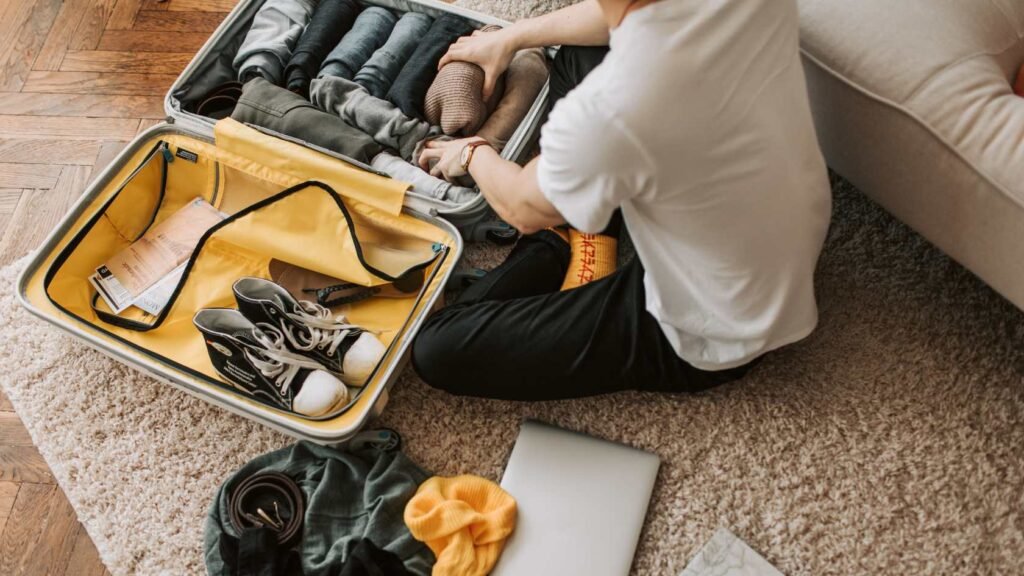
July packing is all about staying dry and warm at the same time.
Start with rain protection. Carry a good poncho or rain jacket and a waterproof cover for your backpack. In July, these are not optional.
For your feet, bring proper trekking shoes with strong grip. Wet meadows and muddy slopes are no place for casual sneakers.
For clothes, pack quick dry layers for the day and at least one proper warm layer for the cold nights. Carry extra socks, because dry socks at camp are pure happiness on a wet trek.
Add a headlamp, your personal medicine, a valid ID proof, a reusable water bottle, sunscreen, and sunglasses, since the UV is strong even under cloud.
Pack a few dry bags too, to keep your phone, documents, and a spare warm layer safe from the rain.
The one mistake we keep seeing. People carry cotton t shirts and jeans. In monsoon, cotton soaks, stays wet, and chills you fast. Skip cotton, skip casual sneakers, and you avoid most July misery.
Bhrigu Lake in July vs June, August and September
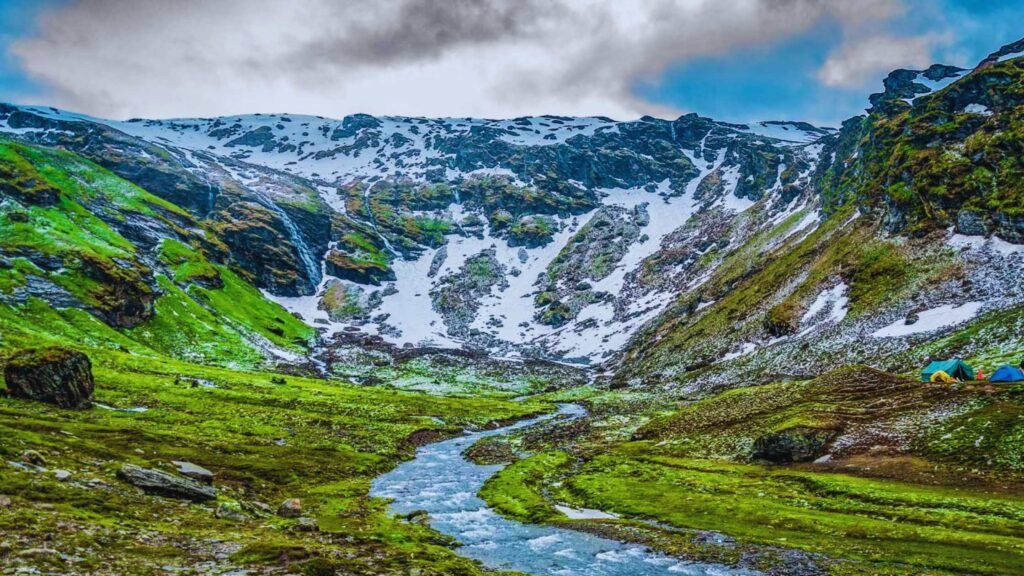
People always ask which month is best, so here is the honest month by month read.
June is better for snow and a frozen or half frozen lake. The slopes are drier and the views are often clearer, but it is colder higher up.
July gives you green meadows, wildflowers, and a thawed lake, with the trade off of monsoon rain and clouds.
August can be even wetter, with lower visibility and more road risk on the Manali side.
September is the sweet spot for many. Skies clear up after the monsoon, the air is crisp, and the post monsoon views are some of the best of the year.
To put it in source terms, MountRoutes rates June, September, and October as peak windows, while July to September is good for meadows and flowers.
So if your heart is set on flowers and green, July is your month. If you want clear peaks and you can wait, September is hard to beat.
Who Should Do Bhrigu Lake Trek in July and Who Should Avoid It
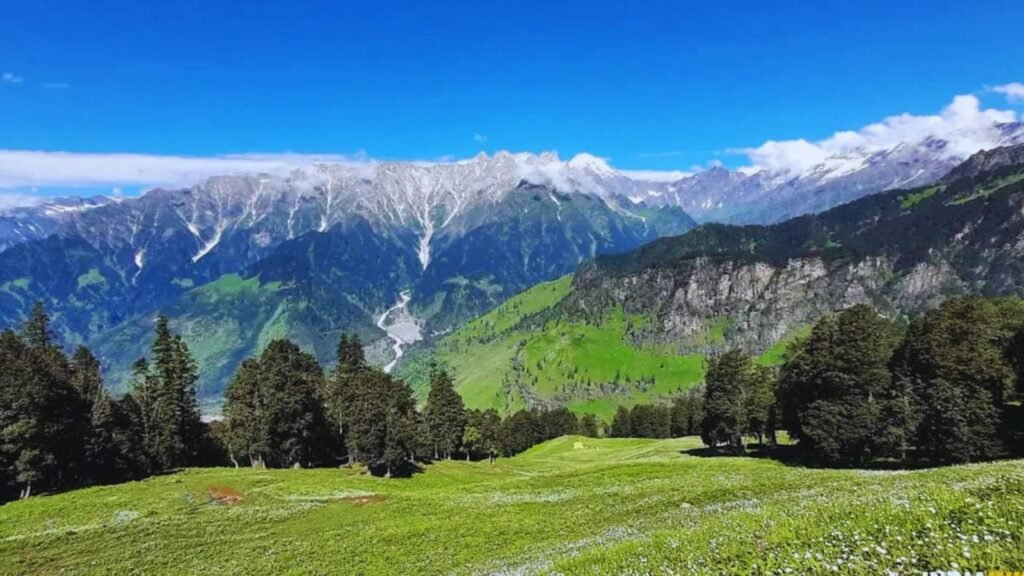
July suits fit travellers who accept that mountains in monsoon mean rain, mud, cloud, and flexible schedules. If you can roll with a delayed start or a foggy summit day, you will have a great time.
It also suits people who love green landscapes and wildflowers over guaranteed clear views.
It is not the right month for everyone. Skip July Bhrigu if you want guaranteed views, zero rain, or hotel level comfort on the trail.
Avoid it with very young children, with weak or troublesome knees, or if you have a fixed return flight and no buffer day. A single washed out road can throw a tight plan into chaos.
Being upfront about this is part of our job. We would rather tell you July is not your month than sell you a trek you will regret.
Local HimTrails Tips for July Trek Planning
After years on these trails, here is what we actually tell our travellers.
In our experience, the best July plan is the one with a buffer day in Manali. That spare day is your insurance against rain and road delays, and it is the single biggest comfort upgrade you can make.
Check the weather and road updates the day before and the morning of your trek. Conditions here change overnight, and a clear evening means nothing for a cloudy dawn.
Do not trek solo in July. The fading meadow trail and sudden cloud cover make a guide genuinely valuable, not just nice to have.
Start early every day. Mornings are clearer and safer, and afternoon clouds tend to build up later.
Keep your waterproofing ready at all times, not buried at the bottom of your bag. And when a local guide gives a safety instruction, follow it. They are not being dramatic, they are reading signs you cannot see yet.
Our guides are ITBP and IMF certified, and we cap it at one guide for every six trekkers on high routes, with a weather check 48 hours before every departure.
If you want help shaping the full trip, look through our popular Himachal tours or just contact HimTrails and we will build a plan around your dates.
👉 Want this trip? Let’s plan it right.
अक्सर पूछे जाने वाले प्रश्न
Also Read: Hampta Pass Trek in July 2026: Weather, Safety, Itinerary and Local Tips
क्या आप अपने हिमाचल एडवेंचर के लिए तैयार हैं?
Get FREE customized itinerary · Best Price Guaranteed · Local Himachal Experts · 3,973+ Happy Travelers