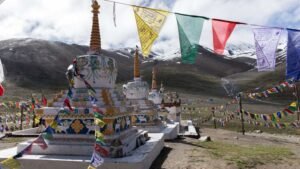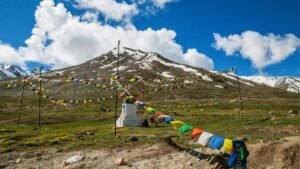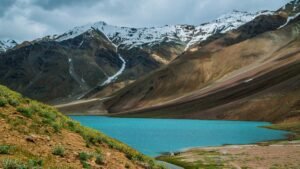
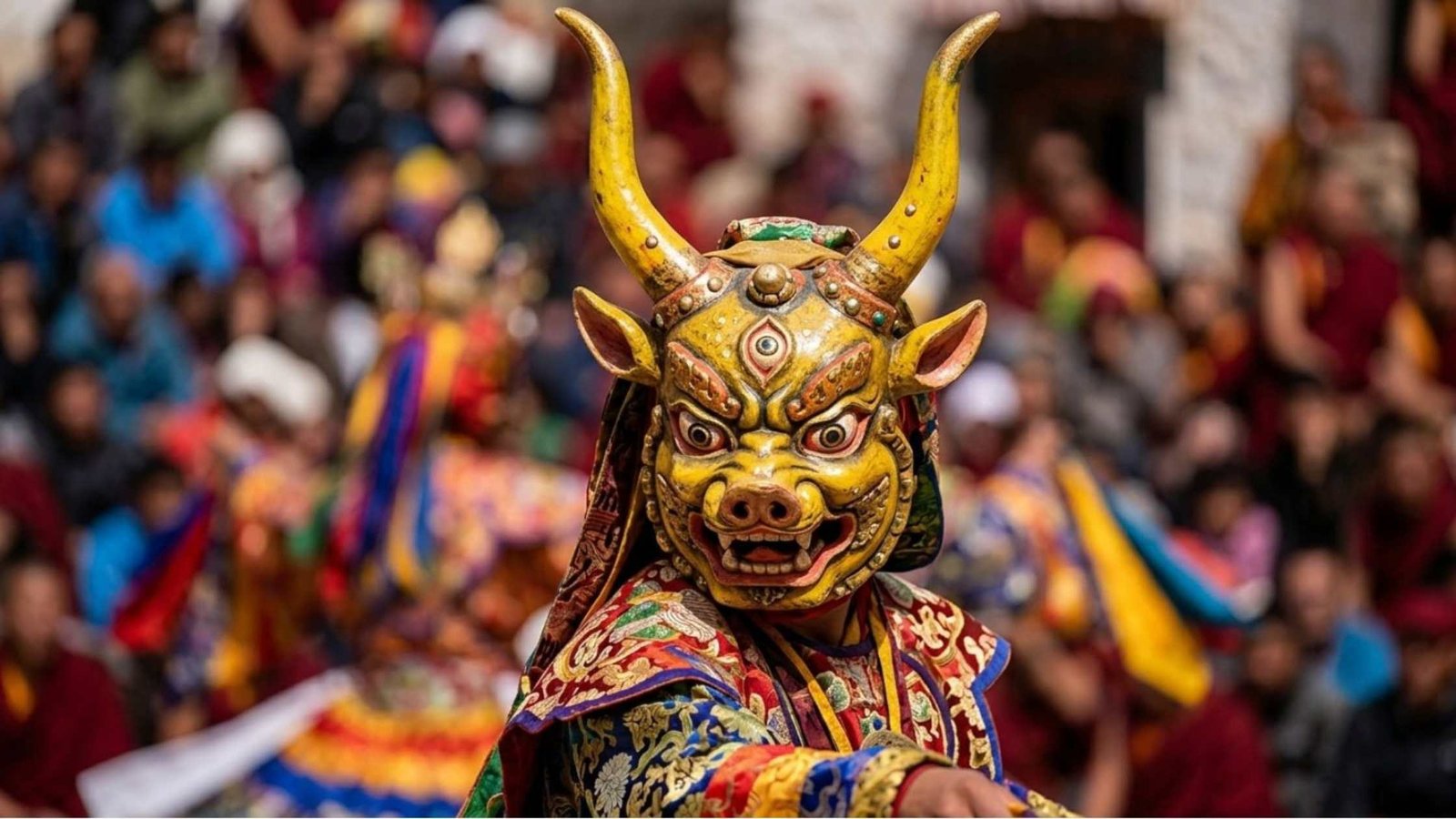
Every August, the quiet town of Kaza wakes up to drums, maroon robes, and stalls selling things you will not find anywhere else in India. This is the Ladarcha Festival स्पीति, the biggest cultural and trade fair the valley has.
If you are planning a Spiti trip and want to time it with the one event where the whole valley shows up in one place, this is it. We run trips through Spiti every season, and the Ladarcha festival period is the date travellers ask us about most.
This guide gives you the real picture. The dates, the history, where it actually happens, what you can buy, and how to plan the trip without wrecking your acclimatisation.
Quick Answer
The Ladarcha Festival Spiti is the valley’s main cultural and trade fair, held in Kaza every year, usually in the third week of August.
It began centuries ago as a trans Himalayan trade fair in Kibber Maidan, linking Spiti with Ladakh, Tibet and Kinnaur. The Himachal Pradesh Government revived it in the 1980s and shifted it to Kaza, where it runs today.
You get folk music, traditional dances, Buddhist performances, handicraft stalls and a busy local market selling woollens, jewellery, dry fruits and farm produce.
For 2026, the State-Level Ladarcha Fair will be held in Kaza from 24 to 26 August 2026. The dates were revised from the earlier proposed schedule of 21 to 23 August.
👉 Confused? Let locals plan your trip.
What is the Ladarcha Festival in Spiti?
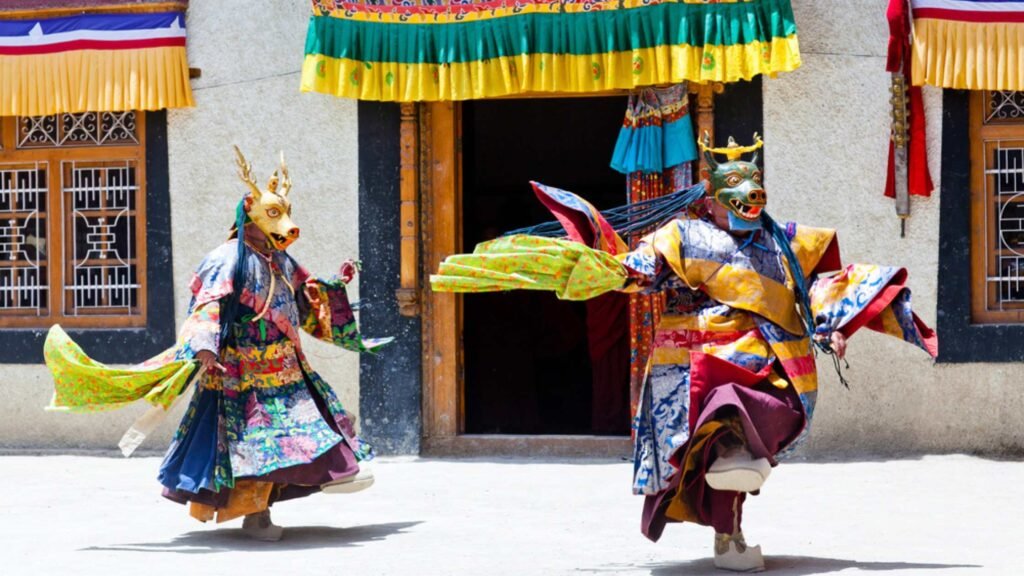
The Ladarcha Festival Spiti is the most important cultural and trade fair in the whole valley. Nothing else brings the community together quite like it.
For a few days, Kaza turns into a meeting ground. Traders, farmers, monks, musicians and families from across Spiti and beyond gather in one spot.
Think of it as part market, part cultural show, part village reunion. People come to sell, to buy, to dance, and to meet relatives they only see once a year.
The word “Ladarcha” itself points to its trading roots. Long before tourists came here, this was where survival deals were struck before the long winter shut the valley off.
In our experience, travellers who plan around this fair week get a side of Spiti that day-trippers never see. You meet locals when they are relaxed, proud, and showing off the best of what they make.
One thing most tourists get wrong: they assume Ladarcha is a tourist event staged for visitors. It is not. This is a real working fair for the local community first, and you are a welcome guest rather than the main audience.
Ladarcha Festival 2026 Dates
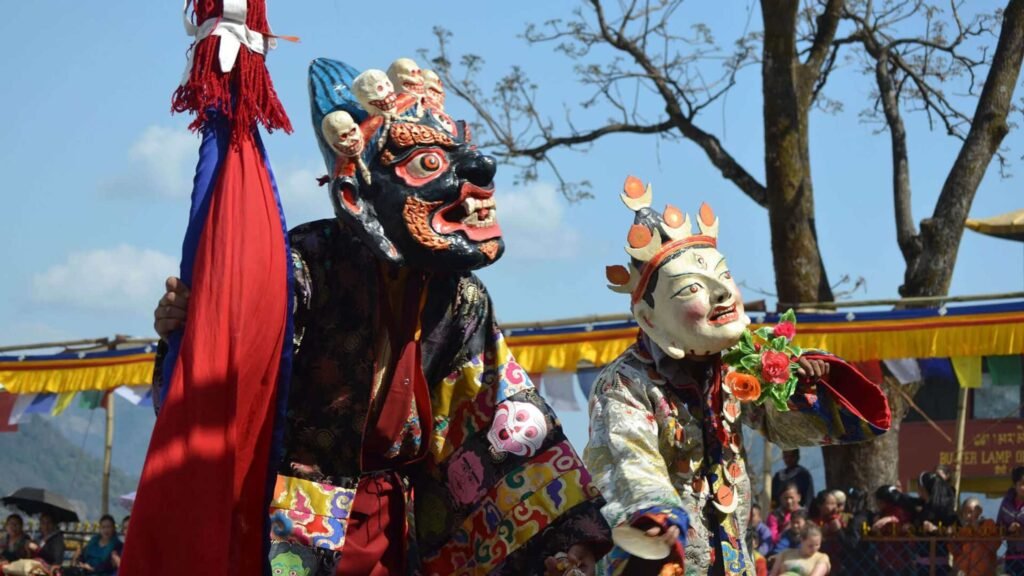
The State-Level Ladarcha Fair 2026 will be held in Kaza from 24 to 26 August 2026. The fair was initially proposed for 21 to 23 August, but the dates were later revised by the local administration.
The festival will begin on 24 August with a traditional procession from Kaza Gompa to Ladarcha Mela Ground. Cultural evenings are planned on all three days, with performances by local artists, Mahila Mandals, schoolchildren and cultural groups. A farmers’ fair and departmental exhibitions are also part of the programme.
Travellers should still keep some flexibility in their itinerary because road conditions in Spiti can change quickly. Check the latest Lahaul-Spiti district road status before travelling, especially if you plan to use the Manali–Kaza route via Kunzum Pass.
History of Ladarcha Fair
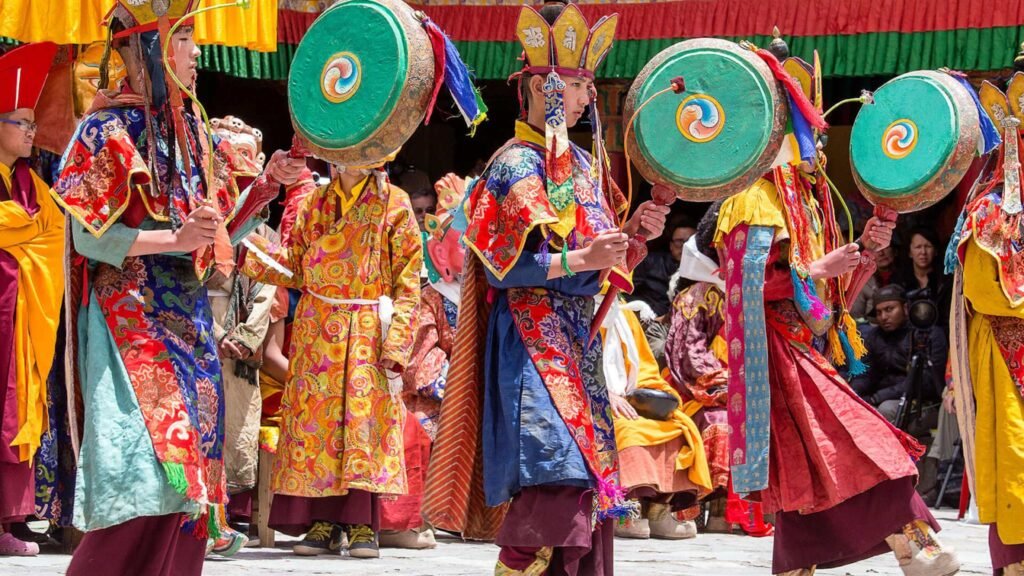
The story of the Ladarcha Fair Kaza is really the story of how Spiti survived in a place where winter cuts you off for months.
This was never just a festival. It was a lifeline.
Origins as a Trans Himalayan Trade Fair
Ladarcha began as a trans Himalayan trade gathering. It connected Spiti, Ladakh, Tibet and Kinnaur at a single meeting point.
Traders crossed brutal high passes on foot and on horseback to reach it. They carried goods from regions that had no other way of reaching each other.
The original Ladarcha Fair was held at Kibber Maidan in July, where traders from Ladakh, Rampur Bushahr and Spiti gathered to barter their produce.
In a land with almost no roads and no shops, a fair like this was how you got what your own village could not produce.
Why the Fair Was Essential for Survival
Spiti grows very little. The land is cold, dry and high. For most of the year, nothing comes in or goes out.
So families used Ladarcha to stock up for the long winter ahead. They traded what they had for what they needed.
Wool, salt, butter, barley, dried meat, tea and everyday goods changed hands here. A bad year at the fair could mean a very hard winter at home.
That is why this gathering carried so much weight. It was not entertainment. It was the difference between a comfortable winter and a desperate one.
Revival of the Festival
Over time, modern roads and new supply chains made the old survival trade less critical, and the fair faded.
The Himachal Pradesh Government revived it in the 1980s and moved it to Kaza, the main town of Spiti.
The new version kept the trade spirit but pushed culture front and centre. Folk dances, music and Buddhist performances became as much the point as the buying and selling.
Today the fair lives on in Kaza as a celebration of Spiti’s identity. The trading roots are honoured, but now the whole valley comes to perform, not just to barter.
Was Ladarcha Originally Held in Kibber or Kaza?
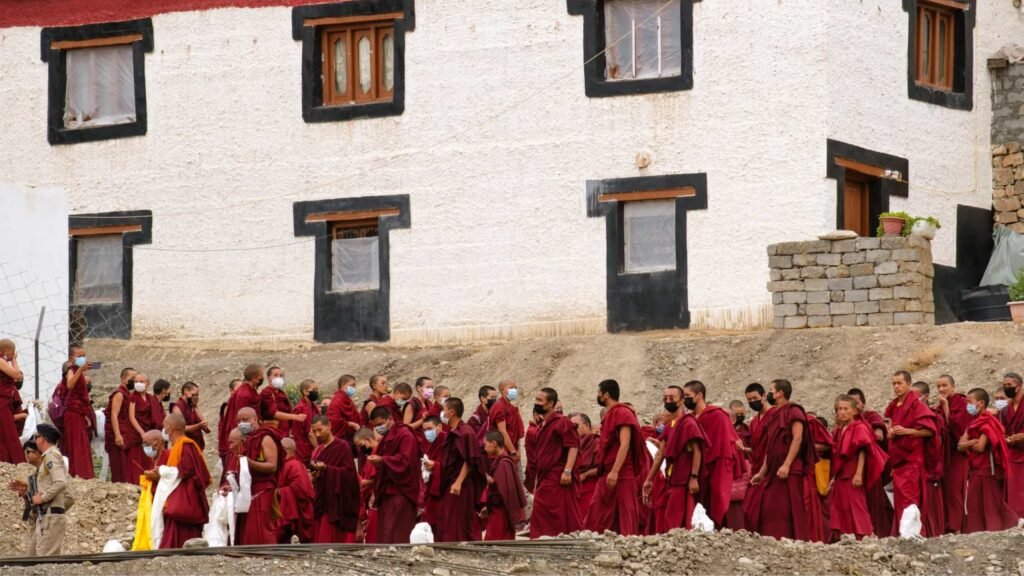
This trips up a lot of people, so here is the clear answer.
Ladarcha did not start in Kaza. The original fair was held at the Ladarcha Ground near the Kibber Maidan, higher up in the valley.
Kaza became the venue only after the government revived the event in the 1980s and shifted it down to the town.
So if you read somewhere that Ladarcha is a “Kibber festival,” that is correct about the history but wrong about today. The Kibber Ladarcha Fair roots are real, but the modern fair runs in Kaza.
We mention this because travellers sometimes drive up to Kibber expecting the fair and find a quiet village instead. Head to Kaza for the actual event.
Why is Ladarcha Festival Important?
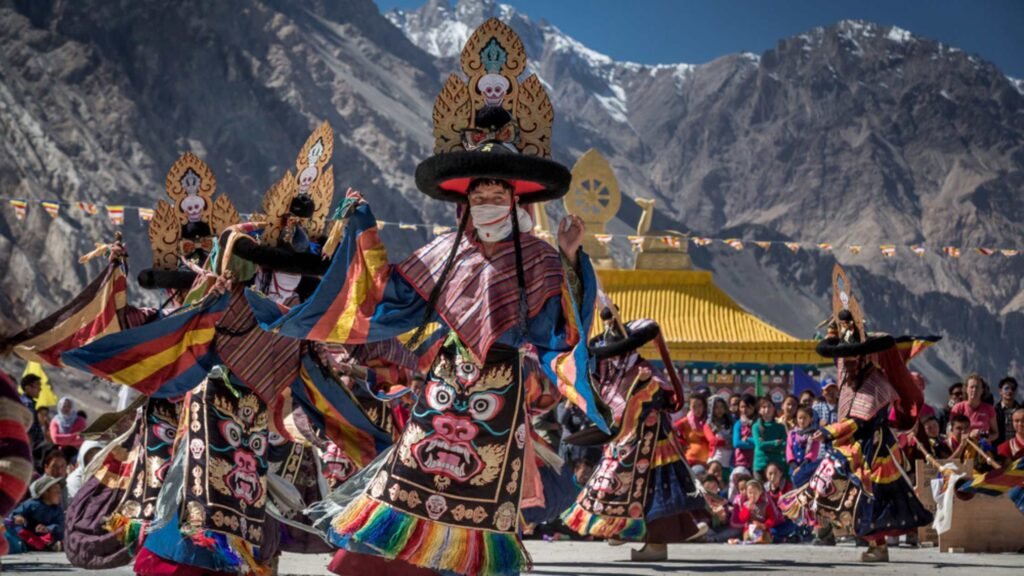
The Ladarcha Festival Spiti matters on three levels at once. Culture, money and tourism all sit inside this one event.
Cultural Importance
Ladarcha is where Spiti shows you who it is.
You see traditional dress that families keep for special occasions. You hear folk songs passed down for generations. You watch Buddhist cultural performances that tie the valley to its monasteries.
For young people in Spiti, the fair keeps these traditions alive. It gives the next generation a reason to learn the old dances and songs.
Economic Importance
The fair gives a real economic boost to local communities.
Farmers sell produce. Craftspeople sell handmade goods. Small traders earn in a few days what can carry a household for weeks.
In an economy where the working season is short, this matters a lot. Many families plan part of their yearly income around these fair days.
In our experience, buying directly from these stalls is the most useful thing a traveller can do here. Your money goes straight to the maker, not a middleman.
Tourism Importance
Ladarcha has become one of the few fixed dates that pull culture-focused travellers into Spiti.
It gives people a reason to visit beyond the usual monastery circuit. It puts Spiti on the map as a place with living traditions, not just dramatic landscapes.
For the valley, that wider attention helps homestays, drivers, guides and small cafes through the season.
What Happens During the Ladarcha Festival Spiti?
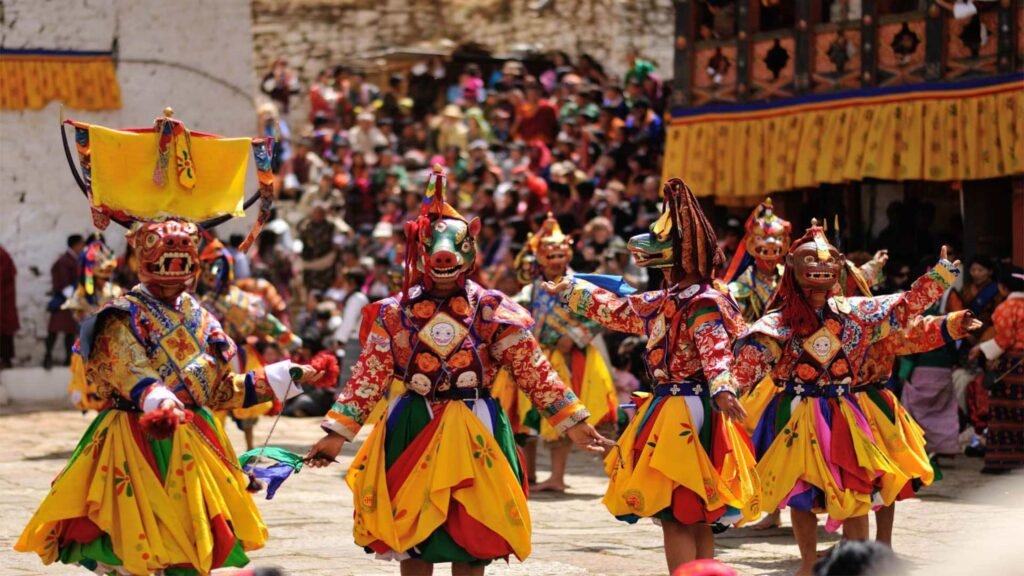
The Ladarcha Fair Kaza packs a lot into a few days, and it runs at a relaxed mountain pace.
The heart of it is the open ground where stalls go up and crowds gather.
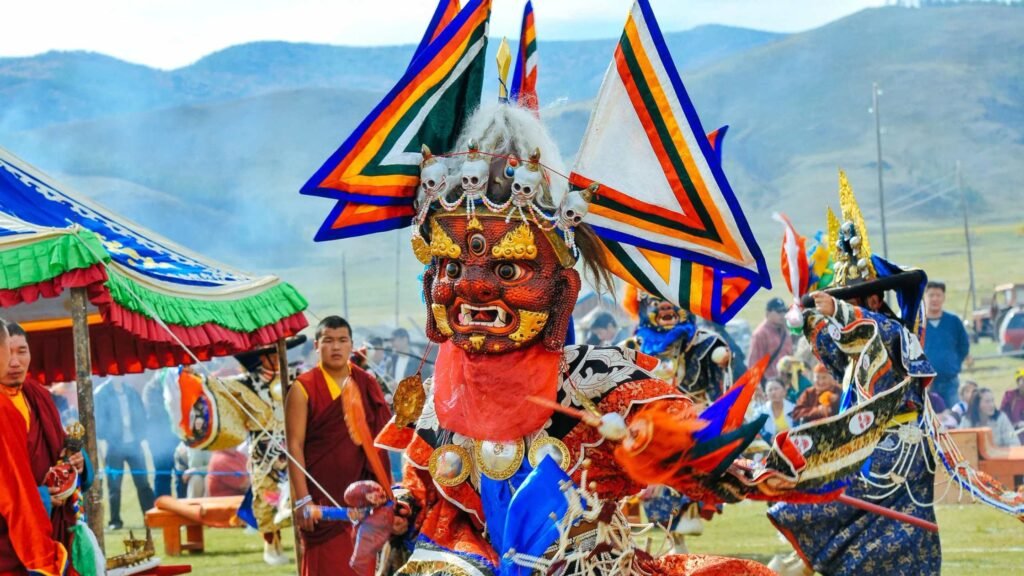
You get folk music drifting across the field through the day. You get traditional dances in bright costumes that locals practise for weeks.
You get Buddhist cultural performances that connect the fair to the valley’s monasteries and faith. You get a handicraft exhibition where makers show off their best work.
And running through all of it is the local market, busy from morning till the light fades.
People dress up. Old friends reunite. Children run between stalls. It feels less like a staged event and more like the whole valley exhaling after a hard year.
The timing tip we always share: get to the ground in the morning. The light is soft for photos, the stalls are freshly stocked, and the crowd is thinner. By afternoon it fills up and the best handicrafts start selling out.
What Can You Buy at Ladarcha Fair?
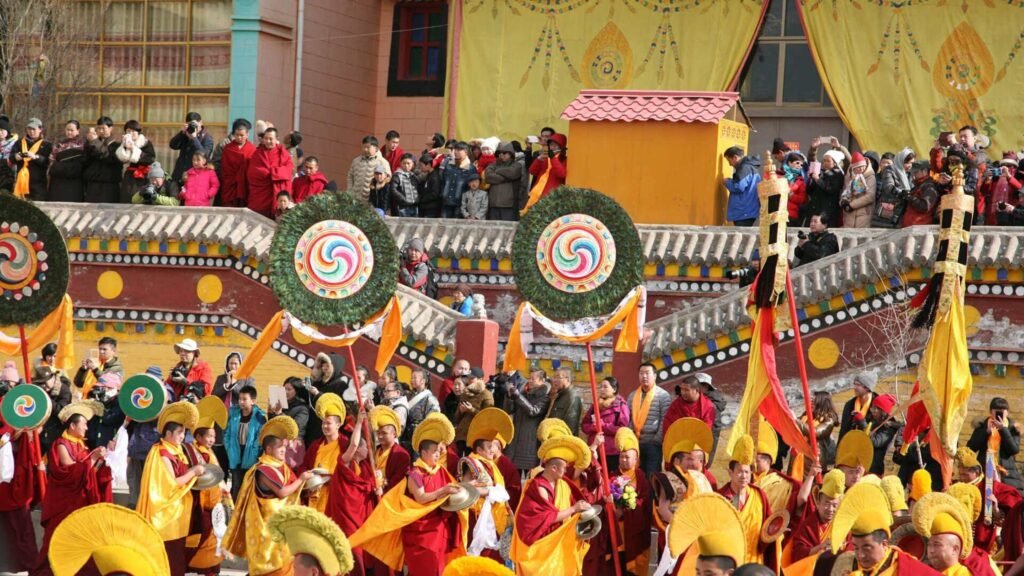
This is where the old trade fair lives on. The shopping at Ladarcha is genuinely different from a city market.
You will find woollen goods like shawls, socks, caps and blankets, all built for real Himalayan cold. These are not souvenirs. Locals actually wear them.
You will find handicrafts made in the valley, from small carvings to household items. You will find jewellery, often in traditional Spiti and Tibetan styles.
You will find dry fruits and local agricultural produce, including some varieties you rarely see in the plains.
Our honest tip on money: do not haggle hard here. Prices are already fair, the makers are not rich, and a few rupees mean far more to them than to you. Pay a decent price and you get a genuine product and a warm smile.
One thing we tell every traveller. Carry cash in small notes. Many stalls do not take UPI or cards, and the network at the fair can drop out without warning.
Best Places to Visit During Ladarcha Festival Spiti
The fair is in Kaza, which puts you right in the middle of Spiti’s best sights. Build a day or two around the festival to see the area properly.
Kaza
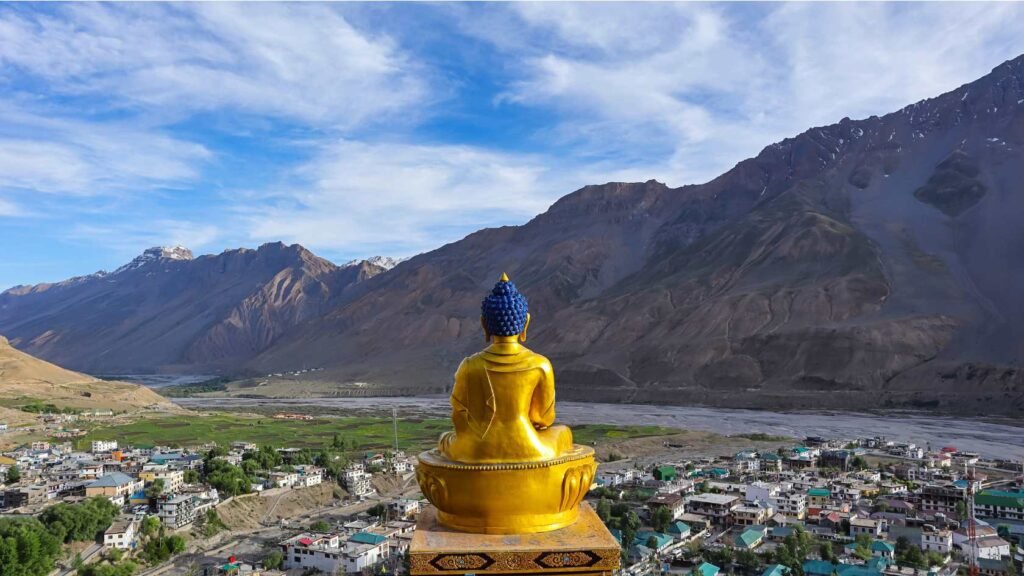
Kaza is the main town of Spiti and sits at roughly 3,800 metres (about 12,500 feet). It is your base for the fair and for everything around it.
Spend time in the local market, eat at the small cafes, and use the town to rest and acclimatise before going higher.
This is also where you find the most stay options, the most reliable food, and the best chance of a phone signal.
Key Monastery
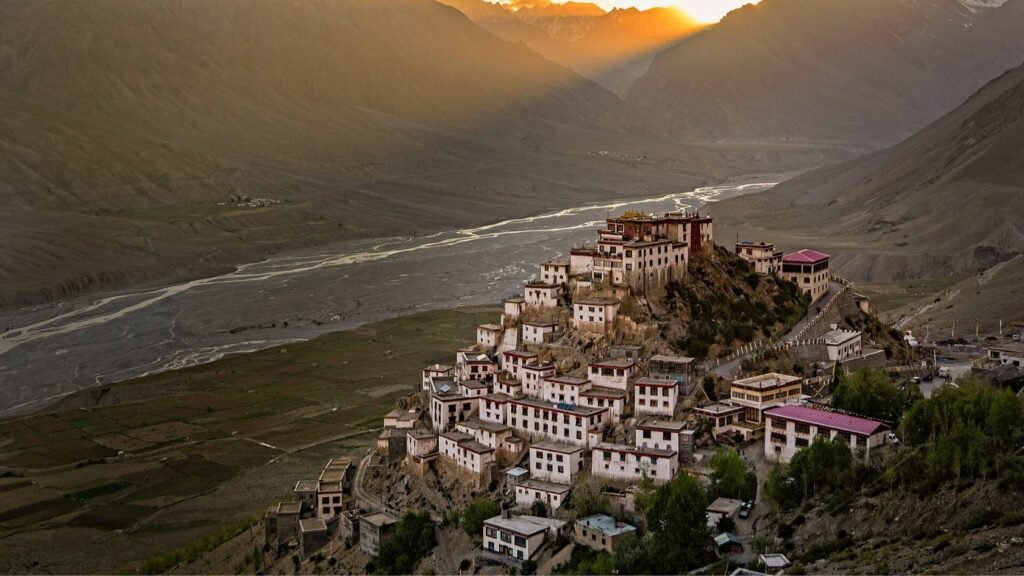
Key Monastery is the largest and most famous monastery in Spiti, a short drive from Kaza.
It stacks up the hillside like a fort, with whitewashed walls glowing against the brown mountains. Go in the early morning if you can, when the monks are at prayer and the crowds have not arrived.
This is the single most photographed spot in the valley, and it earns it.
Kibber
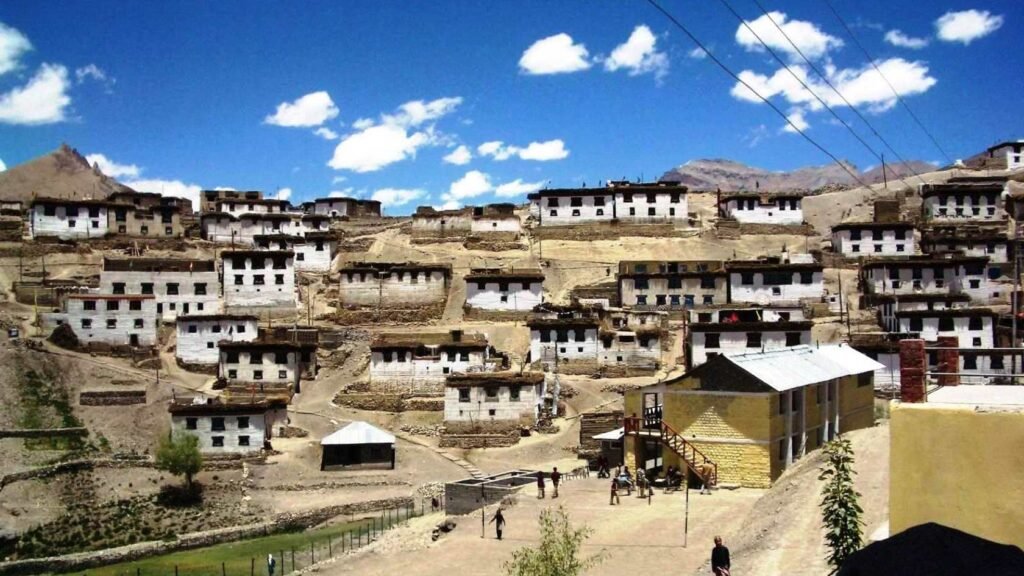
Kibber is one of the highest villages in the world that you can drive to. It is also the historic home of the original Ladarcha ground.
The drive up from Kaza takes under an hour, and the views over the Spiti valley are huge and open.
Stop here even though the fair has moved away. The old connection makes it worth the trip.
Chicham Bridge
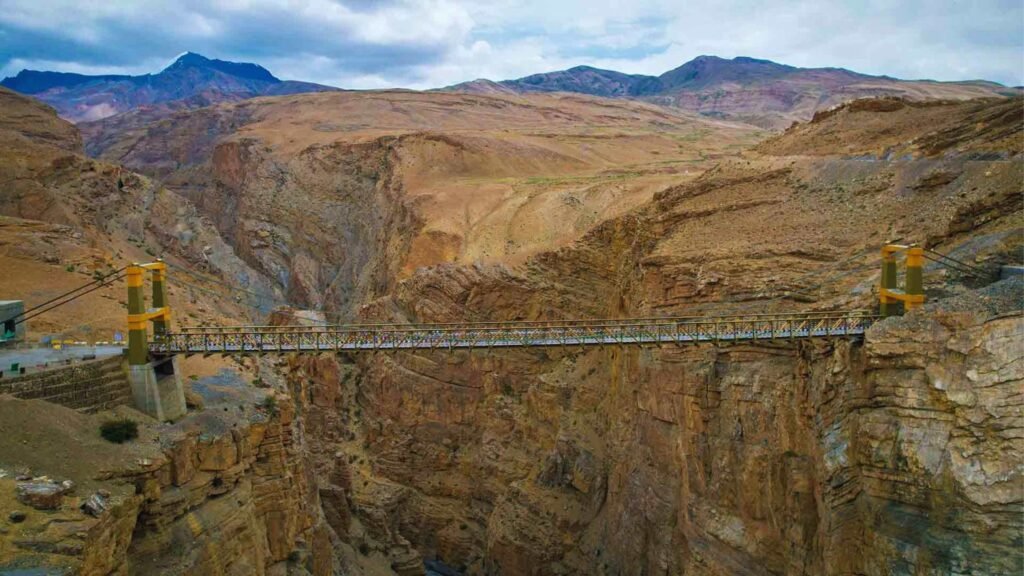
Chicham Bridge is Asia’s highest suspension bridge, hanging over a deep gorge near Kibber.
Standing on it and looking straight down into the canyon is one of those moments that stays with you. The first time we crossed it, even our driver who has done it a hundred times slowed down to take it in.
It is a quick stop and pairs perfectly with a Kibber visit.
Langza
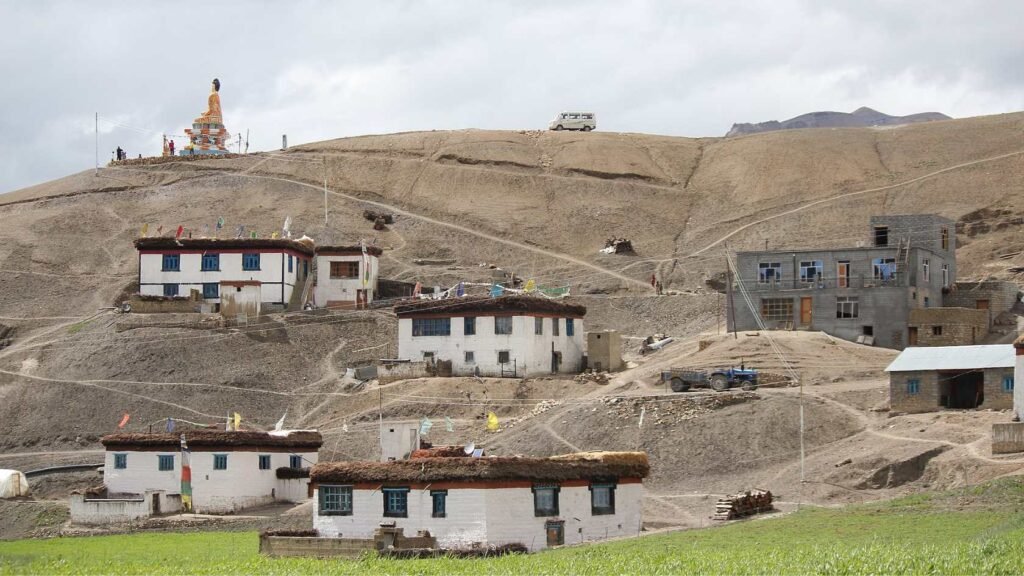
Langza is the village with the giant Buddha statue looking out over the valley. It is also known for marine fossils found in the surrounding hills, leftovers from when this land sat under an ancient sea.
Ask a local kid and they will often show you fossils. Please do not buy or carry them out, though. Leave them where they belong.
Hikkim
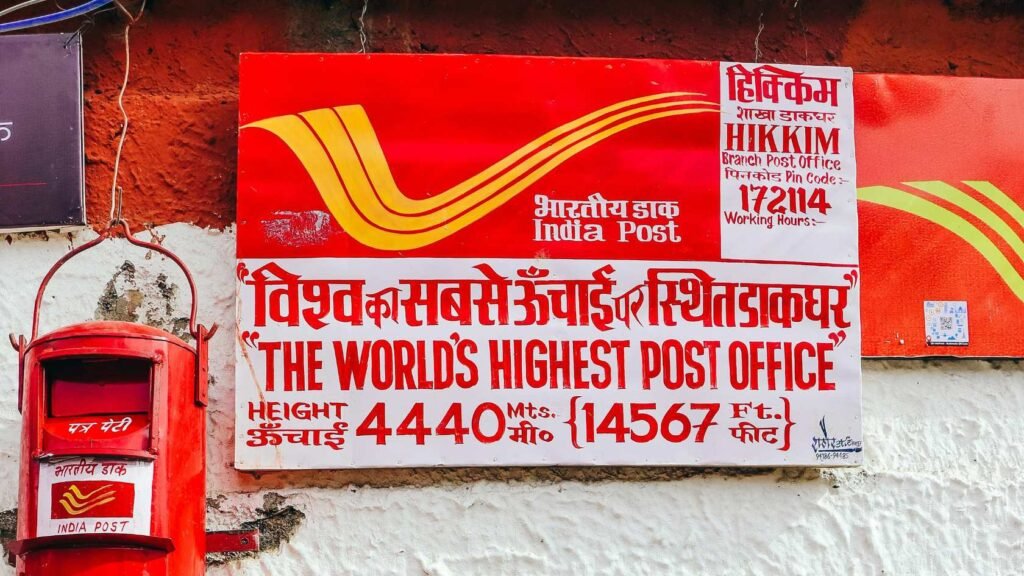
Hikkim is home to the world’s highest post office. Yes, it is a real working post office.
The thing to do here is buy a postcard and mail it to someone you love. It travels down from over 4,400 metres and takes weeks to arrive, which is exactly the charm.
Komic
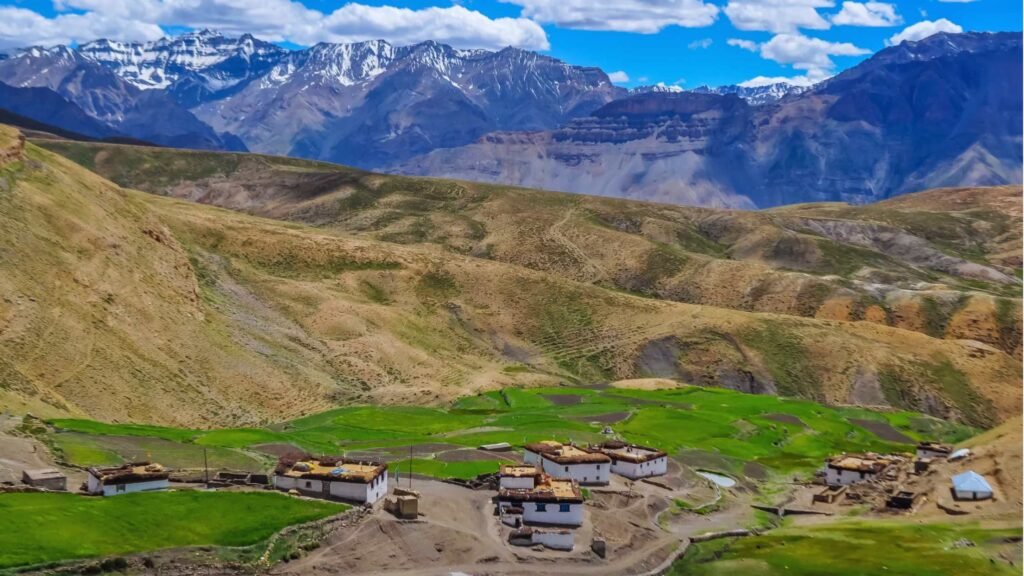
Komic is one of the highest villages in the world connected by a motorable road, and it has a small, peaceful monastery.
It is quiet, remote, and feels like the edge of the inhabited world. A short visit here rounds off the high-village circuit nicely.
These villages sit close together, so you can cover the whole loop in a day or two from Kaza. If you would rather have a local driver handle the routing and timings, our Spiti tour packages are built exactly for this.
How to Reach Kaza for Ladarcha Festival Spiti
You reach the Ladarcha Festival Spiti by reaching Kaza, and there are two main road routes into the valley.
The first is the Shimla to Kaza route via Kinnaur. You go through Narkanda, Kalpa, Nako and Tabo before reaching Kaza. This route climbs slowly, which is much kinder on your body and gives you proper acclimatisation.
The second is the Manali to Kaza route via the Atal Tunnel and Kunzum Pass. It is shorter but gains height fast, which raises the altitude sickness risk if you rush it.
For acclimatisation, entering Spiti via Shimla and किन्नौर is generally the easier approach because the altitude gain is more gradual. If you plan to exit via Manali and Kunzum Pass, check the latest road status before fixing the route.
There is no direct flight or train to Kaza. The nearest airport and railhead sit far down in the lower hills, so the road trip is the trip.
Bikers love both routes, and August works for riding as long as you watch the weather on the Manali side. If a self-ride is your dream, see what a guided bike expedition into Spiti looks like before you commit.
A real safety warning with numbers. Shared taxis can quote inflated rates during fair week because demand spikes. We have seen single-leg quotes jump well above the normal going rate during Ladarcha. Always agree the price before you sit in the vehicle, and ask a local or your operator what the fair rate should be.
Where to Stay During Ladarcha Festival Spiti
Kaza is the obvious base, and during the Ladarcha Fair Kaza week, that base fills up fast.
You get homestays, guesthouses and a few hotels in and around town. Homestays are our top pick because you eat home food, get local company, and your money supports a family directly.
The honest negative you need to hear. Kaza is a small town, and fair week is peak demand. If you turn up without a booking expecting a room, you may end up stuck or paying double. Book early.
If Kaza is full, nearby villages like Kibber, Langza or Komic sometimes have homestay rooms. They are higher and colder, so only choose them once you are acclimatised.
What we always tell first-timers: spend your first night lower, at a place like Kalpa or Tabo on the way in, before sleeping at Kaza’s altitude. Arriving slowly means you actually enjoy the fair instead of nursing a headache in your room.
👉 Pick the right stay & route — we’ll help.
Suggested 7 Day Ladarcha Festival Itinerary

Here is a 7-day plan that gets you to Kaza with gradual acclimatisation. It enters via Shimla; the return route should be chosen according to the latest road conditions.
Day 1: Shimla to Kalpa
Drive through Kinnaur along the Sutlej. Stay overnight at Kalpa with views of Kinner Kailash. An easy first day to start adjusting to height.
Day 2: Kalpa to Tabo
Continue deeper into the valley. Visit Tabo Monastery, one of the oldest in the Himalayas, and sleep at Tabo.
Day 3: Tabo to Kaza via Dhankar
Stop at the dramatic Dhankar Monastery and village, then reach Kaza. Rest and let your body settle at the town’s altitude.
Day 4: Ladarcha Festival day in Kaza
Spend the full day at the fair. Folk dances, music, Buddhist performances, and the market. This is the day you came for.
Day 5: Key, Kibber and Chicham
Visit Key Monastery, drive up to Kibber, and cross Chicham Bridge. Back to Kaza by evening.
Day 6: Langza, Hikkim and Komic
Do the high-village loop. See the Buddha at Langza, mail a card from Hikkim, and visit the monastery at Komic.
Day 7: Kaza to Manali
If the Manali–Kaza route and Kunzum Pass are open, travel via Batal and the Atal Tunnel to Manali. If the route is closed, keep your return plan flexible and use the safer available alternative.
If you want this run as a guided trip with a local driver and handpicked stays, our Grand Kinnaur Spiti Circuit package follows almost this exact loop.
Travel Tips for Visiting Ladarcha Festival Spiti

A few things that genuinely change your fair experience.
Acclimatise before Kaza
Spend at least one night at a lower point on the way in. Rushing straight to 12,500 feet is the fastest way to spend the fair feeling sick.
Carry cash in small notes
Stalls run on cash. ATMs in Kaza are few and often out of money during peak fair week.
Reach the ground early
Mornings are calmer, the light is better, and the best handicrafts are still on the table.
Pack for cold nights even in August
Days are pleasant in the sun, but once it drops behind the mountains, it gets cold fast. Carry a fleece and a windproof layer.
Respect the culture
Ask before photographing people, especially during performances and prayers. A smile and a quick “may I” goes a long way.
Do not over-haggle
Prices are fair and the makers are not wealthy. Pay properly.
Download offline maps and tell someone your plan
Network in and around Kaza is patchy. BSNL has the best odds, but do not rely on it.
The money-saving tip locals know: buy your woollens and dry fruits at the fair itself, not from shops on the highway later. Fair prices are lower and the quality is better because you are buying straight from the source.
Ladarcha Festival Spiti vs Other Festivals in Spiti
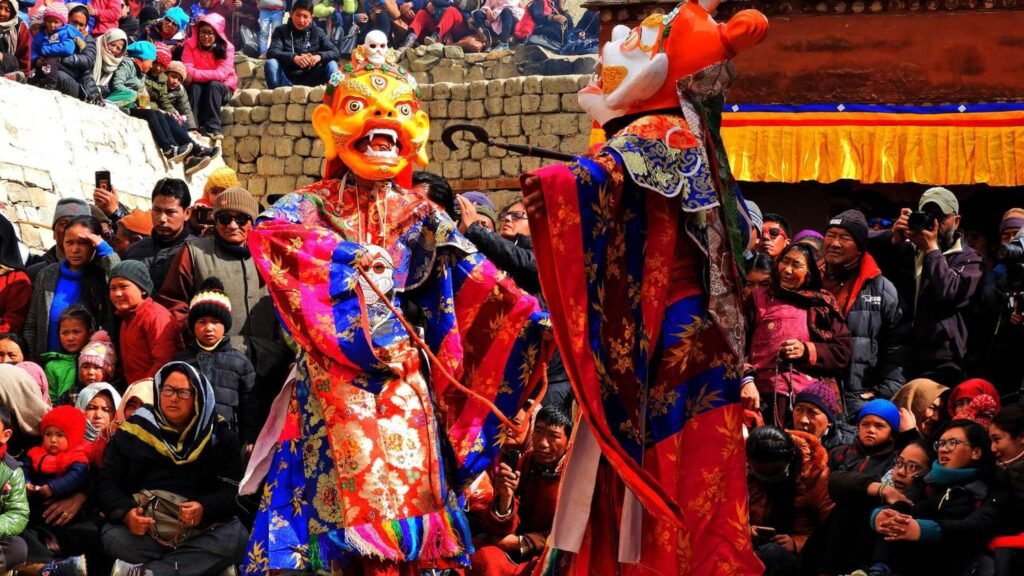
Ladarcha is the biggest, but it is not the only fair worth knowing about. If you want to understand the festivals in Spiti Valley as a whole, here is how Ladarcha fits in.
Ladarcha is the trade and cultural fair. Its identity is the old market plus folk culture, and it draws the widest crowd from across the region.
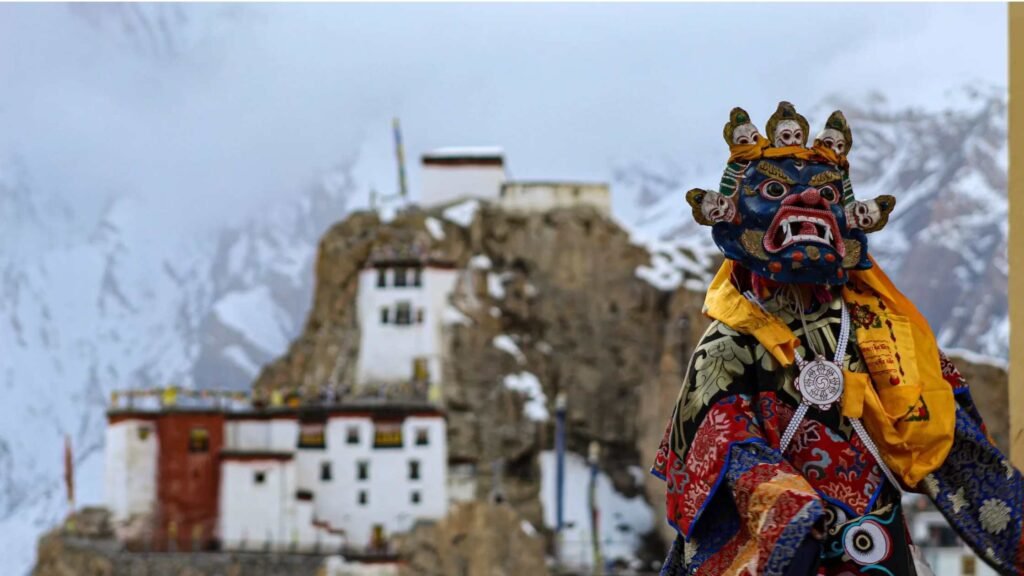
Most other Spiti festivals are tied to specific monasteries and the Buddhist calendar. These are quieter, more religious, and centred on prayer, masked dances and ritual rather than trading.
So Ladarcha gives you the social, buzzing, whole-valley experience. The monastery festivals give you the spiritual, inward one.
Ladarcha falls during Spiti’s main summer travel season, although mountain road conditions can still change because of weather, landslides and local closures.
In our experience, the travellers who love Spiti most end up wanting both. Come for Ladarcha one year, and a monastery festival the next, and you start to really know the valley.
Final Thoughts
The Ladarcha Festival Spiti is the one week when the whole valley comes out to celebrate, trade and remember who it is.
It is not a polished tourist show. It is a real fair, with deep roots in survival and trade, kept alive in Kaza for the next generation. That honesty is exactly what makes it special.
Plan it right and it becomes the highlight of your Spiti trip. Acclimatise slowly, book your Kaza stay early, carry cash, and reach the ground in the morning.
We drive these roads every season and we would rather help you plan it well than watch you struggle with avoidable mistakes. If you want a Spiti trip built around Ladarcha 2026, browse our Spiti tour packages or reach out to HimTrails and we will shape it around your dates.
👉 Want this trip? Let’s plan it right.
अक्सर पूछे जाने वाले प्रश्न
Also Read: Hampta Pass Trek in August 2026: Weather, Safety, Itinerary and Local Advice
क्या आप अपने हिमाचल एडवेंचर के लिए तैयार हैं?
Get FREE customized itinerary · Best Price Guaranteed · Local Himachal Experts · 3,973+ Happy Travelers