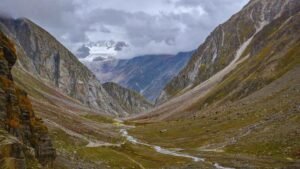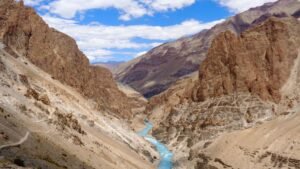
The Bhrigu Lake Trek in September 2026 can be a beautiful experience, but changing mountain weather may affect the Gulaba road, campsites and upper trail. The trek usually takes three to four days and reaches around 14,000 feet, so acclimatisation and an early start are important. Before leaving मनाली, confirm the live weather, road access, trail condition and current permit requirements. Keep a buffer day and a lower-altitude backup plan in case rain, fog or early snowfall makes the trek unsafe.
Quick Answer: Is Bhrigu Lake Trek Good in September 2026?
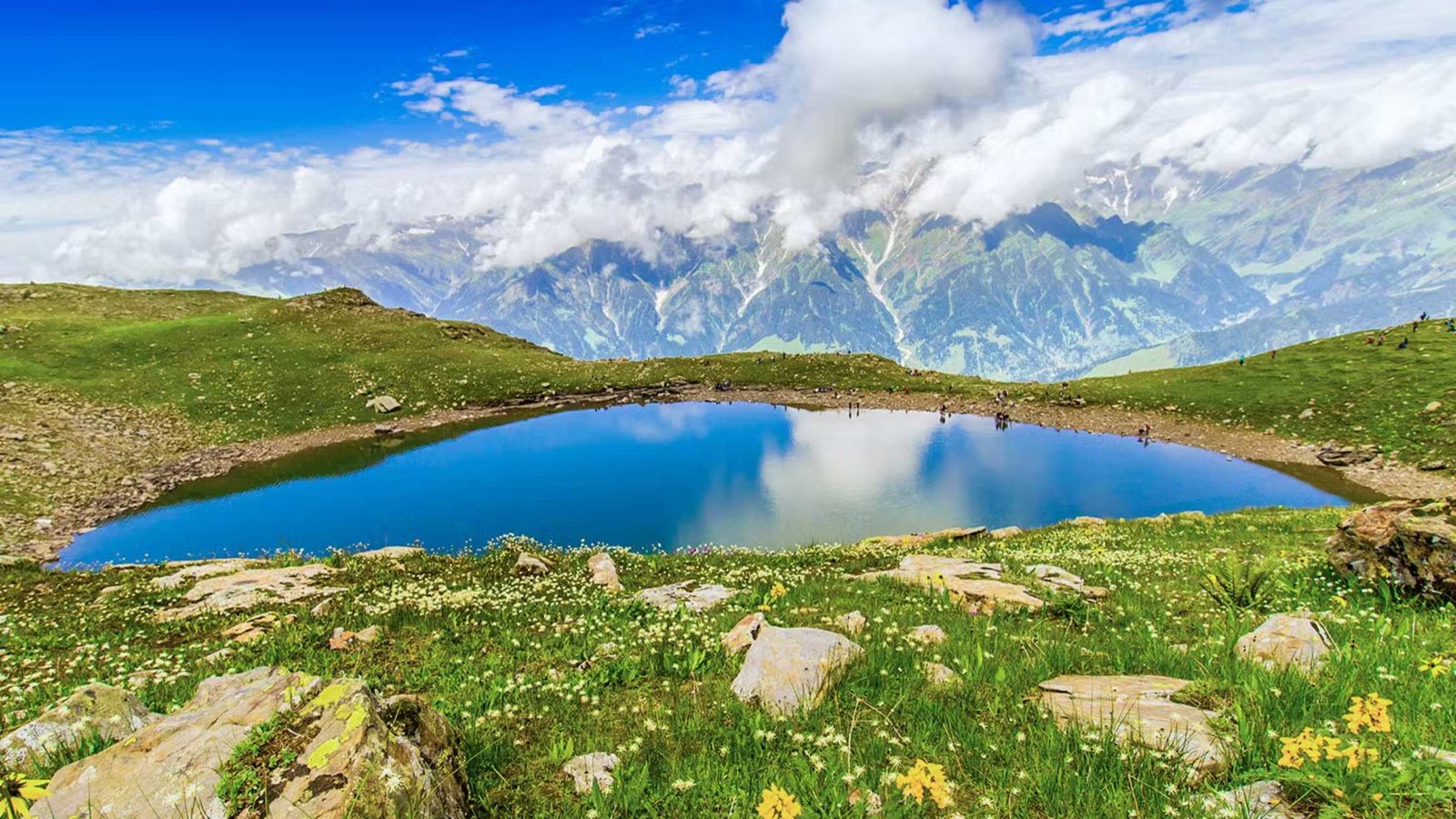
Yes, the Bhrigu Lake Trek in September is one of the stronger seasonal choices for green meadows, improving visibility and clearer mountain views than peak monsoon. Early and mid September can still bring rain because the normal monsoon withdrawal date for Himachal Pradesh is around 25 September. Nights commonly fall near 0°C to 3°C, old seasonal snow is usually gone, and most plans take three to four days.
September is attractive because the landscape still holds its monsoon green while the sky often begins to open. That balance is the real appeal. It is not a promise of dry trails, blue skies, or a snow free lake day.
In our experience, the best September trek is planned with waterproof gear, a flexible route, and enough time to wait when the mountain asks you to wait.
👉 Confused? Let locals plan your trip.
Bhrigu Lake Trek in September at a Glance
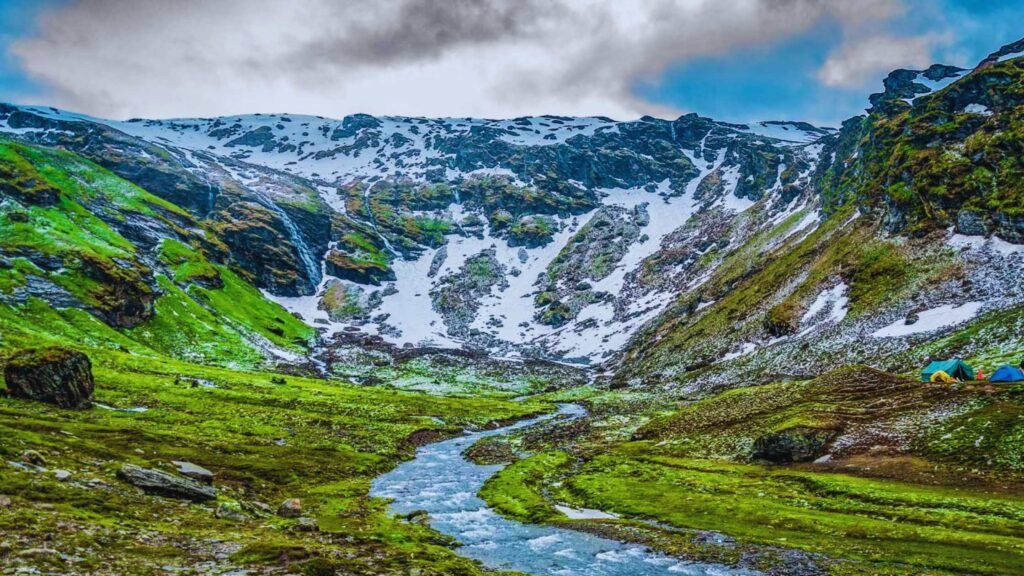
Bhrigu Lake lies in Kullu district near Manali, and Gulaba is the common roadhead on several standard itineraries. The lake is usually described at around 4,200 to 4,300 metres, which is roughly 14,000 feet.
You will see exact heights ranging from about 13,700 feet to 14,100 feet across operator pages. This difference comes from route mapping, GPS readings, and the exact point used as the lake elevation. It is better to plan for the altitude band than pretend one number is universal.
Published trek totals also vary from roughly 21.5 to 29 km. Some routes start at Gulaba and camp at Jonker Thatch and Rola Kholi. Others begin after a drive to Kulang and use Moridugh. Campsite choice, roadhead access, route variation, and GPS measurement all change the final total.
Most guided itineraries take three or four days. The attraction is how quickly the trail reaches open alpine country, but that quick access also means quick altitude gain. Treat the short duration as a reason to pace carefully, not as proof that the trek is easy.
For a wider view of regional conditions, road planning, and the changing monsoon pattern, read the HimTrails guide to Himachal in September.
What Is the Weather at Bhrigu Lake in September?
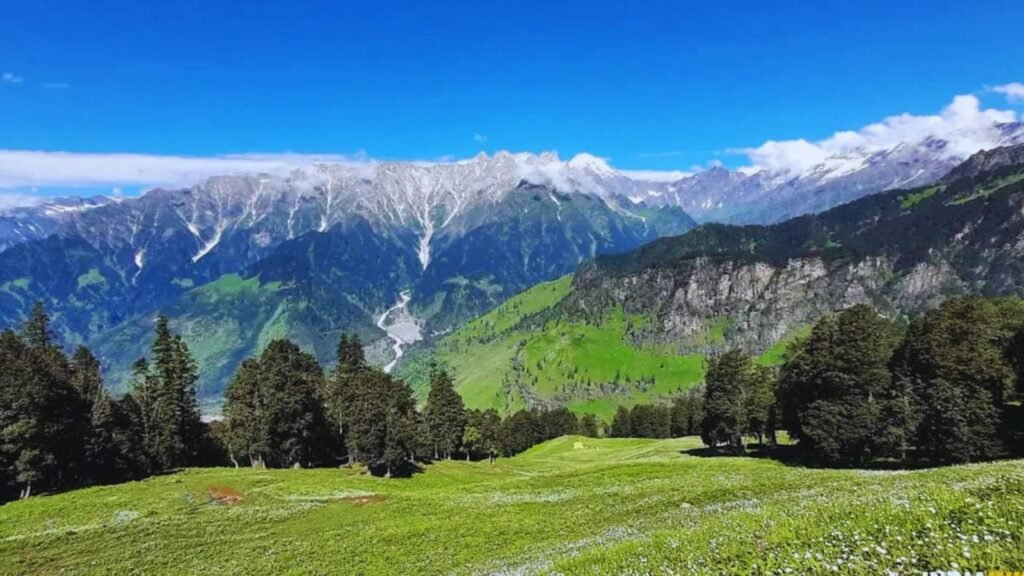
What daytime and night temperatures should you expect?
A sensible planning range is around 7°C to 15°C during the day and roughly 0°C to 3°C at night. These are seasonal guide figures, not a forecast for your exact dates.
A range of 12°C to 15°C by day and 0°C to 3°C at night for its mid August through September window. Around 7°C to 15°C during the day and close to 0°C at night for September through October.
The lower daytime figure is useful when cloud, wind, or rain removes the warmth of direct sun. Wet clothing can make a moderate temperature feel far colder, especially when you stop walking at camp.
Our team recommends packing for the colder end of the range. It is much easier to remove one layer during a sunny climb than to create warmth after your base layer and socks are wet.
Does it rain on the trek in September?
Yes, it can rain in September. The India Meteorological Department gives 25 September as the normal date for southwest monsoon withdrawal from Himachal Pradesh. That corrects the common claim that the whole month is safely post monsoon.
Early and mid September can still receive showers, low cloud, mist, slippery ground, and road disruption. A single wet spell can affect the Manali approach even when the upper meadow looks clear later in the day.
The IMD outlook dated 1 August 2026 suggested near normal August to September rainfall over some parts of northern Kullu. This is a broad probabilistic outlook for a large area. It is not a date specific forecast for Bhrigu Lake, Gulaba, Rola Kholi, or your departure.
Check the latest IMD Shimla warning close to the trek. The useful forecast is the one issued near your dates, not a seasonal slogan repeated months in advance.
Ask the operator how recent rain has affected the approach road, stream crossings, campsite ground, and the lake day. A forecast may describe rain probability, while a ground team can explain what that rain has already done to the route.
Is there snow at Bhrigu Lake in September?
Established seasonal snow as gone during its mid August to September window, with green terrain and an open lake. That is a fair seasonal expectation, not a guarantee.
Fresh rain, sleet, or snowfall can still arrive at high altitude when a new weather system moves through. The lake sits near 14,000 feet, so conditions can change faster than they do in Manali.
September is not the most reliable month for people whose main goal is walking on snow. Choose it for green meadows, sharper autumn light, and an improving chance of long mountain views. Treat any fresh snow as a possibility, not a promised feature.
Which Part of September Is Best for the Trek?
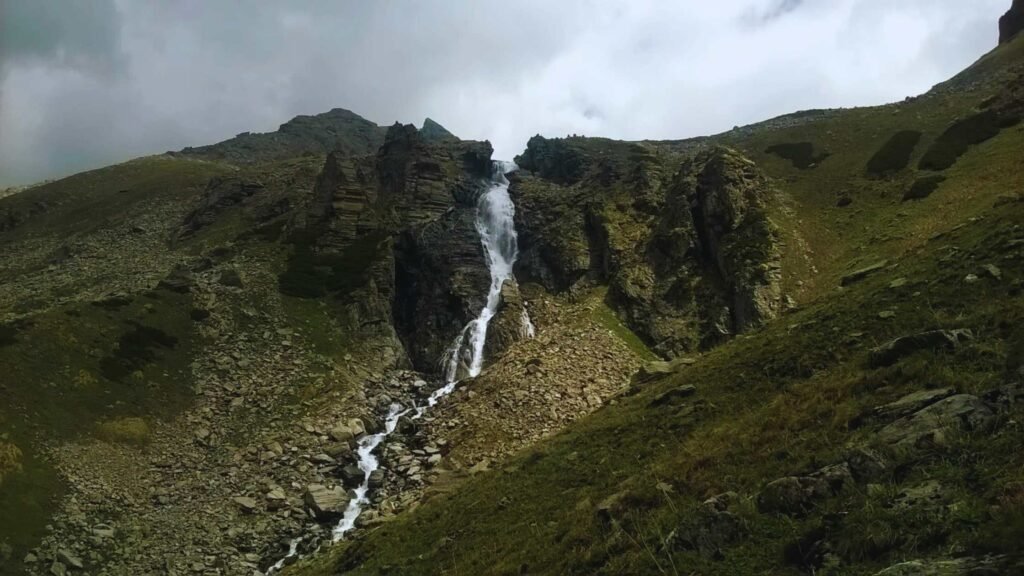
Early September
Early September usually gives the deepest green meadows and may still hold a few lingering flowers. It also carries the greater chance of residual monsoon cloud, rain, wet approach roads, and soft ground.
Pack stronger rain protection, keep electronics and warm clothing in dry bags, and leave a road delay buffer. A fixed onward ticket on the same evening as the trek finish creates pressure you do not need.
Mid September
Mid September is a transition period. You may get a rewarding mix of fresh green scenery and improving visibility, but the monsoon may not have fully withdrawn.
This is often a good window for travellers who accept uncertainty and want the landscape before it begins to turn more autumnal. Our team still plans every mid September departure with rain gear and route flexibility.
Late September
The probability of clearer post monsoon conditions generally improves around and after the normal withdrawal period. Nights also become colder, and frost can appear around camp.
A fresh western disturbance or another weather system may still bring rain, sleet, or snow. Late September is not a weather guarantee. It is simply a seasonal planning choice with better odds of clearer views than the first part of the month.
This early, mid, and late comparison is guidance, not a guaranteed 2026 forecast. For a direct contrast with wetter peak monsoon conditions, see Bhrigu Lake Trek in July 2026.
Is Bhrigu Lake Trek in September Difficult for Beginners?
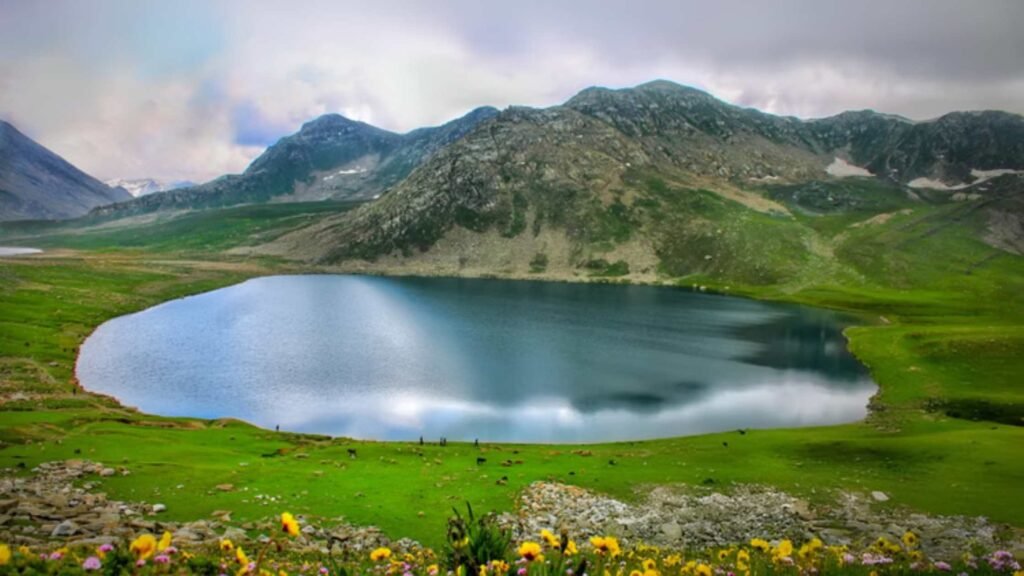
What makes this short trek challenging?
Bhrigu Lake is non technical, but it is not a casual hill walk. We describe it as moderate for a fit beginner because the altitude rises quickly and the lake day demands steady effort.
The main challenges are rapid height gain, sustained climbing, uneven ground, cold wind, and changing weather. The short number of days can make people underestimate the route.
On the four day Gulaba route, the lake day is about 10 km and commonly takes seven to eight hours. That is the longest day, with a climb from Rola Kholi to the lake and a return to the same camp.
Can a first time trekker do it?
A prepared beginner can complete a guided three or four day itinerary. General fitness helps you walk more comfortably, but it does not remove the risk of altitude illness.
Give yourself several weeks of regular walking, stair climbing, basic cardio, and leg strength work. Train with the shoes and daypack you plan to use so your feet and shoulders are not learning everything on the first climb.
Do not rely on one compulsory running number as proof that you are safe. Fitness, pacing, hydration, sleep, prior altitude response, and honest communication with the trek leader all matter.
For other trail options and difficulty levels, browse HimTrails experiences for trekking in Himachal Pradesh.
Who should postpone or seek medical advice?
Anyone with an unstable heart or lung condition, a significant previous altitude reaction, or another serious medical concern should speak with a clinician familiar with high altitude travel before booking.
A medical conversation is also sensible when recent illness, injury, or poor recovery has disrupted training. This article cannot assess personal fitness or diagnose a condition.
Do not start altitude medication casually because another trekker recommended it. Medication choice and dosage belong in a medical consultation, not in package copy.
Which Bhrigu Lake Route and Itinerary Should You Choose?
Why do three day and four day itineraries both exist?
A common four day route starts from Gulaba, then uses Jonker Thatch and Rola Kholi as camps. Another documented three day route begins after a drive to Kulang and camps at Moridugh.
Neither duration automatically proves that one operator is wrong. Different roadheads, campsite locations, route variants, and GPS methods create different time and distance totals.
The four day version spreads the trek across more stages and gives a clearer structure for a first high altitude trek. The three day version can suit a fit group on the Kulang and Moridugh route, but it gives less room for weather, fatigue, or altitude symptoms.
Recommended four day September itinerary
Day 0: Arrive and prepare in Manali.
Reach Manali before the morning your trek begins. Rest, finish your gear check, confirm pickup details, and ask for the latest road and weather update.
One night in Manali helps with logistics and gives your body a little time at a higher elevation than the plains. It does not guarantee full acclimatisation for a lake near 14,000 feet.
Day 1: Manali to Gulaba and Jonker Thatch
A drive of about 24 km from Manali to Gulaba, taking around one hour, followed by a 1.5 km trek of about 1.5 hours to Jonker Thatch.
The walking distance looks short, but the altitude gain is meaningful. Start slowly, avoid racing the group, and tell the trek leader about headache, nausea, dizziness, or unusual fatigue.
Day 2: Jonker Thatch to Rola Kholi.
This section covers about 5 km in roughly three to four hours. The route climbs through open meadows before reaching the higher camp.
September weather can change how this day feels. Sun makes the meadow pleasant, while wind and cloud can turn the same slope cold within minutes.
Day 3: Rola Kholi to Bhrigu Lake and back.
This is the longest and most demanding day, covering approximately 10 km in seven to eight hours.
You climb to the lake, spend only the time that weather and group condition allow, then return to Rola Kholi. Reaching the lake is never more important than returning safely.
Day 4: Rola Kholi to Gulaba and Manali.
The descent to Gulaba covers about 5 km in roughly three to four hours, followed by the return drive to Manali.
All these figures belong to this specific Gulaba, Jonker Thatch, and Rola Kholi route. Campsite movement, trail conditions, weather, and operator practice may change them slightly.
When does a three day itinerary make sense?
The documented Kulang and Moridugh route provides a three day alternative. It usually includes a drive from Manali to Kulang, a climb to Moridugh, a lake day from camp, and a final descent.
A shorter itinerary can work for a fit, well briefed group with a suitable guide and stable conditions. It is not automatically safer because it leaves less flexibility for poor weather, tired legs, or altitude symptoms.
Use the Himachal Trek Map to understand how Manali based trails sit across the region and why route names can differ between operators.
👉 Pick the right stay & route — we’ll help.
How Do You Reach Manali and Gulaba?
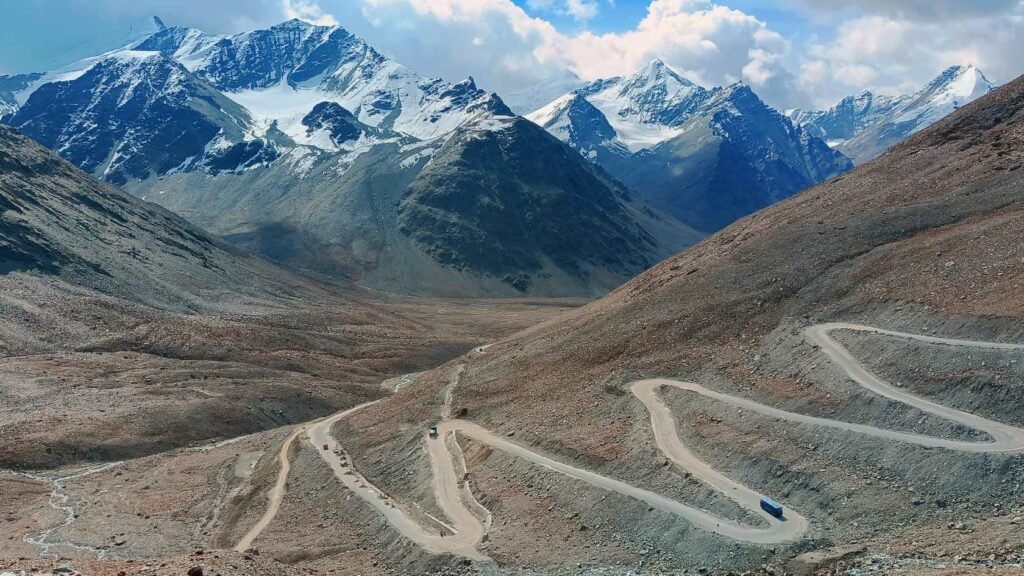
Manali is the practical assembly town for this trek. Reach it before the morning departure so you have time for rest, equipment checks, and any last minute purchase.
The approach to Gulaba is usually described at about 21 to 24 km. Published driving times range from around one to two hours because pickup point, roadhead, traffic, weather, and checkpoint delays can differ.
Do not book a tight same day bus or flight after the trek. A buffer night in Manali is the calmer choice. A late departure may work, but only when your operator confirms the realistic return time close to the date.
The HimTrails Manali travel guide covers arrival, stay areas, local planning, and onward travel. Travellers combining the trek with sightseeing can also review Manali tour packages.
What Are the Bhrigu Lake Road, Permit and Closure Updates for 2026?
What do the official road orders tell us?
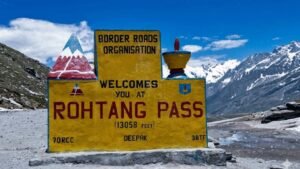
The District Kullu administration opened and regulated the Rohtang approach corridor through dated orders in 2026. These orders show why travellers should check the latest notice rather than depend on an old screenshot.
A 5 May 2026 order permitted tourist movement up to Marhi and included temporary Tuesday closure conditions for road work. A 16 May 2026 order later extended tourist movement to kilometre 46.35 after a safety inspection.
The second order had a stated end date of 17 July 2026. Both orders have expired. They demonstrate that road access can move during the season, but they do not prove that Gulaba access or the Bhrigu trail will be open in September.
Check the latest District Kullu office orders before departure. A current operator trail report should support the official road information, not replace it.
Is a Rohtang vehicle permit the same as a Bhrigu trek permit?
No. The official Rohtang portal lists a ₹500 tourism vehicle permit. It also lists a congestion charge of ₹50 for cars, jeeps, and MUVs and ₹100 for buses and heavy vehicles.
The portal says the congestion charge applies to vehicles crossing Gulaba Bridge and that the permission is valid for one day. This is a vehicle access rule, not proof of a single personal Bhrigu trekking fee.
Applicability is route based: the ₹500 tourism permit applies only to vehicles visiting Rohtang Pass, while the congestion charge applies to every vehicle crossing Gulaba Bridge—₹50 for cars, jeeps and MUVs, and ₹100 for buses and heavy vehicles. Do not assume that every trekker must personally buy a ₹550 permit.
Use the official Rohtang permit portal and confirm the current requirement with the vehicle provider handling your transfer.
Do trekkers need a forest or camping permit?
Bikat Adventures says multiple permits are required and included in its trek cost. The Searching Souls lists forest permits among its package inclusions.
The Himachal Pradesh government’s Trekking Management System lists Bhrigu Lake and supports registration by trekkers and agencies, but its public Bhrigu page does not publish a trek, forest, or camping fee. Independent trekkers should therefore confirm current registration and camping requirements with the local forest authority.
Guided operators commonly process required permissions for their groups. Independent trekkers should not copy an operator inclusion line and treat it as an official rule for every route.
What should travellers check 24 to 48 hours before departure?
Check the latest District Kullu road order, the IMD Shimla warning, your operator’s trail report, and the exact vehicle permit requirement for your pickup route.
No Bhrigu specific September closure notice was found in the official Kullu notices checked as of 3 August 2026. The absence of a closure notice is not confirmation that the road or trek will remain open.
Our team recommends asking one direct question before departure: what has been physically checked on the route during the last twenty four hours? A current ground report is more useful than a generic seasonal claim.
How Much Does Bhrigu Lake Trek Cost in September 2026?
There is no universal Bhrigu Lake price because guide quality, transport, tent sharing, meals, permits, insurance, offloading, group size, and taxes vary.
Bikat displayed ₹7,500 plus 5% GST. Its optional charges displayed ₹1,600 for backpack offloading, ₹1,500 for a single tent, and ₹160 for insurance. These are time sensitive public figures.
The Searching Souls currently displays ₹4,500 with 5% GST excluded. The price is live on its booking page, but the same page contains inconsistent route, distance, and duration information, so it should not be used as the only comparison.
HimTrails currently lists Bhrigu Lake from ₹5,999 per person on a group joining basis and states that its trek packages include a guide, permits, camping, meals, and transport to the trailhead. Private group rates differ, and the exact September departure price should still be confirmed for the chosen dates.
Your real budget may also include travel to Manali, a room before the trek, a possible buffer night after it, gear rental, offloading, personal snacks, GST, insurance, and contingency cash. Do not compare only the first number on a booking card.
What Should You Pack for Bhrigu Lake in September?
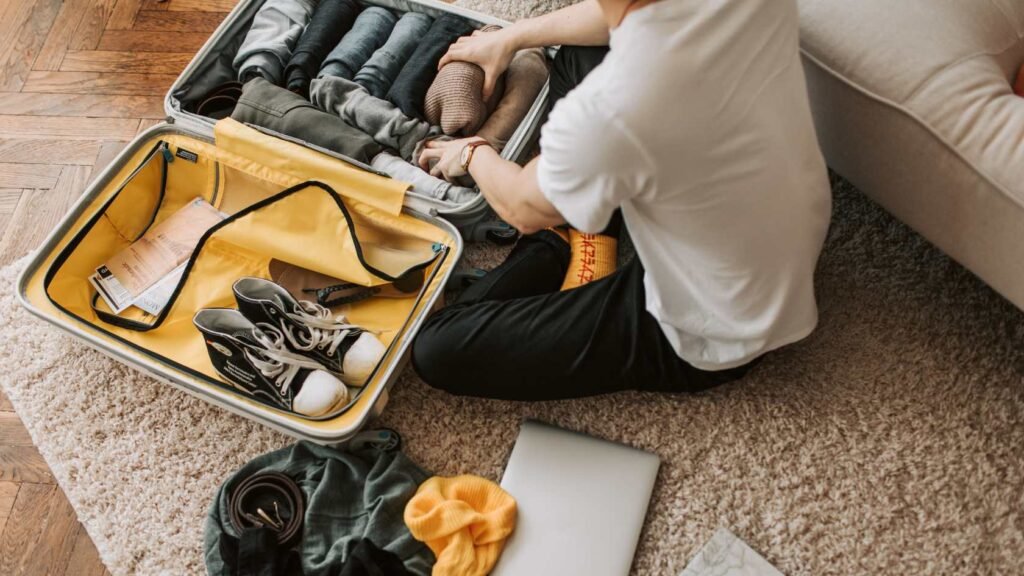
Use a layered clothing system. Start with a quick dry base layer, add insulating layers, and keep a waterproof outer shell ready where you can reach it without unpacking the whole bag.
Four warm layers for its mid August to September planning window. Individual cold tolerance differs, so confirm what each layer means with your operator and avoid treating four thin fashion layers as mountain insulation.
Wear broken in trekking shoes with strong grip. Carry a warm cap, gloves, extra dry socks, rain protection, a backpack cover or dry bags, a headlamp, sunglasses, sunscreen, a reusable water bottle, personal medicines, and valid ID.
Early September deserves stronger rain preparation. Late September deserves more attention to cold evenings and nights. In both periods, one dry base layer reserved for camp can change the whole experience.
Ask what the operator provides or rents. Tents, sleeping bags, trekking poles, jackets, rainwear, and other equipment vary by package, and the cheapest listing may leave more personal gear to arrange.
What Accommodation, Toilets, Water, Network and Cash Can You Expect?
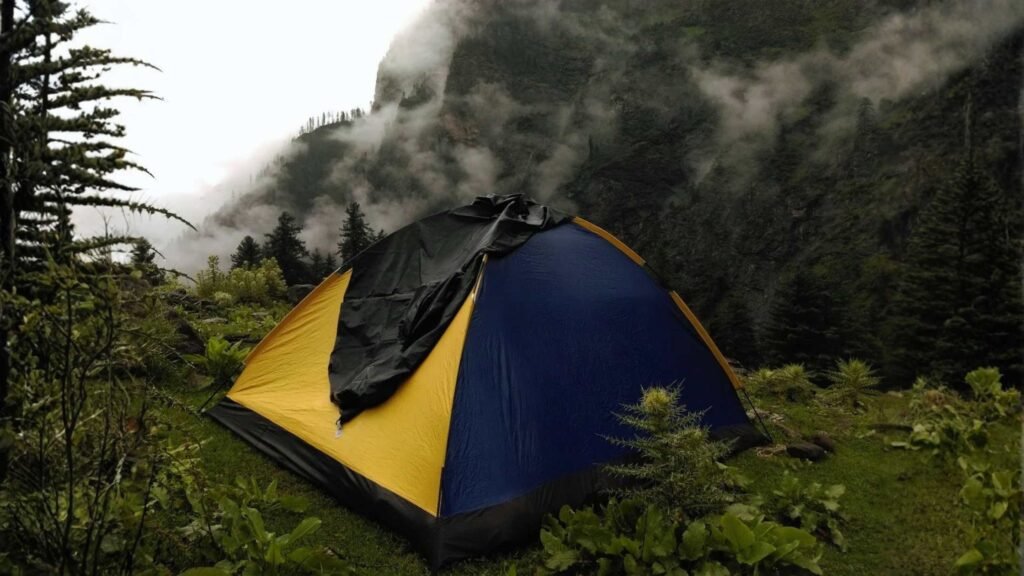
Guided operators commonly use camping tents and often place two trekkers in one tent. Exact tent size, sleeping bag rating, mattress, and sharing policy depend on the operator.
Bikat describes a toilet tent with a dry pit arrangement on its trips. Facilities vary, so ask what will be available at each camp rather than assuming every company follows the same system.
Bikat reports Airtel and Jio connectivity over almost all of its route, while Spotty service around Gulaba and little or no reliable coverage higher towards Rola Kholi and the lake. Because operator reports conflict and telecom coverage maps are predictive rather than guaranteed, treat mobile service as intermittent. Never depend on a phone signal for navigation, weather warnings, payment, or emergency contact.
Bikat also reports ATMs in Manali and none after leaving town. Carry the reasonable cash you may need before departure, while keeping it secure and divided.
Confirm drinking water treatment, charging availability, sleeping bag rating, tent sharing, toilet arrangements, and any power bank limits with your chosen operator.
Is Bhrigu Lake Trek Safe for Solo Travellers?
Why is a local guide recommended?
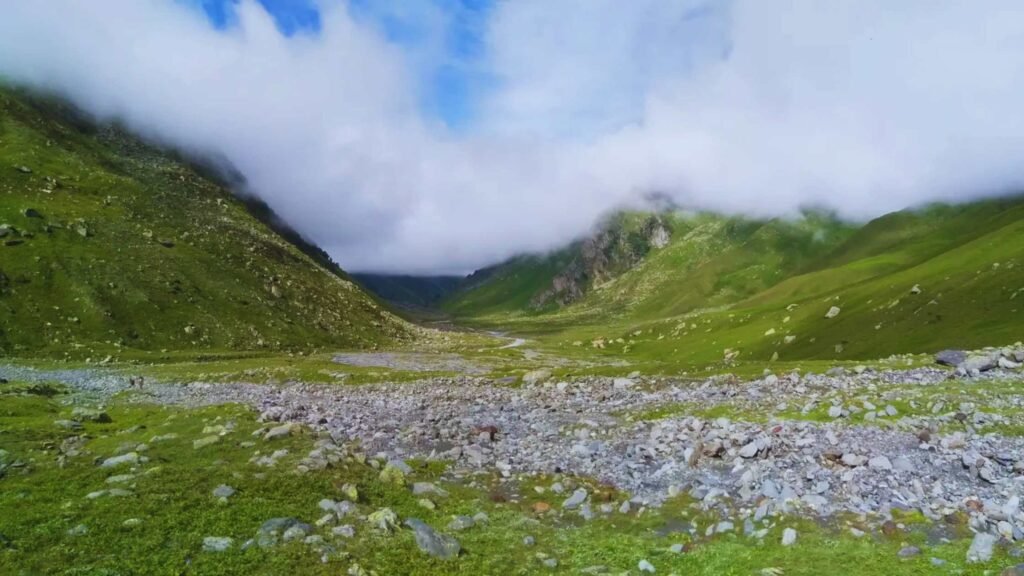
The trail crosses broad open meadows where a clear track may fade. Fog around the lake can make route finding difficult and advises hiring a local guide.
A guide is especially useful for a first Himalayan trek, a solo traveller, or an early September departure with unsettled weather. Local teams also help interpret current stream levels, campsite changes, and retreat options.
Solo trekking is not impossible, but the risk changes when there is nobody beside you to notice slowing pace, confusion, or worsening symptoms. A downloaded map is helpful, but it cannot assess your condition or move a group to safety.
What are the signs of altitude sickness?
The CDC Yellow Book describes headache as the main symptom of acute mountain sickness. It may come with loss of appetite, dizziness, fatigue, nausea, or vomiting.
A trekker should never continue to a higher sleeping altitude while experiencing altitude illness symptoms. If symptoms become worse despite rest at the same elevation, descent is required.
Do not hide symptoms because the group is close to the lake. Tell the trek leader early. This section cannot diagnose you and does not replace medical care.
What is the emergency exit?
The usual retreat is back towards Gulaba. Operators identify Manali as the closest substantial town for medical support.
Before departure, disclose relevant medical conditions to the trek leader and verify the group’s first aid, oxygen, communication, evacuation, and insurance arrangements. Ask who makes the turnaround decision and how transport from the roadhead is handled.
For a broader comparison of routes, difficulty, and base towns, see HimTrails’ guide to treks in Himachal Pradesh.
How Should You Trek Responsibly at Bhrigu Lake?
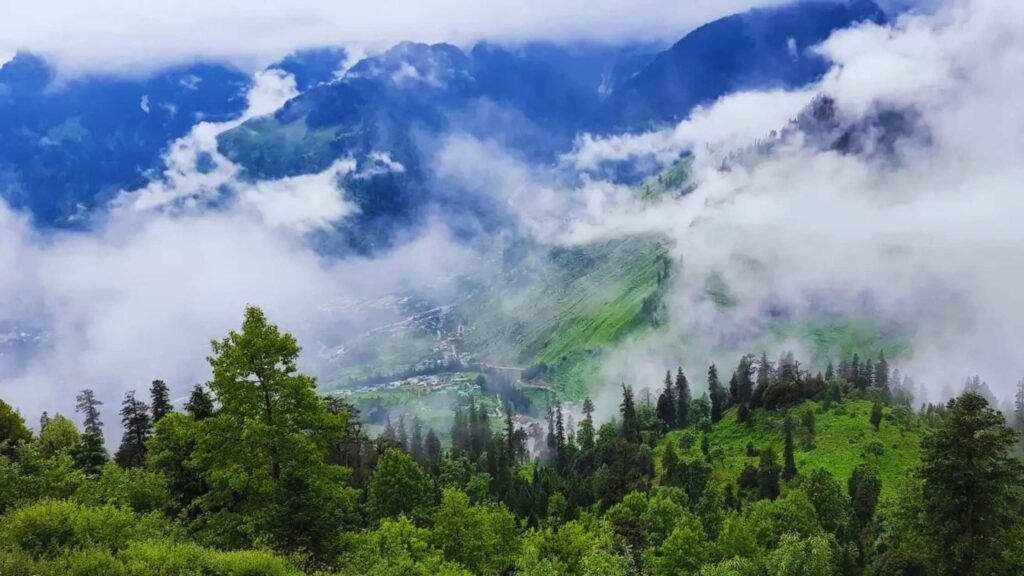
Bhrigu Lake is considered sacred in local tradition because of its association with Sage Bhrigu. Treat this as a living local belief and behave with the respect you would expect at any sacred place.
Carry every wrapper, tissue, food scrap, and piece of personal waste back. Keep noise low, follow existing routes, and listen when local guides ask the group to move or stop.
Leave No Trace guidance says washing should not happen directly in a lake or stream. Carry water about 200 feet away before washing and use only a small amount of biodegradable soap where permitted.
A lake can look untouched while small daily actions are slowly damaging it. Our team asks trekkers to leave the campsite cleaner than they found it, not merely free of their own large rubbish.
Is Bhrigu Lake Worth Doing in September?
Yes, for the right traveller. September suits people who value green meadows, cold clear mornings, and a better probability of long mountain views than peak monsoon.
It does not guarantee a dry trail, an open approach road, mobile network, fresh snow, or a successful lake day. The mountain decides what is possible on the day, and a responsible team respects that decision.
The Bhrigu Lake Trek in September is worth choosing when the scenery matters more than chasing one fixed summit photograph. A safe turnaround in fog is still a well managed trek, while reaching the lake by ignoring warning signs is not a success.
In our experience, the best September plan is the one with enough flexibility to respect the weather. That is how HimTrails plans this trek: honest expectations first, then the route, pace, and support that fit the group.
👉 Want this trip? Let’s plan it right.
अक्सर पूछे जाने वाले प्रश्न
Also Read: Kheerganga Trek in September 2026: Weather, Safety, Route and Day Trek Plan
क्या आप अपने हिमाचल एडवेंचर के लिए तैयार हैं?
Get FREE customized itinerary · Best Price Guaranteed · Local Himachal Experts · 3,973+ Happy Travelers